UK hosts first-ever forum dedicated to trade and investment with East Africa, including announcements on cross-border trade and electric motorbikes
The UK has announced two investments in East Africa to de-risk cross-border trade for buyers and sellers, as well as to provide more electric bikes and charging infrastructure in Kenya.
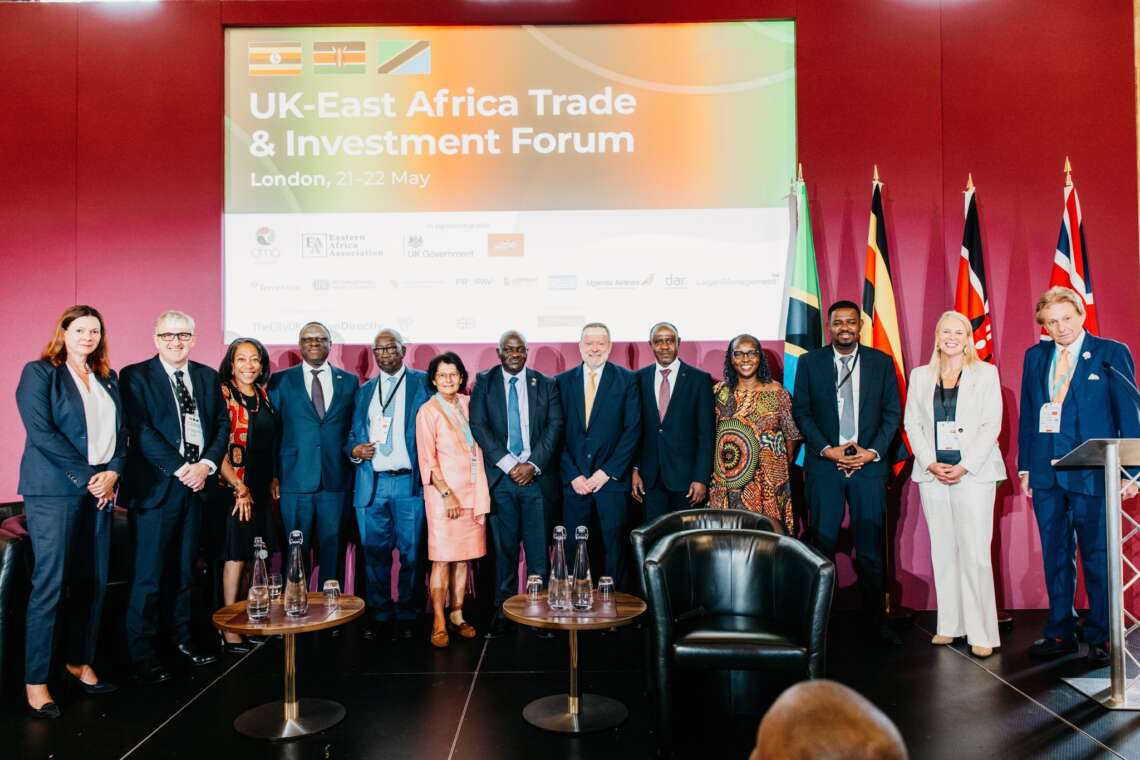
The announcements were made at the first-ever East Africa Trade and Investment Forum (EATIF). The forum has brought together businesses and governments from Kenya, Uganda and Tanzania to engage directly with British businesses, and agree future investments. The forum took place on 21 to 22 May. It was organised by DMA Invest and the East Africa Association, in partnership with the UK Government.
British International Investment (BII) and Standard Chartered Bank will support trade finance in Kenya and Tanzania with a USD $100 million facility to de-risk cross-border and local trade. This will make finance more accessible for businesses as well as increase the availability of vital goods and services. Investment qualifies for the ‘2X Challenge’ which advances gender equality and women’s economic empowerment in developing countries. The facility will support female-led businesses, as well as employment and leadership opportunities for women, and is expected to finance over USD $450 million in trade volumes over its lifetime.
In addition, BII will make a USD $5 million investment in electric motorbike infrastructure in Kenya. The investment will support ARC Ride’s initial rollout of 5,000 electric motorbikes and upgrade battery swapping infrastructure which will increase adoption. This will directly result in over 100,000 metric tons of CO2 per year being saved as electric mobility replaces petrol motorbikes.
Lord Collins, the UK Government’s Minister for Africa, represented the United Kingdom at the summit, which was also attended by government delegations from Kenya, Uganda and Tanzania. This included: Abubakar Hassan Abubakar, Principal Secretary State Department for Investment Promotion, Kenya, and the CEO of the Kenya Investment Authority (KenInvest), John Mwendwa; General Wamala, Minister for Works and Transport in Uganda; and Msafiri Lameck Mbibo, Deputy Permanent Secretary of the Ministry of Minerals in Tanzania.
Lord Collins, the UK Government’s Minister for Africa, said, “The UK is a long-term partner for long-term investment in East Africa. This forum will showcase the best of East African business to British business and lay a pipeline of private sector investment between them. This, combined with much-needed improvements to regulations and resilience, will lead to jobs and mutual growth in the future. We go far when we go together.”
Mwebesa Francis, Ugandan Minister for Trade, Industry and Cooperatives said, “We welcome the UK-East Africa Trade and Investment Forum 2025 as a platform to highlight Uganda’s vibrant trade and investment opportunities. By engaging with UK investors and partners, we aim to enhance our trade infrastructure, diversify our export markets, and drive sustainable development. We hope this forum will also explore ways to leverage trade and investment to accelerate progress towards our Ten-fold Growth Strategy, unlocking new opportunities for economic growth and development.”
Abubakar Hassan Abubakar, Principal Secretary, State Department for Investment Promotion, Kenya, said, “Kenya provides Africa’s leading value proposition for private capital, with a great portfolio of opportunities in key sectors. We are proud to be part of the UK EATIF and welcome the regional focus that fosters economic integration.”
Chris Chijiutomi, MD and Head of Africa at British International Investment, said, “BII is proud to announce these two investments today at the EATIF, demonstrating our commitment to fostering economic growth in East Africa. By making trade finance more accessible and backing innovative infrastructure projects like electric motorbikes, we are addressing critical needs in the region. We’re not only supporting businesses that are the backbone of these economies, but also driving inclusive and sustainable growth, contributing to a more resilient and prosperous East African region.”
The EATIF aims to deliver mutually beneficial growth and jobs by building partnerships between businesses and policymakers in Kenya, to create a long pipeline of investment between the UK and the region. It will aim to channel private sector funding into high-impact sectors critical for sustainable development like infrastructure, clean energy, agribusiness, healthcare, and manufacturing.
EATIF aims to replicate the success of the West and Central Africa Forum (WCAF), which built a pipeline of over GBP 1 billion in deals over three years. EATIF is just the beginning, with a series of follow-up engagements planned to sustain momentum and translate relationships into tangible deals.
These interactions, ranging from government-to-government meetings to C-suite business dialogues, will help align priorities and lay the groundwork for future partnerships. The forum will showcase the full suite of UK government support available to businesses, such as UK Export Finance (UKEF) and BII. UKEF has played a transformative role in other regions, growing its exposure in West and Central Africa from £3 million to over £1.2 billion, and similar outcomes are expected in East Africa over time. These tools can help UK and East African businesses de-risk projects and access finance more easily.