Government presses ahead with a series of high-level visits to Beijing even as controversy over collapsed espionage case casts a shadow on relations….reports Asian Lite News
Ministers are pushing ahead with their reset of relations with China, including several planned high-level visits before the end of the year, despite the furore triggered by the collapse of a high-profile espionage trial.
Plans have been drawn up for Jonathan Powell, the national security adviser, to travel to Beijing in November for talks before an anticipated trip by Keir Starmer next year. Bridget Phillipson, the education secretary, and Patrick Vallance, the science minister, are also expected to travel to China on government business before the end of the year.
The government could yet decide to pull or postpone Powell’s November trip after he was dragged into the controversy surrounding the abandonment of charges against two men accused of spying for Beijing. A government spokesperson said: “We have long been clear that we are bringing a consistent, long-term and strategic approach to managing our relations with China, rooted in UK interests. That includes constructive and robust engagement at a variety of levels.”
The Crown Prosecution Service (CPS) unexpectedly pulled the charges against Christopher Cash, a former parliamentary researcher, and Christopher Berry, a teacher, last month. The CPS argued that the government had not provided sufficient evidence that China represented a “threat to the national security of the UK”.
Starmer published the three witness statements submitted by a deputy national security adviser, Matthew Collins, to prosecutors on Wednesday after accusations he had interfered with the trial to protect the UK’s trading relationship with China.
In a letter to the Conservative party leader, Kemi Badenoch, on Thursday, the prime minister rejected Tory claims that Powell had a role in shaping the evidence that ultimately led the case to collapse. He wrote that while Powell attended a meeting about the case with senior Whitehall officials in September, “these discussions were based on the working assumption that the case would proceed – which was the desired outcome of the government – and focused on how to handle the implications”. The meeting, on 1 September, took place nearly a month after Collins submitted his final witness statement to the CPS on 4 August.
Powell last travelled to Beijing in mid-July where he met China’s top diplomat, Wang Yi. The Chinese government said they had discussed the UK government’s desire for “a consistent, lasting and mutually respectful relationship”.
Phillipson is planning to travel to China later this year for talks on education, according to two people briefed on the discussions. Vallance’s trip next month, which was first reported by PoliticsHome, is to hold a formal, in-person forum on science, innovation and technology for the first time since 2018. Virtual talks were held in 2021.
The visits are the latest examples of high-level engagement between the UK and China which has stepped up since Labour entered power. Rishi Sunak’s administration sought to pursue a similar approach but was hamstrung by political instability and opposition from hawkish Tory backbenchers.
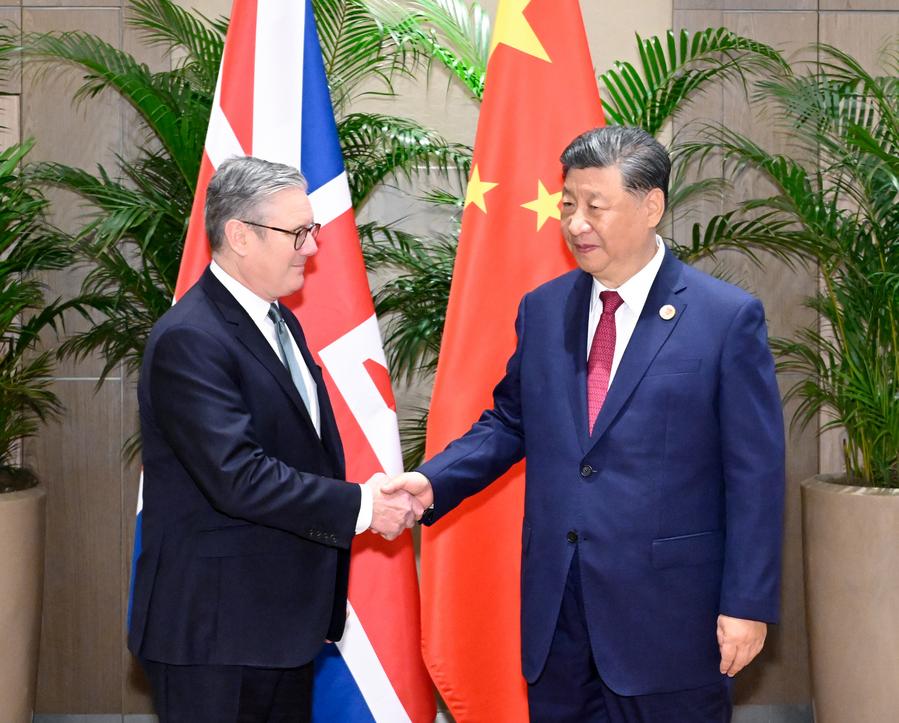
Plans are being drawn up for Starmer to make a bilateral trip to China next year, possibly in mid-February. Donald Trump has also said he intends to make a trip to China early next year, which could affect the timing of Starmer’s visit if it goes ahead.
The last UK prime minister to visit China was Theresa May in 2018, when ministers were still talking about a “golden era” in relations with the country.
Rachel Reeves, the chancellor, travelled to China with a business delegation in January and unveiled £600m in investment. Ed Miliband, the energy secretary, and Peter Kyle, the trade secretary, have also visited China for talks over the past year. Senior Chinese government figures made several visits to the UK in the same period.
This week, Oliver Robbins, the permanent secretary of the Foreign Office, became the latest senior government figure to travel to Beijing. Part of his brief has been to discuss much-needed refurbishment to Britain’s embassy in Beijing, which China is blocking while the fate of its own new embassy is being decided. Ministers have come under pressure over the implications of their rapprochement for national security.
Powell, who previously served as chief of staff to Tony Blair and later as a senior diplomat, has found himself at the centre of the political row despite assurances from Downing Street that his role has been limited to advising on the “strategic management” of UK-China ties.
The government insists that its approach is based on “realism, not naivety” and that engagement with Beijing remains essential on global challenges such as climate change, artificial intelligence regulation, and economic cooperation.
However, opposition figures and Conservative MPs have accused the government of sending mixed signals to allies by deepening engagement with Beijing so soon after a national security scandal. Tory MPs have also raised concerns that the collapse of the espionage case risks undermining confidence in Britain’s counter-espionage operations.
The controversy erupted last month when the CPS dropped charges against the two men, both of whom had denied spying for China. The abrupt decision prompted speculation that senior officials had intervened to avoid damaging diplomatic or economic fallout with Beijing.
Starmer’s decision to publish the witness statements was aimed at quelling accusations of interference but has done little to calm criticism from across the political spectrum.
Officials say the forthcoming visits by Powell, Phillipson and Vallance will proceed “subject to the usual security reviews” and are designed to maintain communication channels on key policy areas rather than signal a political endorsement.
Despite the tensions, British and Chinese officials have continued to frame the relationship as one requiring both vigilance and engagement. Powell’s July meeting with Wang Yi was described by both sides as “constructive”, with a shared emphasis on stability and respect for sovereignty.
Ministers privately concede that the optics of pressing ahead with high-level visits amid a national security row are challenging. But they argue that isolating Beijing is neither practical nor in the UK’s interests, particularly as Britain seeks to stabilise its post-Brexit trade position and global influence. As one senior official put it, “We are not returning to a golden era. We are managing a difficult relationship with our eyes open.”