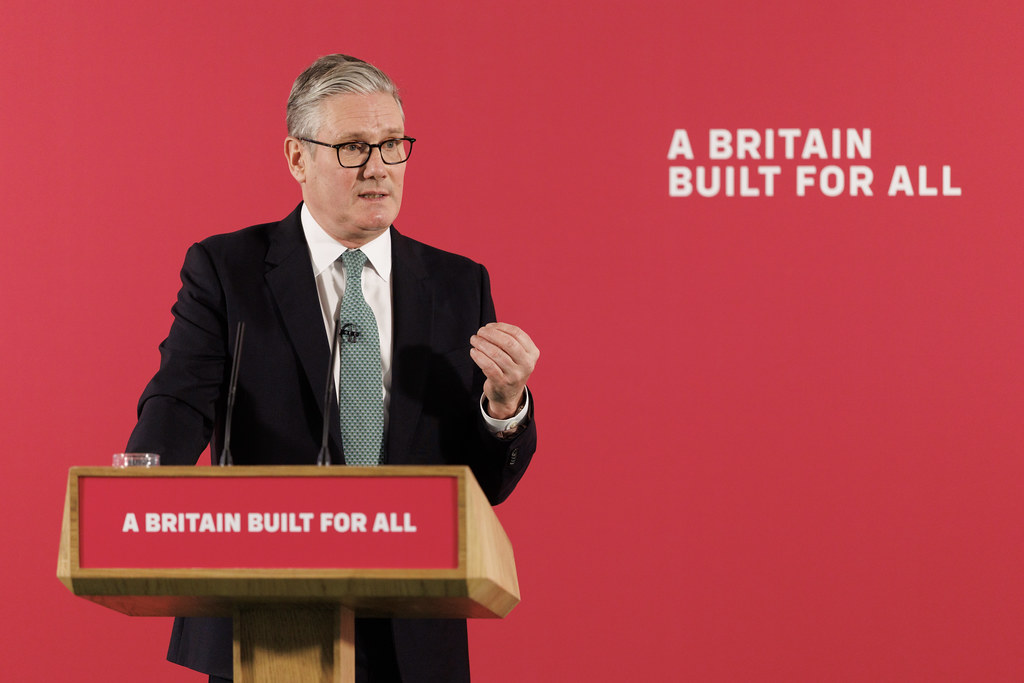
The Employment Rights Act has become law, introducing a wide-ranging overhaul of workplace protections that the Government says will benefit more than 15 million workers across the UK…reports Asian Lite News
More than 15 million workers across the UK are set to benefit from a major shake-up of employment law after the Employment Rights Act received Royal Assent today, marking one of the most significant changes to workplace rights in a generation. The Government says the new legal framework is designed to modernise workers’ rights, help more people remain in employment, support productivity and raise living standards, while striking a balance between employee protections and business needs.
At the heart of the legislation are a series of new “day one” rights aimed at supporting working families. The changes mean an estimated 32,000 more fathers and partners each year will be able to take paternity leave, while around 1.5 million additional parents will gain access to unpaid parental leave. Ministers say this will help families better manage the pressures of work alongside caring responsibilities in a modern labour market.

Reforms to statutory sick pay are also a central element of the Act. Around 1.3 million workers who were previously excluded will now be able to take time off when they are ill without worrying about losing pay, a move the Government says will improve health outcomes and reduce insecurity for some of the lowest-paid workers.
The Act also introduces a new bereavement leave entitlement, allowing employees facing the most difficult personal circumstances to take time away from work with dignity. Up to 2.7 million employees a year are expected to benefit from this new right.
One of the most closely watched elements of the legislation concerns zero-hours contracts, which have risen over the past decade to cover more than one million workers. These workers, often among the lowest paid, will now gain new protections against what the Government describes as exploitative practices. The measures include the right to a contract that better reflects the hours people regularly work, as well as compensation if shifts are cancelled at short notice.
The Act also shortens the qualifying period for protection from unfair dismissal. Previously, employees had to wait two years before gaining this right. Under the new law, workers will be entitled to protection after six months in a new job, a change ministers say will provide greater security while still allowing employers flexibility.
Announcing the legislation, Prime Minister Keir Starmer said: “Today we have proved what a pro-business, pro-worker government can achieve – a modern framework for worker’s rights.” He added: “This Act sets in motion an increase in living standards, supporting productivity and importantly, more security and dignity for people in work.” He said the Government had delivered on its promise to “bring work into the 21st century”.
The Secretary of State for Business and Trade, Peter Kyle, described the legislation as transformative. “The landmark Employment Rights Act will transform workplace law for the 21st century – bringing stronger protections and the fairness every worker deserves,” he said. He added that the Government believed the changes were “a vital part of creating and maintaining good jobs and fair pay” and would be delivered “in partnership with businesses, trade unions and civil society”.
Ministers have argued that stronger employment rights are not only fair but economically beneficial. They point to academic research from institutions including the University of Oxford, the University of Warwick, MIT and UCL, which has found a positive relationship between job satisfaction and productivity, with happier and healthier workers more productive and more likely to stay in their jobs.
To address concerns from employers, the Government says the reforms will be phased in gradually over a two-year period, giving businesses time to prepare. Officials say consultations with businesses, trade unions and civil society will continue to ensure the detailed implementation works in practice.
Business and labour leaders broadly welcomed the legislation. Co-op Group chief executive Shirine Khoury-Haq said: “Treating people fairly and with respect is a fundamental part of being a responsible employer.” She said the Act would ensure fair treatment at work and help businesses attract and retain skills.
TUC general secretary Paul Nowak called the Act “the biggest upgrade in workers’ rights in a generation”, while Centrica chief executive Chris O’Shea said a stable and fair framework would help businesses “plan, invest and grow with confidence”, adding that what is good for workers is also good for the economy.