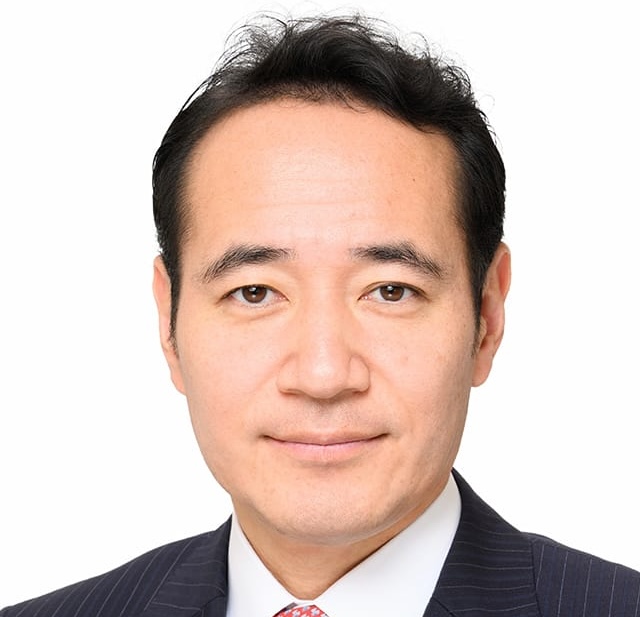
With elections scheduled for February, Baroness Sandip Verma urged the British government to respond forcefully – issuing a strong condemnation and deploying British election observers before and during the polls … writes Anirudh Madhavan
As the national elections approach in Bangladesh, international observers and human rights voices are increasingly alarmed by the country’s downward trajectory. An unelected interim government, led by Dr. Muhammad Yunus and supported by a coalition of Islamist groups, assumed power after Sheikh Hasina’s removal in August 2024. The lead-up to the upcoming election has been marked by rising violence against Hindu minorities and concerns about electoral fraud. Western countries and global organizations are openly warning that Bangladesh is headed in the wrong direction, amid reports of targeted attacks on Hindus and concerns that Islamist hardliners and their allies may undermine a free, fair election.
Recent letters from British lawmakers capture the urgency of these concerns. In early January 2026, Baroness Sandip Verma, a member of the UK House of Lords, wrote to Prime Minister Keir Starmer detailing “escalating persecution of minority communities and opposition supporters in Bangladesh.” Verma noted that conditions have “deteriorated sharply since the removal of former Prime Minister Sheikh Hasina,” citing “reported lynchings, burning of young Hindu men, rape and forced conversions of non-Muslim women” carried out by mobs while police stood aside. She further warned that Yunus has “failed to stop or condemn” these atrocities, leaving minority Hindus and political opponents in grave danger.

With elections scheduled for February, Baroness Verma urged the UK to respond forcefully – issuing a strong condemnation and deploying British election observers before and during the polls. Particularly worrying, she added, are reports that the radical Islamist Jamaat-e-Islami party, once banned under Hasina, is deeply involved in the upcoming elections, and that the Yunus administration may even remove the word “secular” from Bangladesh’s constitution. Such moves raise “serious questions about the future of constitutional values, law enforcement accountability, and minority rights” in Bangladesh.
Similar alarms were raised by senior British MP Priti Patel, who serves as the UK’s Shadow Foreign Secretary. Patel penned a letter to the UK Foreign Secretary describing the situation in Bangladesh as “deeply concerning and worrying.” She pointed out that “at least six Hindus [were] killed within an 18-day period” recently, calling this level of religiously targeted violence “unacceptable.” Patel reminded the Foreign Office that back on December 2, 2024, the UK Parliament had discussed attacks on Bangladesh’s Hindu community, and ministers promised to monitor the situation and press Dhaka to protect minorities. Yet one year on, violence has only surged. Furthermore, Patel urged the UK government to use its influence with international partners to help stabilize Bangladesh and ensure “religious freedom is protected and Hindus are safe”. Her appeal encapsulates the growing international sentiment that Bangladesh’s authorities must safeguard pluralism and allow credible elections – or risk sliding into deeper turmoil.
Tragically, the fears highlighted in these letters are borne out by a spate of brutal incidents on the ground. Over the past several weeks, Bangladesh has witnessed a string of killings that appear to specifically target Hindus, stoking terror in the minority community. In the span of just 18 days, six Hindu men were murdered in separate attacks across the country. Among the victims was 40-year-old Sarat Chakraborty Mani, a shopkeeper in Narsingdi, who was ambushed at his market stall and hacked with sharp weapons; he died from his injuries while being rushed to the hospital. That same day, in Jashore district, Hindu journalist Rana Pratap Bairagi was shot multiple times in the head and had his throat slit by assailants on a motorbike. Days prior, other Hindu individuals were killed in horrifying fashion: Dipu Chandra Das, a factory worker, was lynched by a mob on fake allegations, and his body was hung from a tree and set ablaze in Mymensingh. The pattern suggests a campaign of intimidation against Hindus ahead of the February elections.
However, these attacks on minorities in an election season have drawn international condemnation. The U.S. Commission on International Religious Freedom (USCIRF) reported a “troubling rise in attacks on religious minorities, particularly Hindus, Buddhists, and Sufi Muslims,” during the chaos following Hasina’s ouster and under the current military-backed caretaker government. The Human Rights Congress for Bangladesh Minorities documented 116 minority deaths across 45 districts between June 2025 and January 2026, arguing that “this is not isolated violence. It is a nationwide pattern of targeted atrocities.”
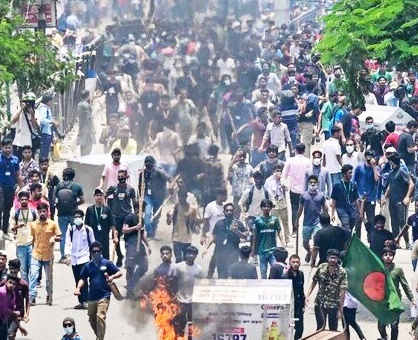
Alongside the spike in violence, global actors are warning of election irregularities and anti-democratic maneuvers that could rob the upcoming polls of legitimacy. One major concern is the exclusion of Sheikh Hasina’s Awami League (AL), which had ruled for 15 years until 2024. The interim government, which took power after mass protests toppled Hasina, has barred the Awami League from contesting the election. In late 2025, a bipartisan group of five U.S. lawmakers wrote a letter to Chief Adviser Yunus urging him to reconsider the effective ban on the Awami League, but to no avail.
Meanwhile, international election observation missions are preparing to scrutinize the upcoming elections in Bangladesh amidst growing fears of irregularities, though questions remain about the extent of their access. The European Union has announced it will deploy a large Election Observation Mission, sending at least 200 observers to Bangladesh to monitor the parliamentary polls scheduled for February 12. At the same time, the United Nations will not send a formal observer delegation. Instead, the UN says it will support Bangladesh’s democratic process through other means, possibly including technical assistance.
Due to fears of limited access to international election observers, radical Islamist outfits in cahoots with Yunus and the right-wing “Gen Z” political party would likely create irregularities during the elections. Human rights observers fear that the resurgence of radical Islamist forces like Jamaat-e-Islami in mainstream politics and the sidelining of the long-time ruling party have raised concerns about whether the election will truly represent the people’s will. Far worse, an unchecked campaign of anti-Hindu violence appears aimed at silencing and terrorizing minority voters. Without guarantees of a free and fair election with full participation, protection of religious minorities, and accountability for those committing atrocities, many fear that Bangladesh’s return to democracy will be derailed by chaos and extremism.