From the Armenian Genocide in 1915 to the Rwandan Genocide in 1994, the hesitance to label events as “genocide” has frequently preceded the inability to avert it. In every instance, denial and procrastination exacerbated the suffering of the victims. The events in Bangladesh in 1971 exemplify this troubling trend. The evidence was readily available in real time-through diplomatic communications, journalistic investigations, and accounts from refugees. Yet, the world chose to hesitate, writes Khalid Rahman
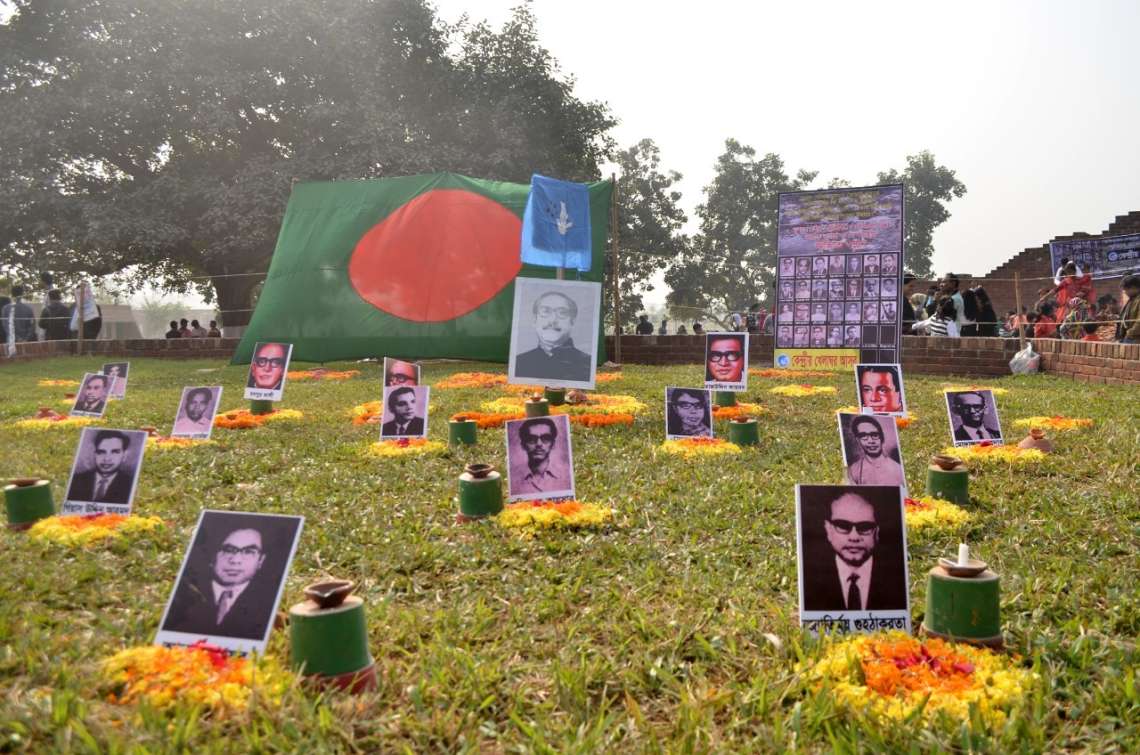
March is not just a month in the South Asin calendar; it represents a moral landscape. It resonates with the sounds of gunfire in Dhaka, the quiet of mass graves in rural Bangladesh, and the wails of millions who were forced to flee. In March 1971, what started as a political crisis escalated into one of the most brutal and underappreciated genocides of the twentieth century. Today, as a resolution in the United States Congress aims to officially acknowledge the Bangladesh Genocide, this moment calls for not only political recognition but also historical truth.
Even if it comes later than expected, such acknowledgment is not merely symbolic, it serves as a corrective measure.
The origins of this disaster can be traced back to political disenfranchisement. After the Awami League triumphed in the 1970 elections, the Pakistani ruling regime’s refusal to hand over power triggered a severe crisis. The resolution presented in the U.S. Congress highlights that, after negotiations failed, on March 25, 1971, the Pakistani state apparatus initiated a calculated military operation known as “Operation Searchlight.”

What followed was not just a typical military campaign; its primary goal was genocide. The resolution further clarifies that the Pakistani forces involved in this operation committed “widespread massacres of civilians.” Historical accounts and academic studies support this assertion: starting in Dhaka, this brutality quickly extended to rural regions, targeting intellectuals, students, and everyday citizens.
Eyewitness accounts paint a chilling picture. Supported by “radical Islamist” factions-motivated by Jamaat-e-Islami-the Pakistani military would invade towns and villages armed with pre-prepared lists, hunting down and executing teachers, journalists, and notable community figures. These were not random acts of violence, but rather a carefully orchestrated effort to eradicate an entire nation. As a result, this resolution urges the President of the United States to acknowledge the atrocities inflicted upon Bengali Hindus in 1971 by the Pakistani military and their allies-specifically Jamaat-e-Islami as crimes against humanity, war crimes, and genocide.
The human cost is nothing short of staggering. While estimates differ, a commonly referenced figure suggests that approximately three million lives were lost. Between 200,000 and 400,000 women endured systematic sexual violence. Nearly ten million refugees sought safety in India, marking one of the largest forced migrations in contemporary history.
The resolution cautiously acknowledges the loss of “tens to hundreds of thousands” of lives and “over 200,000 women… raped.” However, a broader examination of the evidence indicates that the true scale may have been even more extensive. Regardless of the exact figures, the pattern is clear: mass killings, systematic rape, and forced displacement, these are the unmistakable hallmarks of genocide.
These atrocities were not mere isolated events; they formed part of a deliberate campaign. Throughout Bangladesh, massacres occurred with chilling frequency. In Chuknagar of Khulna District, it is estimated that 10,000 to 12,000 civilians-predominantly Hindus-were slaughtered in a single day. In Jathibhanga of Thakurgaon District, over 3,000 individuals were executed in mere hours. Entire villages were annihilated, homes set ablaze, and survivors forced into exile.

A key feature of the violence that erupted in 1971 was its religious dimension. While individuals of all faiths faced persecution during this tumultuous time, the Hindu community was particularly singled out. The resolution currently being debated claims that there was a deliberate campaign-especially in East Pakistan-to “exterminate” Hindus through means such as “genocide, rape, forced conversion, and forced expulsion.” Field reports sent to the U.S. government, countless eyewitness testimonies from journalists, documentation from international bodies like the World Bank, and further evidence accessible to the subcommittee indicate that Pakistani forces routinely identified Hindus by confirming their religious affiliation, after which they would plunder their properties and systematically execute them. In certain cases, the letter “H” was marked in yellow on their corpses. These heinous acts were carried out under the martial law regime enforced by Islamabad.
Crucially, the religiously driven nature of these assaults is of utmost significance, as it directly corresponds with the United Nations’ definition of genocide, which describes genocide as “acts committed with the intent to destroy, in whole or in part, a national, ethnical, racial or religious group.” The parliamentary resolution, referencing this very definition, contends that the occurrences of 1971 meet these criteria.
In spite of efforts to conceal the truth, it ultimately emerged. On June 13, 1971, the Pakistani journalist Anthony Mascarenhas released a groundbreaking article named “Genocide” in the UK’s ‘The Sunday Times’, revealing the horrific acts perpetrated by the Pakistani military. This marked the first global report that unveiled the reality of the deliberate genocide and violence occurring in East Pakistan. His investigative work dismantled the official narrative and brought global attention to the extent of the atrocities.
Equally notable was the dissent from within the U.S. diplomatic ranks. Archer Blood, the U.S. Consul General in Dhaka, dispatched what became known as the “Blood Telegram,” which criticized Washington’s inaction. He characterized the situation as a “selective genocide” and cautioned against the systematic killings.
However, these urgent warnings were mostly overlooked. Subsequent research indicates that geopolitical factors during the Cold War-especially the U.S. ties with Pakistan and China-resulted in a conscious choice of non-intervention.
The inaction of 1971 is not just a mere historical note; it represents a profound moral failure with lasting repercussions. The Blood Telegram itself expressed regret that the United States had “opted not to intervene, even on a moral level.” This silence permitted the violence to persist unchecked for months.
History has witnessed this pattern repeatedly. From the Armenian Genocide in 1915 to the Rwandan Genocide in 1994, the hesitance to label events as “genocide” has frequently preceded the inability to avert it. In every instance, denial and procrastination exacerbated the suffering of the victims.
The events in Bangladesh in 1971 exemplify this troubling trend. The evidence was readily available in real time-through diplomatic communications, journalistic investigations, and accounts from refugees. Yet, the world chose to hesitate.
The ongoing resolution in the U.S. Congress transcends mere legislative action; it seeks to amend the historical narrative. Recent reports highlight that this resolution asserts that “history demands truth” and that recognition is “long overdue”.
Recognition fulfills several essential roles.
Firstly, it restores dignity to the victims. Genocide is not merely a physical atrocity; it also represents an obliteration of identity. By naming it, we affirm that the suffering endured by the victims was genuine, intentional, and unjust.
Secondly, it combats denial. Even now, the events of 1971 are disputed in certain circles. Official acknowledgment by influential nations aids in establishing a factual and moral consensus.
Thirdly, it fortifies global standards. The Genocide Convention holds significance only when applied uniformly. Recognizing the events of 1971 reinforces the principle that such crimes will not be overlooked, irrespective of when they transpired.
Thus, March is not solely a time for remembrance; it embodies a sense of duty. The memory of 1971 imparts lessons that resonate far beyond the borders of Bangladesh. It serves as a reminder that genocide does not commence with mass slaughter but rather with dehumanization, discrimination, and the normalization of hatred.
Moreover, it highlights the resilience of those who resist. In the face of brutal repression, the people of Bangladesh fought valiantly for their freedom, ultimately securing independence in December 1971. Their struggle stands as a testament to the enduring human aspiration for dignity and self-determination.
The U.S. resolution put forth urges the President to officially recognize the atrocities committed in 1971 as “genocide, war crimes, and crimes against humanity.” This request transcends mere politics; it embodies a profound moral obligation.
Acknowledging the Bangladesh Genocide means confronting a truth that has lingered in the shadows for decades yet has not been adequately validated. It serves to honour the countless lives lost and to stand in solidarity with the survivors.
Most crucially, it conveys a message-to both the present and the past-that the global community will not turn a blind eye to such heinous acts.
Every year, March arrives anew. The pressing question is whether we, as an international society, will persist in our remembrance-and whether we will finally opt to name history with the respect it deserves.