The International Court of Justice will deliver its judgment on 19 November in the genocide case brought by The Gambia against Myanmar…reports Asian Lite News Desk
The International Court of Justice (ICJ) is set to deliver a landmark judgment in the genocide case against Myanmar on 19 November, following proceedings that have drawn formal intervention from 11 countries and involved months of hearings on alleged violations of the Genocide Convention.
The case, brought by The Gambia in November 2019, centres on allegations that Myanmar violated its international obligations under the Convention on the Prevention and Punishment of the Crime of Genocide in relation to the Rohingya community.
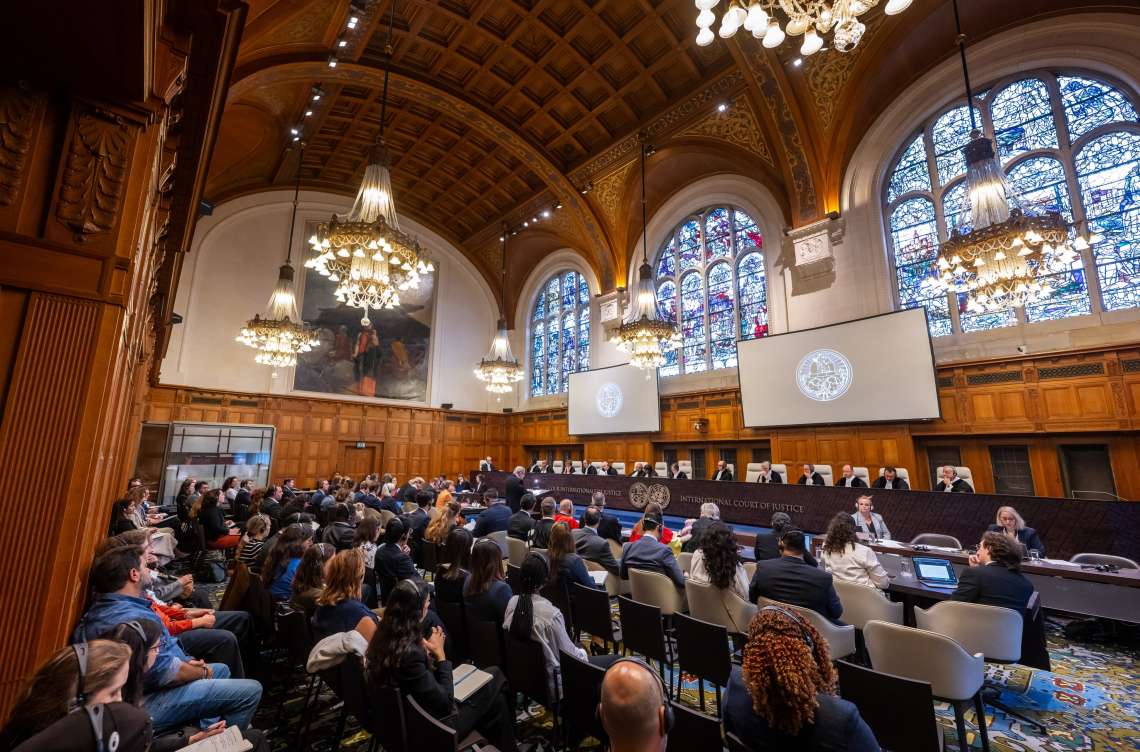
The judgment will be delivered at a public sitting at the Peace Palace in The Hague at 10am local time. ICJ President Judge Iwasawa Yuji will read out the ruling, according to a press release issued by the Court on 3 November.
The proceedings have attracted attention beyond the two countries directly involved, with Canada, Denmark, France, Germany, the Netherlands, the United Kingdom, the Maldives, Slovenia, the Democratic Republic of the Congo, Belgium and Ireland filing declarations of intervention.
Their participation was made under Article 63 of the Statute of the Court, which allows states to intervene in cases involving the interpretation of a convention to which they are parties.
The Court declared the interventions admissible through orders issued on 3 July 2024 and 25 July 2025. However, it later informed the intervening countries that their positions had been sufficiently presented through written observations and that their participation in the oral hearings was not necessary.
How did the case reach the final judgment stage?
The Gambia instituted proceedings against Myanmar on 11 November 2019, asking the ICJ to determine whether the country had breached its obligations under the Genocide Convention.
In its application, The Gambia requested that the Court declare Myanmar responsible for violations of the convention and order it to stop any continuing internationally wrongful acts. It also sought reparations for victims of alleged genocidal acts who are members of the Rohingya group, alongside assurances and guarantees that similar violations would not happen again.
The Gambia based the Court’s jurisdiction on Article IX of the Genocide Convention and submitted a request for provisional measures alongside its application.
On 23 January 2020, the ICJ issued an order indicating certain provisional measures addressed to Myanmar.
The proceedings then moved through the written stages. After The Gambia submitted its Memorial, Myanmar raised preliminary objections challenging the Court’s jurisdiction and the admissibility of the application.
In a judgment delivered on 22 July 2022, the Court ruled that it had jurisdiction to hear the case under Article IX of the convention and that The Gambia’s application was admissible.
Myanmar subsequently filed its Counter-Memorial, followed by a Reply from The Gambia and a Rejoinder from Myanmar.
The case progressed to public hearings on its merits, held between 12 and 29 January 2026. The proceedings included the examination of witnesses and an expert called by the parties.
The upcoming judgment will mark the next major stage in the case, which has remained before the UN’s principal judicial organ since The Gambia filed its application nearly seven years ago.
The Court has also announced arrangements for the public reading. Only 15 seats will be available in the public gallery, with admission granted on a first-come, first-served basis. Members of the public must arrive at the Peace Palace at least 40 minutes before the sitting and present valid identification.
Diplomats and media representatives must complete online registration or accreditation by 12 noon, The Hague time, on 17 November. The Court has said late applications will not be considered.
The judgment will be streamed live and made available on demand in English and French through the ICJ website, the Journal of the United Nations section dedicated to the Court and UN Web TV.