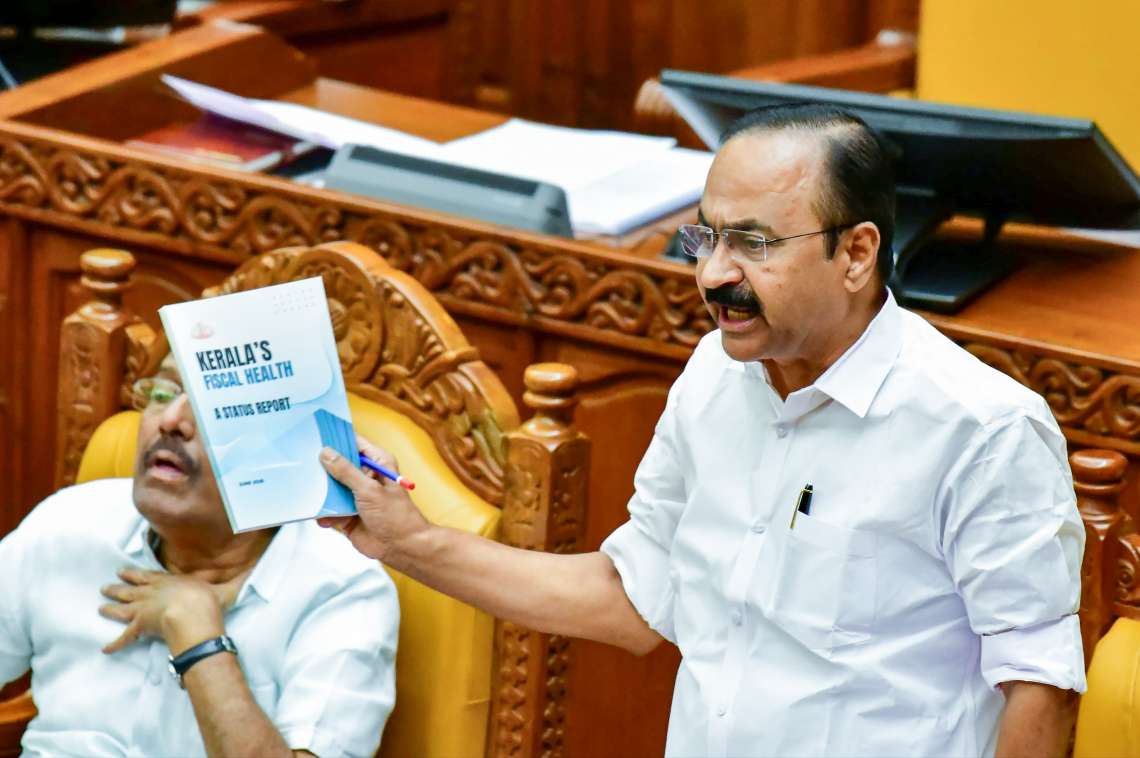
As Kerala debates the impact of money flowing out through migrant workers, economists warn the real challenge lies in sustaining the state’s changing economy, writes Aravind Rajeev
For decades, Kerala’s economic story was inseparable from remittances. Money sent home by millions of Malayalis working in the Gulf transformed villages, funded education, built homes and sustained local businesses. Today, however, a new phrase has entered the state’s economic vocabulary – reverse remittance – triggering a fierce debate that extends far beyond economics.
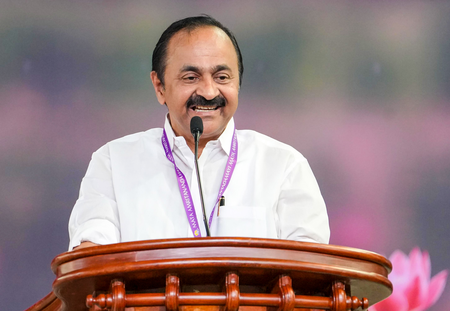
The controversy erupted after Chief Minister VD Satheesan expressed concern over the growing outflow of money earned in Kerala by interstate migrant workers. He announced that the government would undertake a scientific study into the phenomenon, arguing that it could have long-term implications for liquidity and economic activity in the state.
“There are around four million workers from other states currently employed in Kerala,” the Chief Minister said, adding that they spend only a small portion of their earnings locally while the rest is remitted to their home states. He warned that if money continuously flows out, it could reduce circulation within Kerala’s economy and eventually affect growth.
During the Assembly debate, he noted that labour payments which once remained within the local economy are now increasingly leaving the state, making it necessary to understand the scale of the challenge before framing corrective measures.
At first glance, the concern appears reasonable. Kerala’s economy has long depended on inward remittances from the Gulf. According to the latest migration studies, expatriate Keralites send home more than ₹2 lakh crore annually, making remittances one of the state’s biggest economic pillars.
At the same time, interstate migration into Kerala has surged dramatically over the past decade, with estimates placing the migrant workforce at around 45 to 48 lakh people.
But it was the Chief Minister’s characterisation of the issue that sparked controversy.
Migration expert Benoy Peter, Executive Director of the Centre for Migration and Inclusive Development (CMID), strongly challenged both the terminology and the broader narrative. He argued that what the Chief Minister described as “reverse remittance” was, in economic terms, simply remittance, that is money legitimately earned by workers and sent to their families.
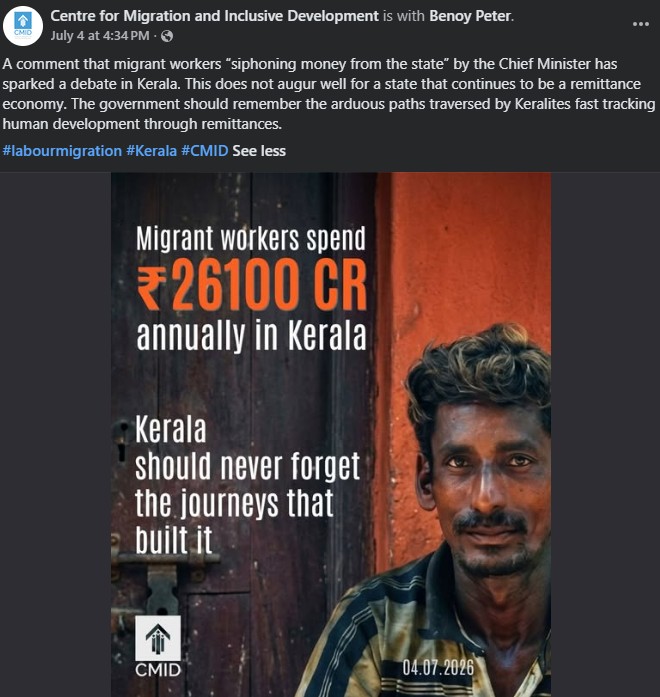
Reverse remittance, he pointed out, traditionally refers to money sent to migrants from their home country, such as parents in Kerala supporting children studying abroad.
Benoy Peter also disputed the suggestion that migrant workers contribute little to Kerala’s economy. Based on migration studies, he estimates that interstate workers spend nearly one-third of their income within Kerala on rent, food, transport, clothing, healthcare and daily necessities, contributing more than ₹26,000 crore annually to the state’s economy.
Unlike many local consumers who increasingly shop online, he noted, migrant workers largely depend on neighbourhood shops, local transport and rented accommodation, generating substantial economic activity.
He cautioned that portraying migrant workers as an economic burden risks reinforcing xenophobic attitudes against a workforce that has become indispensable to Kerala’s construction, hospitality, agriculture and manufacturing sectors.
Ironically, he observed, Kerala itself has prospered for decades because millions of Malayalis exercised the very same right to migrate elsewhere and send money home.
That comparison lies at the heart of the debate.
Kerala’s own migration history makes it difficult to criticise workers for supporting families hundreds of kilometres away. The state celebrated Gulf remittances as the backbone of its economy for half a century.
Today, it relies equally on migrant workers from Bihar, West Bengal, Odisha, Assam and Uttar Pradesh to keep its economy functioning as the local workforce ages and young Malayalis migrate overseas.
The controversy therefore reveals a deeper structural transition rather than merely a disagreement over terminology.
The Chief Minister is right to acknowledge that Kerala’s economy is changing. Migration patterns are shifting, Gulf employment is no longer expanding as rapidly as before, and the state’s demographic profile is ageing.
Understanding how money flows into and out of Kerala is a legitimate public policy exercise. His proposal for a scientific study could provide valuable evidence for future economic planning.
At the same time, experts argue that the debate must avoid turning interstate workers into convenient scapegoats. Their earnings are not draining Kerala’s economy; they are the product of labour that helps build its roads, homes, hotels, factories and infrastructure.
The real question is not whether migrant workers send money home. They always will, just as Malayalis abroad have done for generations.
The real challenge is whether Kerala can generate enough new investment, industry and productivity to ensure that wealth created within the state grows faster than the money flowing out. That, not reverse remittance, is the economic debate Kerala must now confront.