According to the Ministry of Home Affairs, India reiterated its commitment to sharing expertise in police training, counter-terrorism operations and forensic investigations…reports Asian Lite News Desk
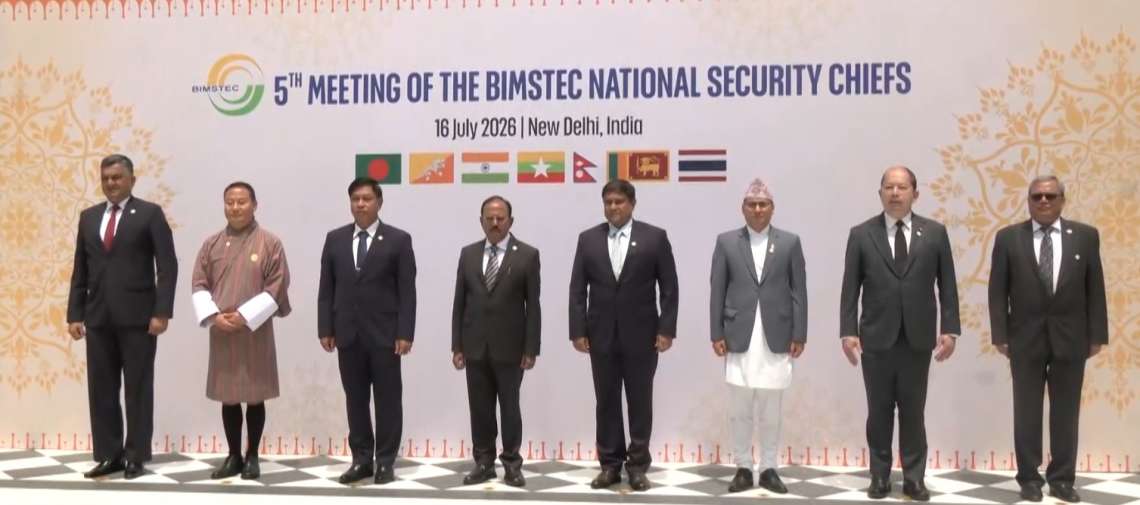
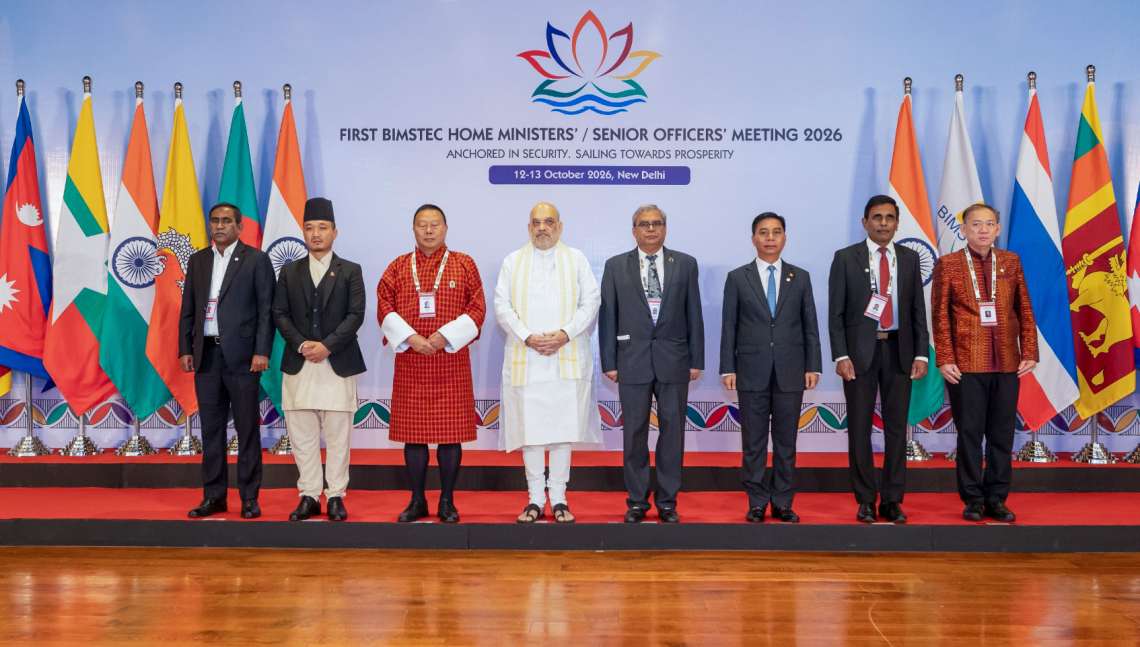
India and six other BIMSTEC member states have approved five initiatives to strengthen regional security, targeting human trafficking, drug smuggling, money laundering, terror financing, illicit financial flows and disaster preparedness.
The agreements were adopted at the first BIMSTEC Home Ministers’ Meeting in New Delhi, chaired by Union Home Minister Amit Shah. The meeting also adopted the Delhi Declaration, reaffirming the members’ commitment to security, trust and cooperation across the Bay of Bengal region.
The five initiatives include a convention against trafficking in persons, a plan of action on drug control, a memorandum of understanding on capacity building to combat money laundering and terror financing, a plan to prevent illicit financial flows, and a regional plan to improve preparedness and coordination during natural disasters.
The convention against human trafficking aims to strengthen cooperation on prevention, criminalisation of the offence, and the protection and rehabilitation of victims.
The drug control plan focuses on tackling the illegal trafficking of narcotic drugs, psychotropic substances and precursor chemicals. The agreement on money laundering and terror financing provides for expert training, the exchange of best practices, and cooperation in financial intelligence, investigations, asset recovery and countering proliferation financing.
The plan on illicit financial flows seeks to identify their sources, risks and channels across member countries.
The disaster preparedness initiative proposes coordinated regional risk planning, joint exercises, early warning systems, disaster mapping, training centres, information sharing, research and technological innovation. It also includes measures to reduce tsunami risks.
Delhi Declaration targets cross-border crime
The Delhi Declaration places emphasis on combating cross-border terrorism, terror financing, radicalisation, drug and human trafficking, cybercrime and organised crime.
It calls for stronger information sharing, mutual legal assistance, extradition, capacity building and effective implementation of existing agreements and action plans. The declaration also highlights the protection of human trafficking victims involved in online scams.
According to the Ministry of Home Affairs, India reiterated its commitment to sharing expertise in police training, counter-terrorism operations and forensic investigations.
The meeting also discussed regional disaster management cooperation, including a proposed BIMSTEC Centre for Disaster Management in Jamnagar, Gujarat.
Addressing the gathering, Shah called for a coordinated regional response to terrorism, organised crime, drug trafficking, human trafficking and emerging cyber threats. He reiterated India’s policy of “zero tolerance” towards terrorism and stressed the importance of timely intelligence sharing, financial investigations, mutual legal assistance and extradition.
Shah said member countries must ensure terrorist networks cannot find safe havens, recruit members, provide training, raise funds or operate against neighbouring countries from within the region.
He added that mutual legal assistance and extradition, in accordance with national laws and applicable treaties, could strengthen efforts to bring criminals to justice.
The home minister identified five priority areas for cooperation: drug control; counter-terrorism and legal cooperation; repatriation of fugitive criminals; cybersecurity and cybercrime investigations; and institutional cooperation and capacity building.
He also called for closer coordination among law enforcement, intelligence and border management agencies to tackle illicit financial transactions and terror financing.
On narcotics trafficking, Shah described the trade as “death trafficking”, arguing that its consequences extend beyond the illegal drug market to the lives of young people, society and future generations. He said no single country could address the problem alone.
The Bay of Bengal Initiative for Multi-Sectoral Technical and Economic Cooperation (BIMSTEC) comprises Bangladesh, Bhutan, India, Myanmar, Nepal, Sri Lanka and Thailand. The regional grouping connects South and Southeast Asia and promotes cooperation across several sectors.
ALSO READ-