Mallikarjun Kharge has urged Narendra Modi to convene an all-party meeting on delimitation, as opposition parties warn against changes that could disadvantage states…reports India Daily News Desk
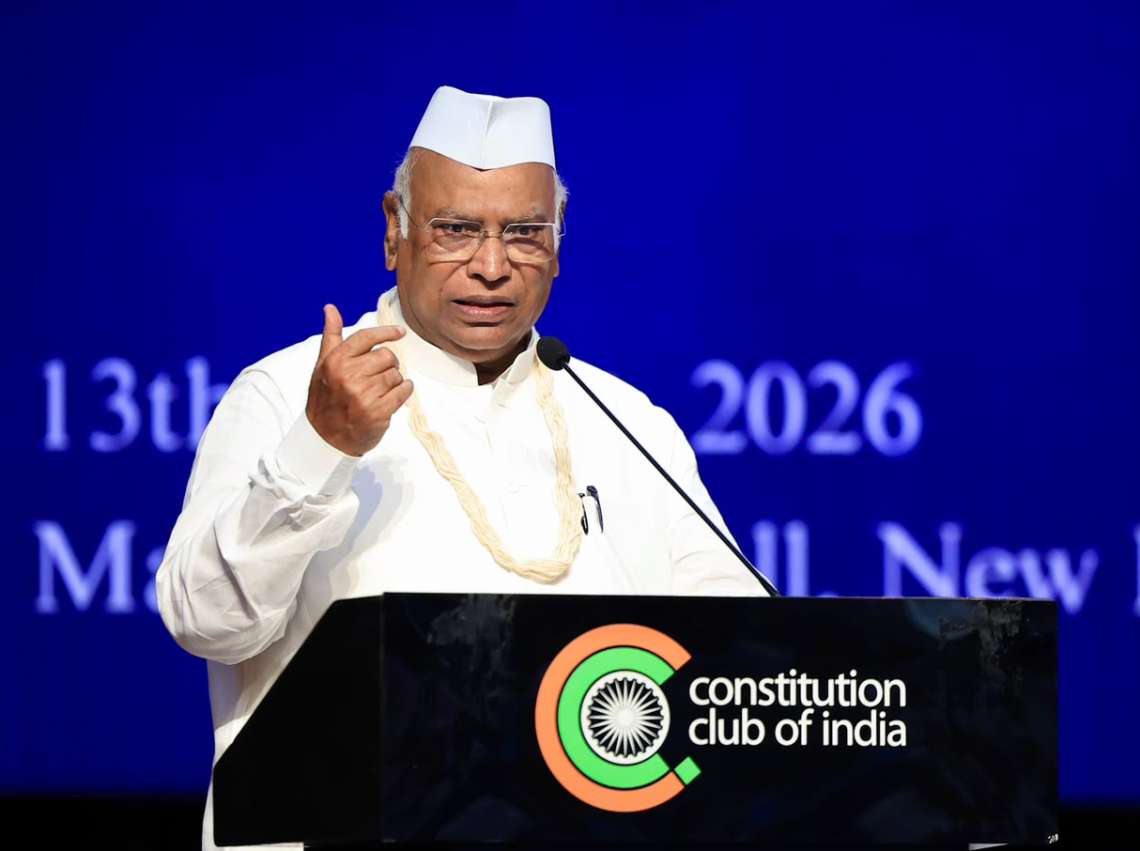
Congress president Mallikarjun Kharge has written to Prime Minister Narendra Modi for the fourth time, demanding an all-party meeting on proposed delimitation reforms and warning the government against pushing through major constitutional changes without wider consultation.
The Leader of the Opposition in the Rajya Sabha raised concerns over the proposed redrawing of parliamentary constituencies, arguing that political parties and other stakeholders must be given sufficient time to examine the government’s plans before any fresh legislation is brought to Parliament.
In his letter dated Friday, 16 October, Kharge also questioned the delay in formally proroguing Parliament’s Monsoon Session, which was adjourned sine die on 13 August.
“It has already been 64 days since the Monsoon Session of Parliament was adjourned sine die on August 13, 2026 and both Houses of Parliament are yet to be prorogued. This scenario is unprecedented,” he wrote.
Kharge said the government should clarify the status of the session and convene an all-party meeting before finalising any new delimitation proposals.
“Please convene an All-Party meeting to have a detailed discussion on your new proposals before they are finalised for consideration in Parliament,” he said, urging the government to allow political parties to deliberate among themselves and consult other stakeholders.
Opposition parties back Kharge’s demand
The Congress and the Dravida Munnetra Kazhagam (DMK) backed Kharge’s demand, arguing that delimitation was necessary but should not be carried out in a way that disadvantaged particular states.
Congress MP Sukhdeo Bhagat told IANS that the government should consult political parties before introducing legislation capable of bringing about significant political changes.
“If you are bringing in a policy that has the potential to bring about radical political changes in the country, the government should make an effort to hold an all-party meeting,” he said.
Bhagat argued that opposition parties should not be sidelined during discussions on reforms with far-reaching consequences for political representation.
DMK spokesperson T.K.S. Elangovan said delimitation could not be stopped but warned against conducting the exercise according to the Bharatiya Janata Party’s preferences.
“Delimitation cannot be stopped, but it should not be carried out the way the BJP wants. That would be unfair, which is why we have been fighting against it,” he said.
CPI(M) Rajya Sabha MP V. Sivadasan also raised concerns about the implications for states that had pursued different population-control policies.
He argued that the BJP was attempting to link women’s reservation with delimitation, potentially delaying the implementation of the quota. Sivadasan said his party supported women’s reservation but opposed tying it to the proposed delimitation exercise.
Kharge’s latest intervention follows the defeat of the Constitution (131st Amendment) Bill, 2026, in the Lok Sabha on 17 April. The legislation was part of a package of proposals linked to expanding the strength of the Lok Sabha and implementing women’s reservation ahead of the 2029 general election.
The constitutional amendment failed to secure the required two-thirds majority. The government subsequently withdrew the accompanying Delimitation Bill, 2026, and the Union Territories Laws (Amendment) Bill, 2026.
Kharge said he had first written to Modi on 11 April, requesting an all-party meeting before the introduction of constitutional amendments on delimitation. He said he repeated the request on 16 July and 27 August before sending his latest letter.
“You did not do so,” Kharge wrote, referring to his initial request. He criticised the short notice given before the April special session and warned against a repeat of that approach.
“Please do not once again try and bulldoze a far-reaching Constitutional Amendment Bill through Parliament as you attempted earlier,” he added.
Delimitation involves redrawing constituency boundaries and determining representation in elected legislatures. Any major changes can have significant political implications, particularly for states concerned about how population differences may affect their share of parliamentary seats.
Opposition parties have sought clarity on the government’s latest proposals, including how representation would be distributed and how the exercise would relate to the implementation of women’s reservation.
The government has not announced a response to Kharge’s latest demand in the material available for this report. Whether an all-party meeting will be convened remains unclear.
ALSO READ-Pakistan Politician Wanted in UK Grooming Case Wins PoK Election