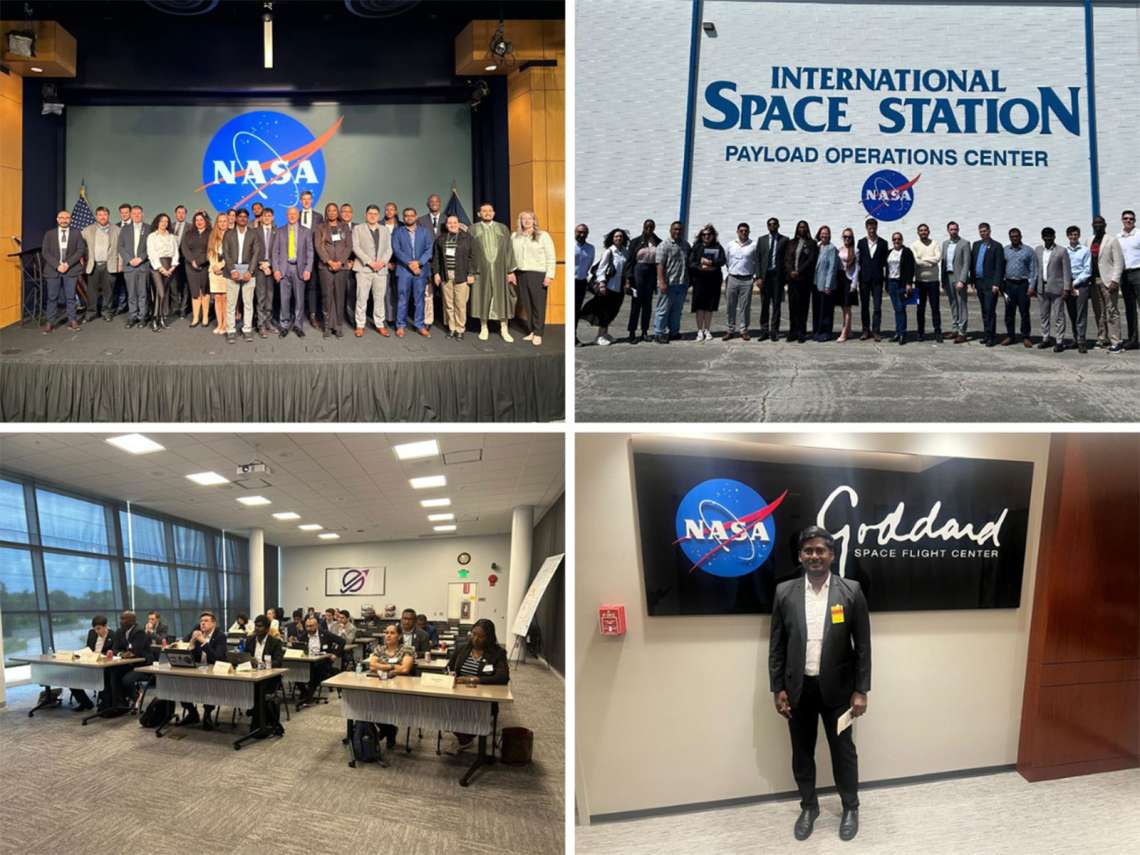
Born into a farming family in rural India, his early life was shaped by hardship. With his father working as a tractor driver and financial instability a daily reality, young Anand walked nearly six kilometres every day to attend school
In a story that sounds more like cinema than reality, Dr Anand Megalingam, Founder and CEO of Space Zone India, has emerged as one of the most striking faces of India’s private aerospace revolution. Selected by the US Department of State for an elite international leadership programme and given advanced exposure through NASA, he was among just 23 global experts chosen for the prestigious initiative.
For many, it is a remarkable achievement. For Dr Megalingam, it is deeply symbolic. Years earlier, while pursuing aerospace research opportunities, his US visa application had been rejected. At the time, he was already gaining recognition in India for work in reusable rocket technology, but access to American institutions remained out of reach.
He did not protest. He did not quit. Instead, he returned to the launchpad.
Born into a farming family in rural India, his early life was shaped by hardship. With his father working as a tractor driver and financial instability a daily reality, young Anand walked nearly six kilometres every day to attend school. Those who know him say that discipline, not privilege, became his foundation.
His academic journey was equally unconventional. He first enrolled in Computer Science for stability, but soon realised it was not his calling. After dropping out, he chose to rebuild his path in Aeronautical Engineering, where he excelled, graduating as a gold medallist with a 9.8 CGPA.
That turning point led to the creation of Space Zone India, founded with his father as his first collaborator. Built from limited resources and an ambitious vision, the company has since become one of India’s most closely watched private aerospace ventures.
Under his leadership, Space Zone India achieved a milestone with RHUMI-H, India’s first reusable hybrid rocket launched from a mobile platform, followed by the RHUMI-1 mission, which drew international attention and established the company as an emerging player in Asia’s private space sector.
Then came another setback. His US visa was denied again. Yet his response became widely shared: “Borders are for people. Innovation has no boundaries.”
Ironically, the same country that once rejected him later selected him for a highly competitive NASA-linked programme. During the month-long engagement, he worked alongside NASA scientists, defence specialists and Space Force officials, gaining exposure to advanced aerospace systems and mission frameworks.
“The training was deeply valuable, and we will apply these learnings to our upcoming missions in India,” he said after returning.
Now, Space Zone India is preparing for its next leap: the RHUMI Twin Mission, which aims to launch two rockets simultaneously from Chennai, a first for India’s private aerospace sector. The organisation is also expanding into satellite systems, reusable launch technology and defence-oriented innovation.
For Dr Megalingam, the mission remains clear: “Our goal is not just to launch rockets, but to build technologies that make India stronger, safer and globally respected.”
From a rural school walk of six kilometres to NASA’s corridors of research, his journey has become a symbol of India’s evolving space ambition—where persistence, not privilege, is shaping the future of exploration.