The Asian Development Bank has identified the Nepal-India digital payment corridor as a major untapped opportunity to strengthen trade, tourism and remittance flows….reports Asian Lite News Desk
The Asian Development Bank (ADB) has identified the Nepal-India digital payment corridor as a major untapped opportunity that could significantly boost trade, tourism and remittance flows, urging both countries to accelerate cross-border payment integration.
In its report, Advancing Digital Payments in Nepal: Infrastructure Upgrades and Policy Development for Enhanced Trade Facilitation, released earlier this week, the Manila-based lender said billions of dollars move annually between Nepal and India through trade and remittances, yet most transactions still rely on conventional banking channels despite rapid advances in digital payment technology.
“The economic relationship between India and Nepal creates a digital payment opportunity that remains largely untapped,” the report quoted Nepali fintech expert Sanjib Subba as saying, adding that interoperable payment infrastructure could improve efficiency for businesses and consumers in both countries.
The report recommended strengthening cross-border payment infrastructure, aligning regulatory frameworks, improving interoperability between payment systems and enhancing market integration to reinforce Nepal’s digital payments ecosystem and facilitate bilateral trade.
It also called for broader investment in domestic digital payment infrastructure, institutional capacity and coordinated governance to support long-term implementation.
In 2024, Nepal Rastra Bank and the Reserve Bank of India signed regulatory terms of reference to integrate Nepal’s National Payments Interface with India’s Unified Payments Interface (UPI).
Since March 2024, Indian travellers have been able to make QR code payments at merchants in Nepal using India’s payment systems through Fonepay and Khalti, two of Nepal’s leading digital payment platforms.
According to the report, daily transactions have increased from around 500 at launch to approximately 2,000 by early 2025, with daily transaction values reaching NPR 6 million (around $42,000). Cumulative transactions since launch have exceeded NPR 1.6 billion (around $11 million).
The report also noted that NEPALPAY QR became available to tourists from China, Italy, South Korea, Malaysia and Singapore in January 2025, expanding Nepal’s digital payment network beyond India.
However, the ADB said reciprocal QR payment services allowing Nepali citizens to make payments in India remain unavailable due to unresolved issues over transaction commission structures.
While Indian users pay a standard 1.95 per cent transaction charge when making QR payments in Nepal, QR payments in India are free, creating uncertainty over who should bear service commissions payable to Nepali banks.
“This situation highlights how differences in fee structures and regulatory approaches between countries can impede the implementation of otherwise technically feasible cross-border payment solutions,” the report said.
The ADB urged both countries to resolve the commission issue to activate the already-developed reciprocal payment system for Nepali users travelling to India.
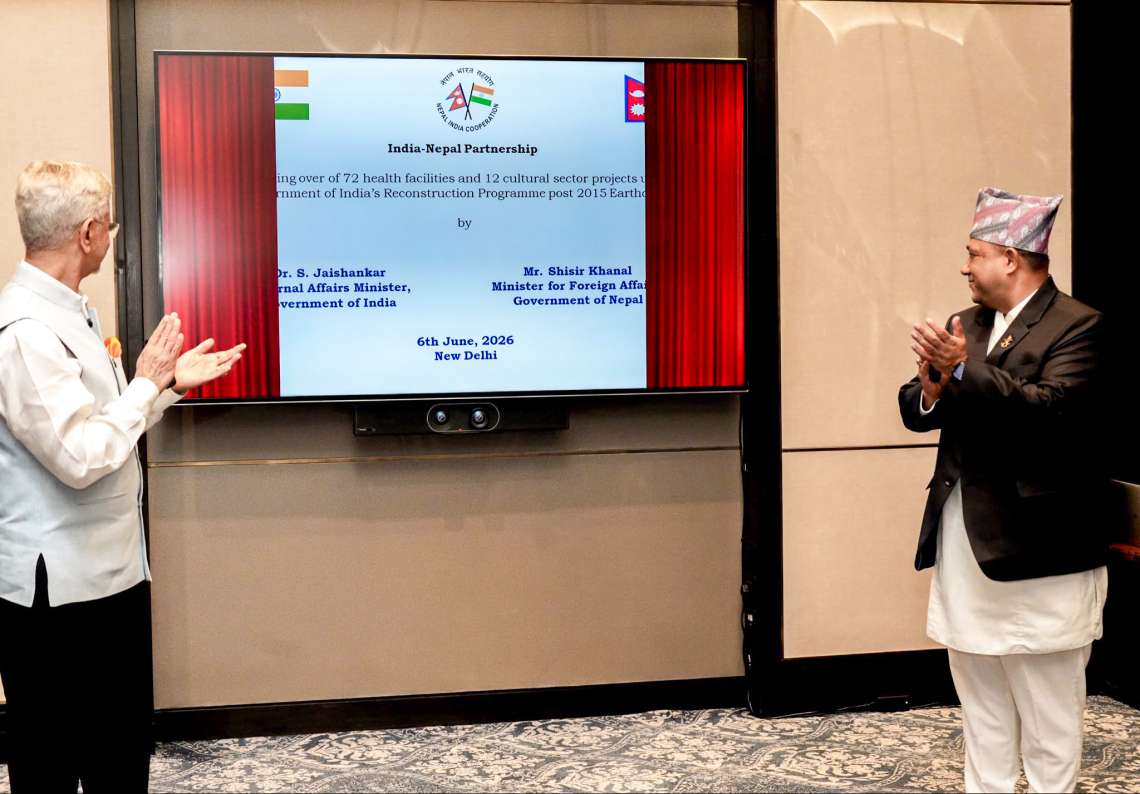
In the meantime, Nepal and India launched a cross-border online fund transfer service in early June, enabling customers to transfer money directly between bank accounts in the two countries.
The service was jointly launched by Nepal’s Foreign Minister Shishir Khanal and India’s External Affairs Minister S. Jaishankar during Khanal’s visit to India, facilitating cross-border remittance transfers for workers employed in either country.
The report also recommended that Nepal adopt a UPI-like payment architecture to simplify cross-border transactions with India, its largest trading partner, and address inefficiencies in bilateral trade payments.