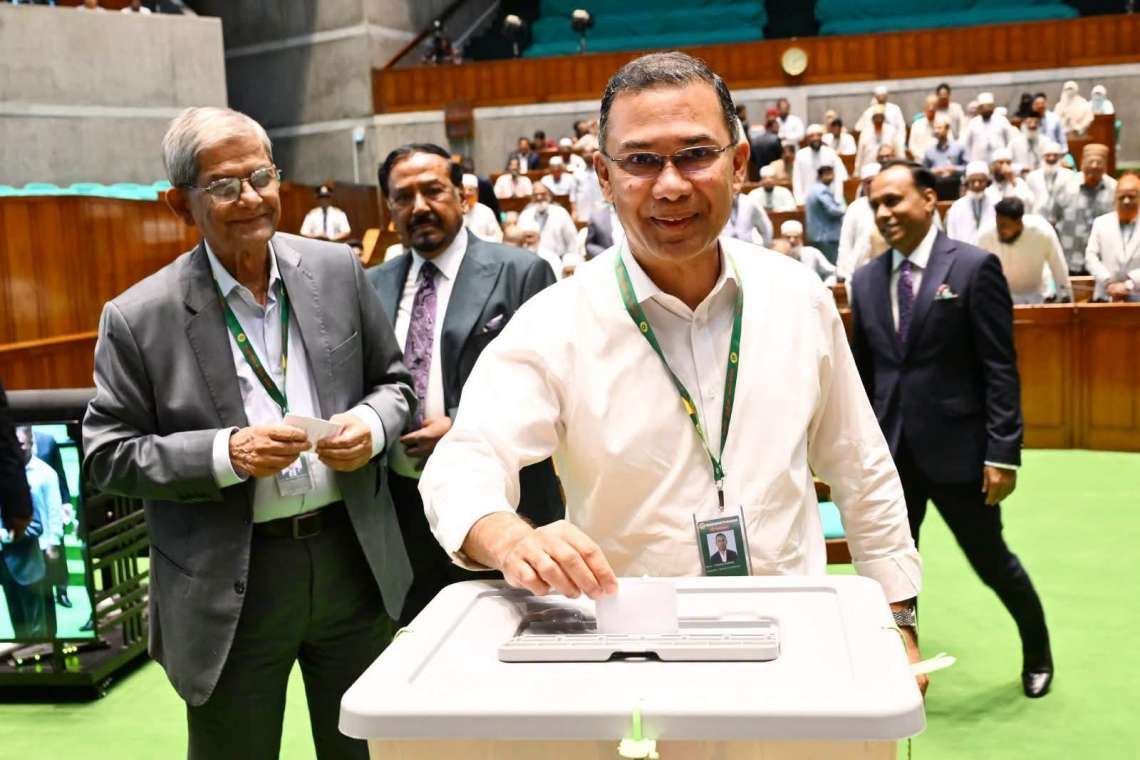
Bangladesh has begun voting for its 23rd President, with BNP nominee Mirza Fakhrul Islam Alamgir facing Oli Ahmed of the Jamaat-e-Islami-led 11-party alliance….reports Asian Lite News Desk
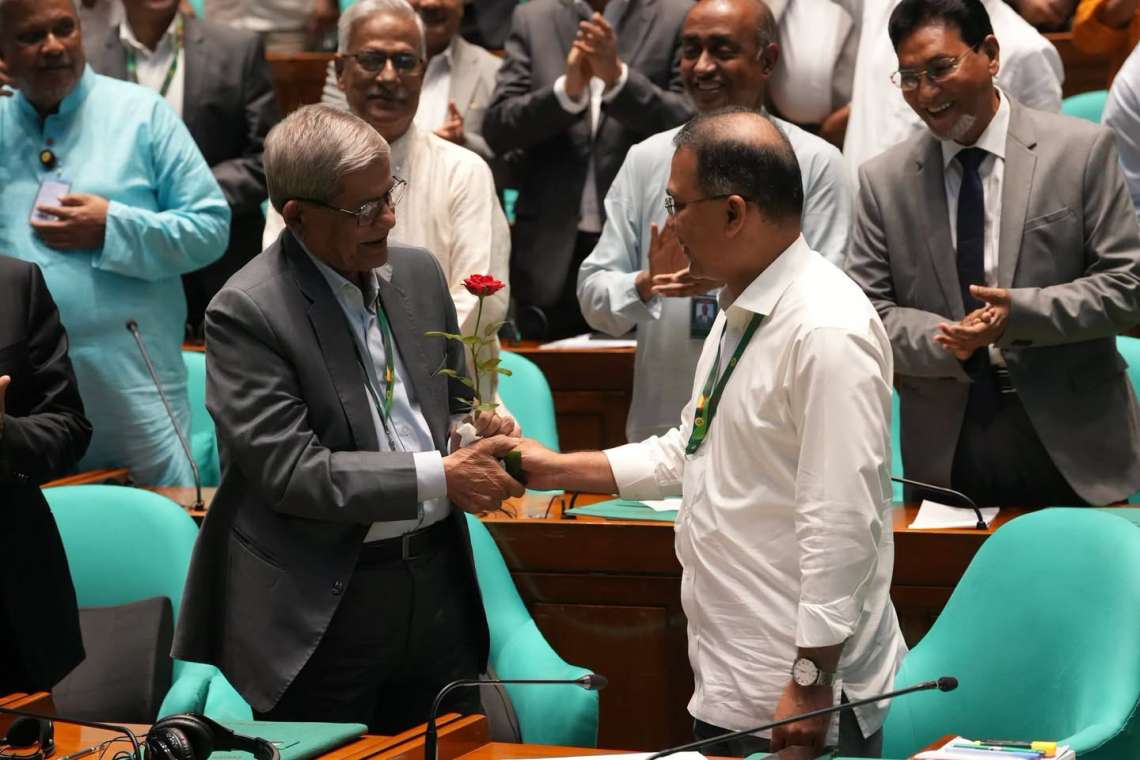
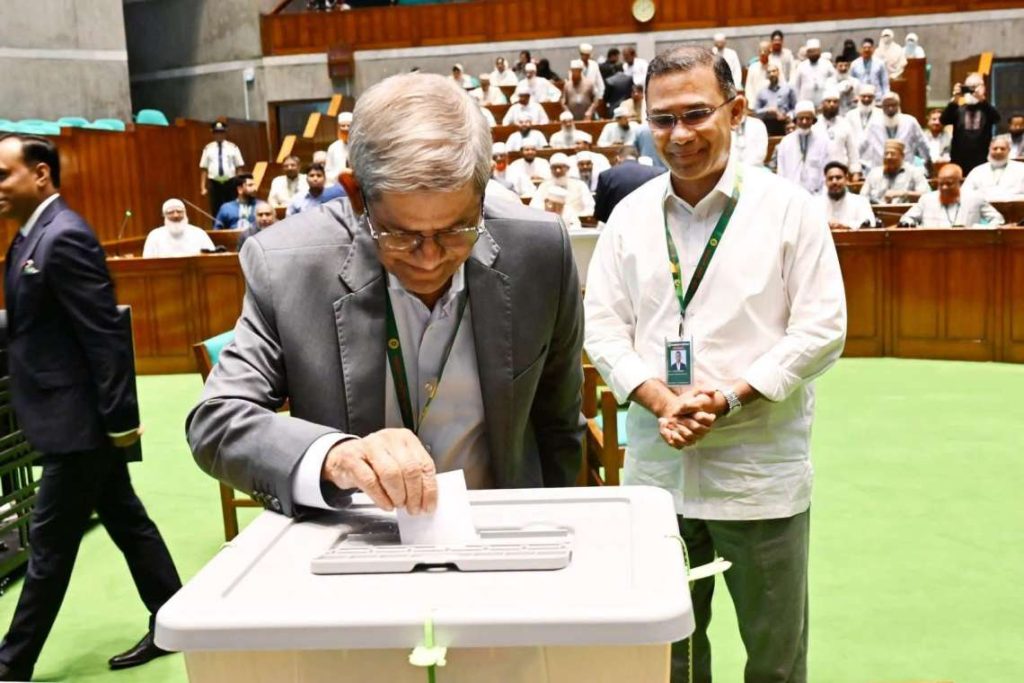
Bangladesh began voting on Thursday to elect its 23rd President, with Prime Minister Tarique Rahman casting his ballot alongside Bangladesh Nationalist Party (BNP) nominee Mirza Fakhrul Islam Alamgir.
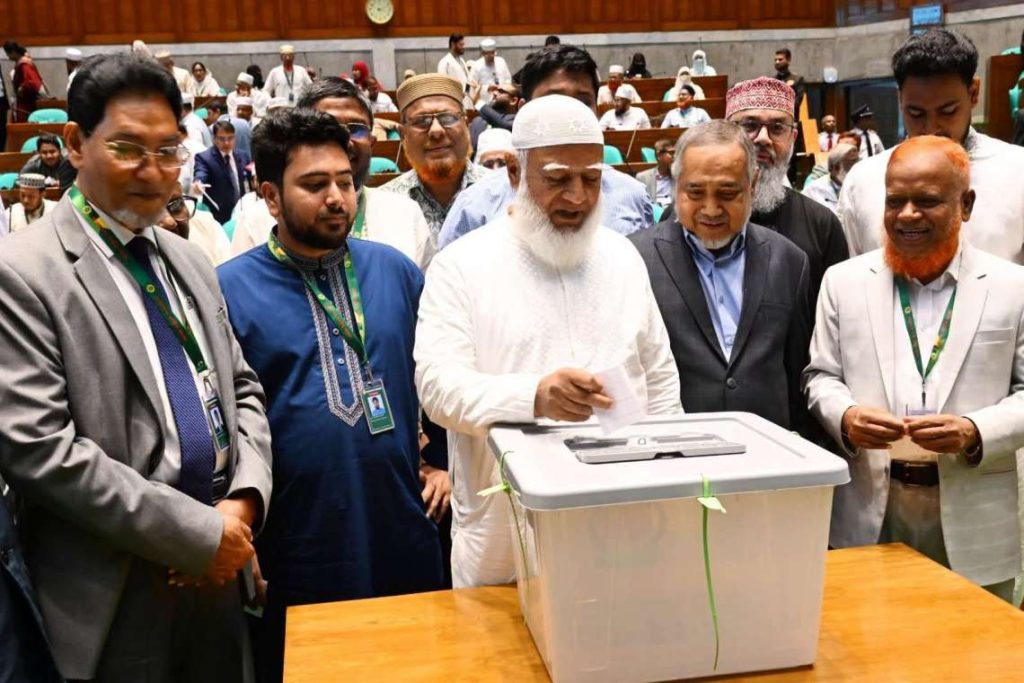
Polling began in the Parliament Session Chamber under the supervision of Chief Election Commissioner and Returning Officer AMM Nasir Uddin.
Two candidates are contesting the election: BNP nominee Mirza Fakhrul Islam Alamgir and Oli Ahmed, who represents the Jamaat-e-Islami-led 11-party alliance. A total of 349 Members of Parliament are eligible to vote, according to Bangladeshi media outlet UNB.
The election marks the first contested presidential poll in more than three decades. Presidents have generally been elected unopposed since 1991, with the last parliamentary presidential election involving a ballot held on October 8 that year.
The election was necessitated by the resignation of President Mohammed Shahabuddin on July 24. Parliament Speaker Hafiz Uddin Ahmed has been serving as acting President since then.
Under Bangladesh’s Constitution, a new President must be elected within 90 days of the office becoming vacant, the Dhaka Tribune reported.
The BNP enters the presidential contest with a clear parliamentary majority following the 2026 general election. The party won 210 seats, while the Jamaat-e-Islami-led 11-party alliance secured 77 seats.
Despite the numerical advantage held by the ruling party, the opposition alliance has fielded a candidate, making the election a contested presidential race.
Senior Supreme Court Appellate Division lawyer Advocate Manzil Morshed told the Dhaka Tribune that the opposition was aware of its chances but said fielding a candidate could serve a political purpose.
“The opposition knows that it will lose the election. Even then, fielding a candidate is a political strategy,” he said.
Asked why the Jamaat-led alliance entered the race despite its likely defeat, Morshed said there was discussion that Jamaat and BNP were closely connected and suggested that the opposition candidate could demonstrate participation in the process.
Election expert Badiul Alam Majumdar, founder of the Dhaka-based civil society platform Shujan, also questioned the competitiveness of the contest, saying: “The presidential election is predetermined. Whoever the ruling party wants will become President.”
The outcome of the election will determine Bangladesh’s next head of state following Shahabuddin’s resignation and end the current period of interim presidential leadership.
The contest has attracted attention because of the return of a parliamentary ballot for the presidency after more than three decades, with the BNP and the Jamaat-led alliance putting forward competing candidates.