BNP nominee Mirza Fakhrul Islam Alamgir has been elected Bangladesh’s 23rd President after defeating Oli Ahmed of the Jamaat-e-Islami-led 11-party alliance….reports Asian Lite News Desk
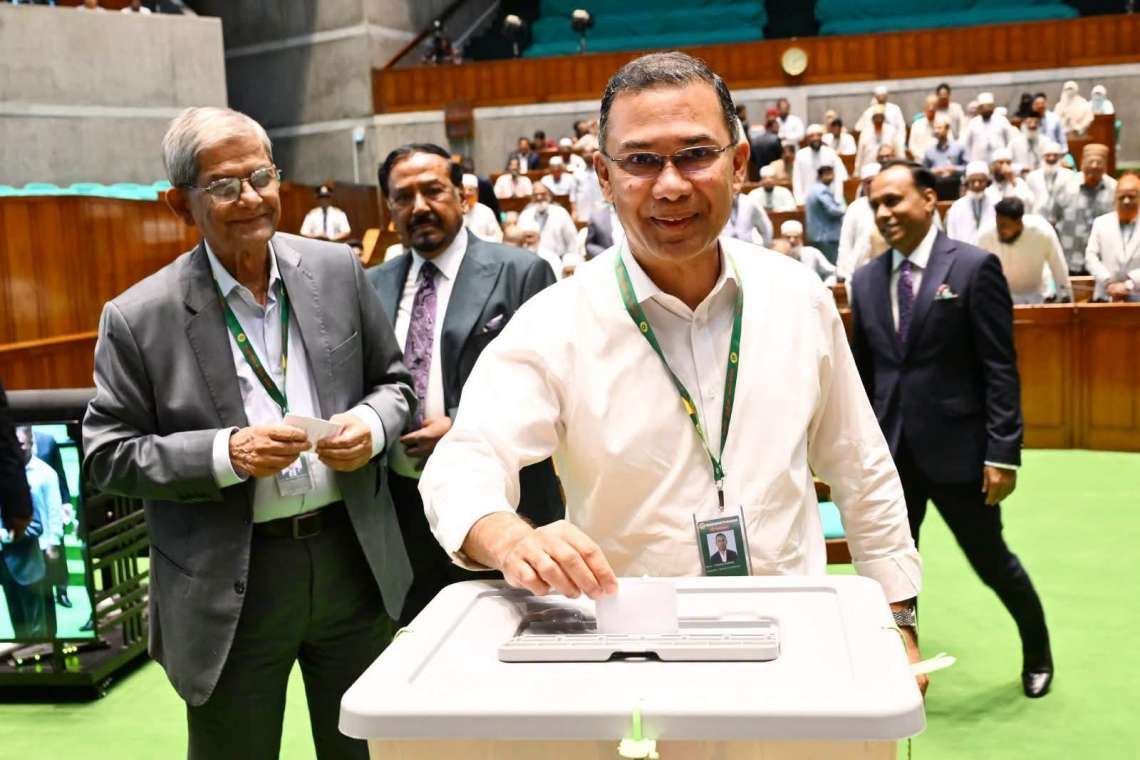
Mirza Fakhrul Islam Alamgir has been elected the 23rd President of Bangladesh after defeating Oli Ahmed, the candidate of the Jamaat-e-Islami-led 11-party alliance, in the country’s first contested presidential election in more than three decades.
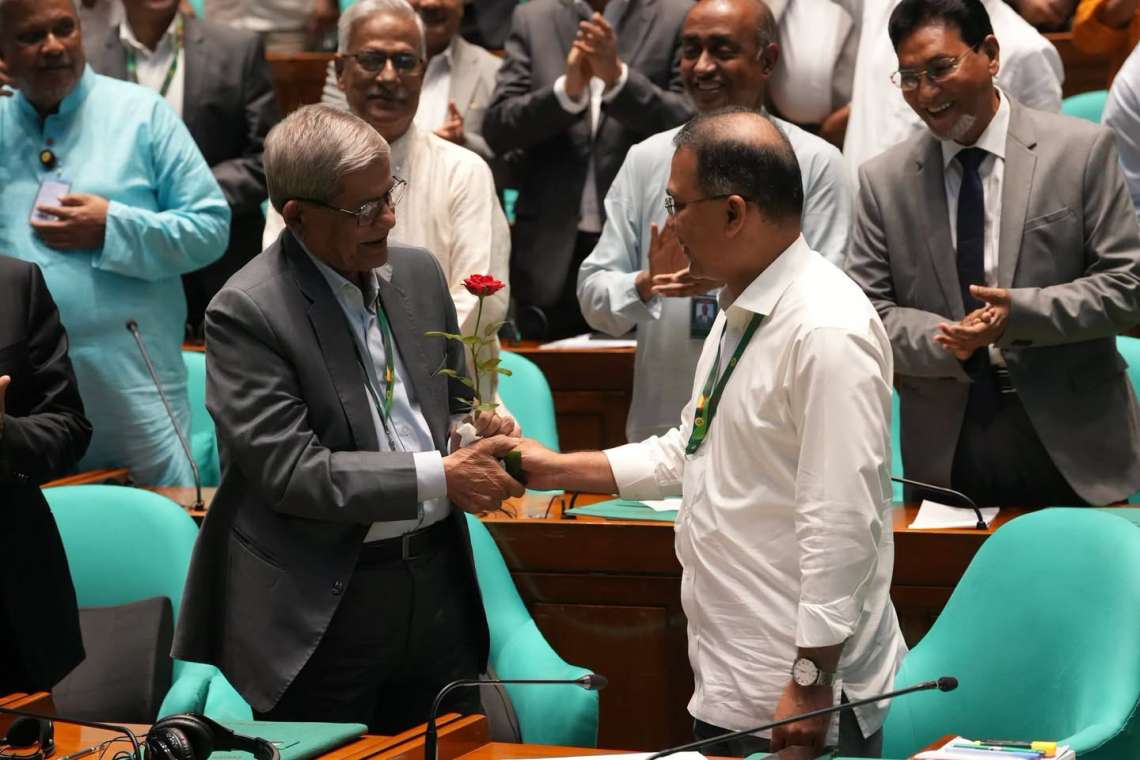
BNP Chairman and Prime Minister Tarique Rahman congratulated Alamgir shortly after the results were announced, presenting him with flowers and extending his best wishes to the newly elected President.
A total of 349 Members of Parliament were eligible to vote in the election. Alamgir was nominated by the ruling Bangladesh Nationalist Party (BNP), while Oli Ahmed, chairman of the Liberal Democratic Party, contested on behalf of the 11-party alliance led by Jamaat-e-Islami.
The election marked the first parliamentary “ballot battle” for the presidency since October 8, 1991. Bangladesh had largely followed a practice of electing Presidents unopposed since then.
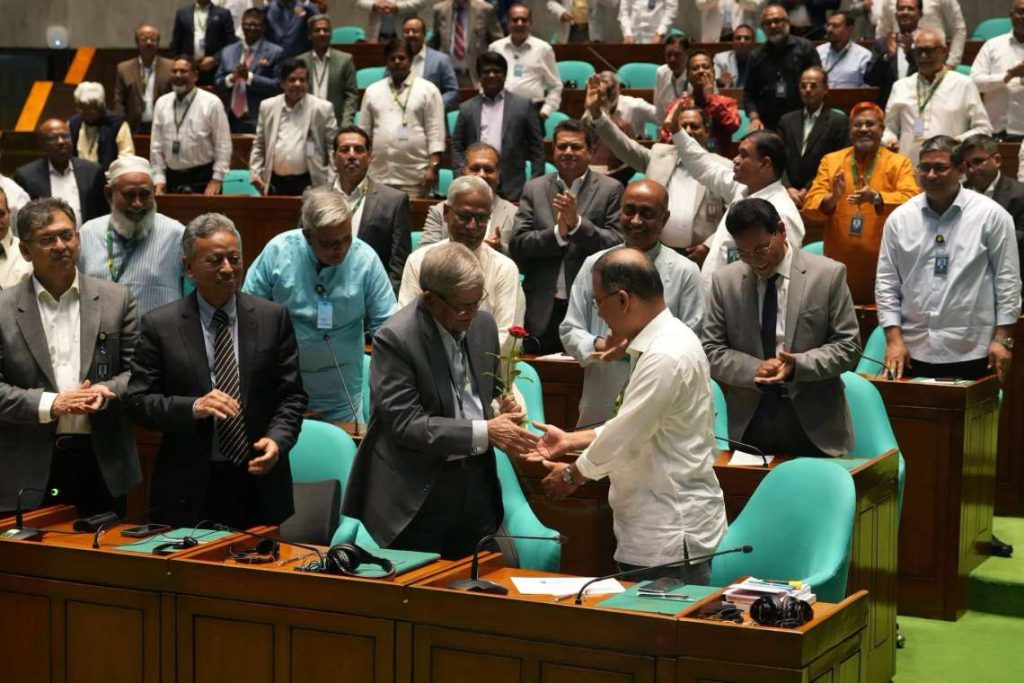
The election was held following the resignation of President Mohammed Shahabuddin on July 24. Parliament Speaker Hafiz Uddin Ahmed had been serving as acting President pending the election of a successor.
Under Bangladesh’s Constitution, a new President must be elected within 90 days of the presidency becoming vacant.
The BNP entered the contest with a significant parliamentary advantage. In the 2026 parliamentary election, the party won 210 seats, while the Jamaat-e-Islami-led 11-party alliance secured 77 seats.
The opposition alliance nevertheless fielded a candidate, with political observers previously describing the move as a strategy to ensure its participation in the presidential process.
Senior Supreme Court Appellate Division lawyer Advocate Manzil Morshed told the Dhaka Tribune last week that the opposition was aware of its electoral disadvantage but said contesting the election remained politically significant.
“The opposition knows that it will lose the election. Even then, fielding a candidate is a political strategy,” he said.
On the decision by the Jamaat-led alliance to field Oli Ahmed, Morshed said there had been discussion in political circles about the relationship between Jamaat and the BNP, adding that the candidacy could demonstrate the opposition’s participation in the process.
Election expert Badiul Alam Majumdar, founder of the Dhaka-based civil society platform Shujan, had also expressed scepticism about the competitiveness of the presidential race.
“The presidential election is predetermined. Whoever the ruling party wants will become President,” he said.