Bangladesh enters campaign mode on January 22 as Yunus vows February 12 polls, security tightens nationwide, and political tensions rise over women’s representation and alliance rifts….reports Asian Lite News
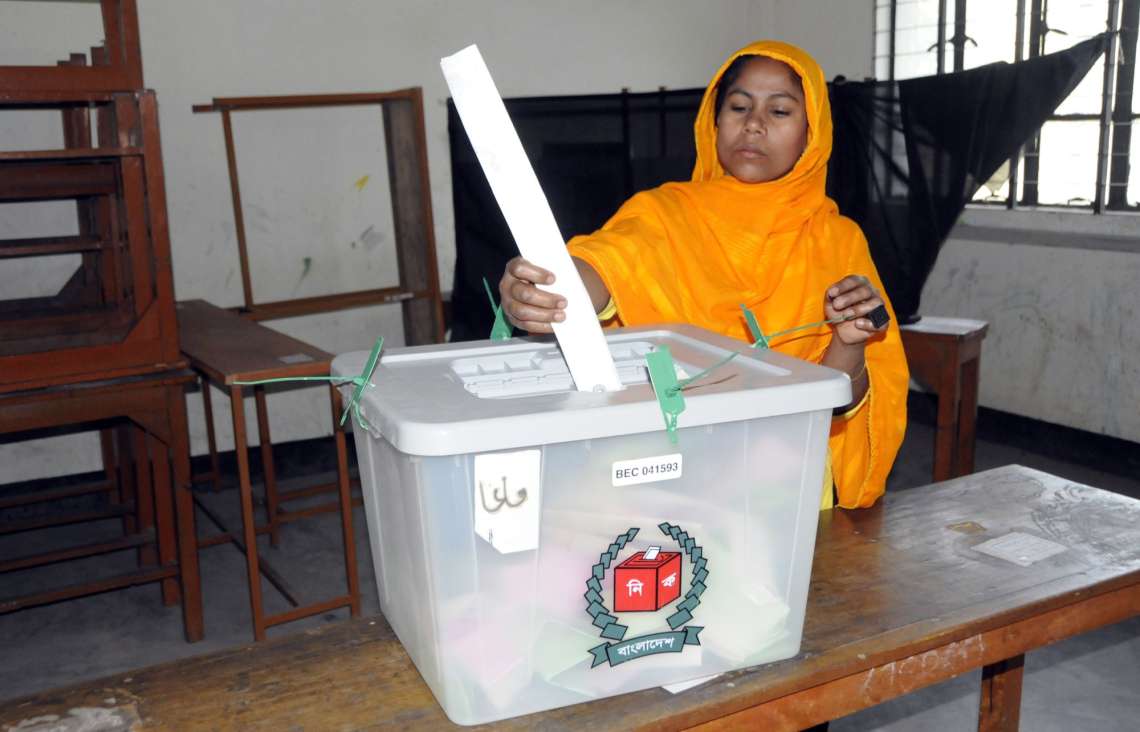
Bangladesh is set to enter a crucial phase of its democratic transition as the public voting campaign for the parliamentary general election formally begins on January 22. With polling and a nationwide referendum scheduled for February 12, the interim government has stepped up security preparations while political parties grapple with internal rifts and growing criticism over the marginalisation of women candidates.
The coming weeks are expected to be closely watched at home and abroad, as authorities attempt to balance security, political competition and public confidence in a vote being held under an interim administration.
Campaign launch under tight security
Ahead of the campaign’s start, security measures have been significantly intensified across the country. The army has established checkpoints at strategic locations, police forces are on special alert, and border areas have been placed under heightened surveillance. Officials say the measures are precautionary and aimed at ensuring a peaceful campaign period and smooth conduct of the polls.
As part of this broader security posture, Bangladesh has suspended visa-on-arrival facilities from January 15 to February 15. The temporary suspension applies to all countries that normally receive on-arrival visas, including neighbouring Bhutan and Nepal, and has been formally communicated to the respective governments. A senior government official said the decision was taken to maintain administrative control and minimise risks during the sensitive election and referendum period.
Yunus draws firm line on February 12 polls
Interim government Chief Adviser Muhammad Yunus has sought to put to rest speculation about possible delays, emphatically reaffirming that elections will be held on February 12 as scheduled. Yunus made the remarks during a meeting with two former senior US diplomats, Albert Gombis and Morse Tan, at the State Guest House Jamuna in Dhaka.
“No matter who says what, elections will be held on February 12 — not a day before, not a day after,” Yunus said, according to an official statement. He stressed that the vote would be free, fair and peaceful, and conducted in what he described as a “festive atmosphere”. The interim administration, he added, would remain completely neutral and ensure a level playing field for all political parties before handing over power to a democratically elected government once results are announced.
Yunus acknowledged a surge in fake news and what he described as deliberate attempts to spread confusion around the polls. However, he said the government remained resolute in its mandate and noted that citizens were becoming increasingly alert to misinformation, including AI-generated content aimed at undermining trust in the electoral process.

Women candidates’ participation sparks concern
Even as preparations for the vote gather pace, concern has mounted over what is being described as the lowest-ever participation of women candidates in Bangladesh’s electoral history. According to figures released by the Election Commission, only 109 of the 2,568 candidates contesting the February 12 polls are women — just 4.24 per cent — despite women making up roughly half of the country’s population and electorate.
The issue has triggered sharp criticism from civil society groups and former political leaders, who have termed the situation a “matter of shame” for the country’s political system. At a recent event in Dhaka examining the gap between parties’ commitments and actual practice, speakers questioned the credibility of repeated assurances about gender-inclusive elections.
Women’s rights groups and activists reiterated their opposition to reserved seats for women, arguing that quotas undermine genuine political empowerment. Instead, they called for women to contest and win elections directly on merit. Forum leaders also pointed to the electoral arithmetic, noting that excluding nearly half the population from meaningful representation raises fundamental questions about democratic legitimacy.
Data reported by leading Bangladeshi media outlets highlights stark disparities across parties. Radical Islamist parties such as Jamaat-e-Islami and Islami Andolan Bangladesh have fielded hundreds of candidates without nominating a single woman. The Bangladesh Nationalist Party, despite having been led by a woman for decades, has allocated tickets to only a small number of women candidates.
Islamist alliance rifts deepen ahead of polls
Political uncertainty has been further compounded by emerging cracks within the Jamaat-e-Islami-led alliance, as disagreements over seat-sharing intensify ahead of the February vote. According to local media reports, only eight of the alliance’s eleven partners have finalised arrangements with Jamaat, while key groups such as Islami Andolan Bangladesh and Bangladesh Khelafat Majlis remain at odds.
Negotiations, which have dragged on for months, reportedly broke down just before the nomination deadline, prompting both Jamaat and Islami Andolan to submit nominations in hundreds of seats. Jamaat has filed candidates in 276 constituencies, while Islami Andolan submitted nominations in 268, effectively setting the stage for direct competition rather than a consolidated Islamist front.
Insiders say dissatisfaction over the number of seats on offer has fuelled tensions, with smaller partners warning they may keep candidates in the race where agreements cannot be reached. The rifts underscore broader fragmentation within the political landscape as parties position themselves for a high-stakes election.