Human Rights Watch says three laws passed by Bangladesh’s Parliament have weakened safeguards and rolled back reforms introduced by the interim government….reports Asian Lite News Desk
Three laws approved by Bangladesh’s Parliament in September have weakened human rights safeguards and reversed reforms introduced by the country’s interim government, Human Rights Watch (HRW) said on Wednesday.
The laws concern the National Human Rights Commission (NHRC), enforced disappearances and the Rapid Action Battalion (RAB), a paramilitary law enforcement unit. HRW said the measures had undermined safeguards intended to strengthen accountability for alleged human rights violations.
The rights group said the new legislation was inconsistent with reform commitments made by the Bangladesh Nationalist Party (BNP) government, which came to power after elections earlier this year.
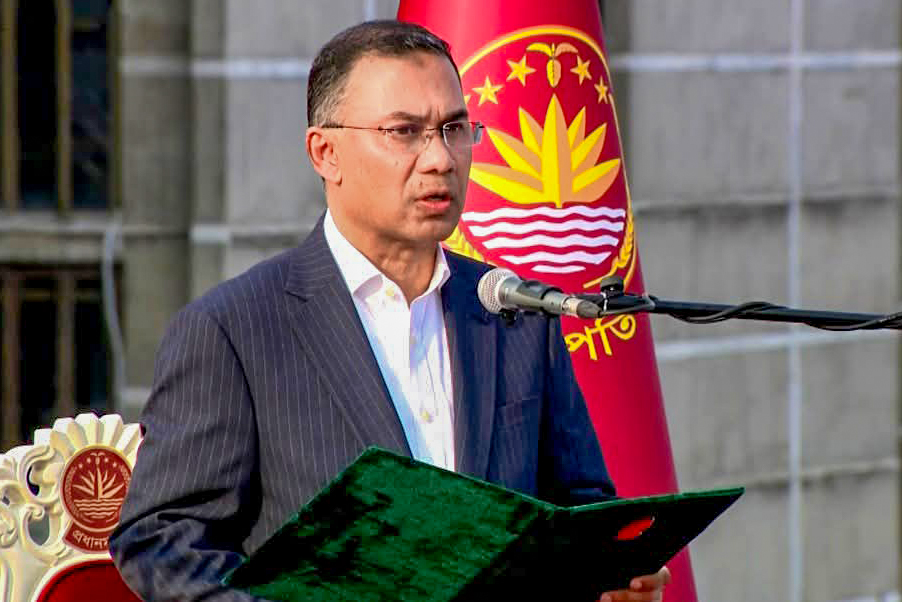
According to HRW, the government of Prime Minister Tarique Rahman has legislated changes that reduce the independence of the NHRC and limit its ability to investigate allegations involving security forces.
Under the law passed on September 6, following a walkout by opposition legislators, the commission cannot directly investigate alleged rights violations by security agencies, HRW said.
Instead, the NHRC can request a report from the agency accused of the violation. HRW said a vaguely worded provision appears to allow the commission to open its own inquiry if the agency fails to respond or if its report is considered unsatisfactory.
The new law also restores greater government control over the appointment of NHRC commissioners and reduces the commission’s budgetary and administrative independence, according to HRW. The rights group said the status and independence of the National Preventive Mechanism had also been weakened.
The changes reverse some provisions introduced by the interim government, which ruled Bangladesh between August 2024 and February 2026. Those measures had expanded the NHRC’s powers to investigate alleged abuses by security forces and inspect detention facilities.
HRW said another law passed by Parliament on September 6, the Enforced Disappearance Prevention and Redress Act, also rolls back elements of the earlier reforms.
Under the new legislation, allegations of enforced disappearance are to be investigated by a security agency other than the one implicated, according to HRW. The group said powers previously given to the NHRC to monitor, inspect and investigate detention facilities had also been removed.
The legislation also changes the standard for command responsibility in enforced disappearance cases. HRW said the previous framework allowed responsibility where officers knew or should have known about violations and failed to prevent them, while the new law requires evidence of direct orders.
On September 10, Parliament passed the Special Response Battalion Act, formally renaming the Rapid Action Battalion as the Special Response Battalion (SRB).
The new force began operating on September 16. HRW said personnel, powers and property, including records, were transferred from RAB to the SRB and that even the force’s logo remained unchanged apart from replacing the letters RAB with SRB.
RAB has previously faced international scrutiny over allegations of extrajudicial killings, enforced disappearances and torture. The United States has also imposed targeted sanctions on several former senior RAB officers over alleged serious human rights abuses.
HRW said the new legislation did not provide sufficient safeguards, training, oversight or accountability mechanisms for the renamed force.
“The new government’s efforts to shield security forces from scrutiny and accountability offer no reason to trust that killings and disappearances will remain a thing of the past,” HRW Asia Director Elaine Pearson said.
HRW has urged Bangladesh’s international partners, including the European Union and the United Kingdom, to raise concerns with the government over its human rights policies.
The organisation also called for stronger oversight of the SRB, including independent external monitoring, safeguards governing arrests and detention, human rights vetting of personnel and preservation of records from the former RAB.
HRW said the government should ensure that its legislation and institutions comply with international standards, including the Paris Principles governing national human rights institutions.