Bangladesh’s politics have rarely been calm, but mass arrests, contested trials and the politicisation of court proceedings have steadily eroded public trust…reports Asian Lite News
Backed by a two thirds parliamentary majority, the Tarique Rahman led Bangladesh Nationalist Party government has taken office amid high public expectations, with rebuilding trust in the judiciary emerging as one of its most urgent tasks.
According to a report, the justice system has in recent years generated growing public unease rather than reassurance, placing the onus on the new administration to deliver transparency, accountability, and meaningful reform.
Writing for Bangladesh’s leading newspaper, The Daily Star, Md. Arifujjaman, Deputy Solicitor under Bangladesh’s Ministry of Law, Justice and Parliamentary Affairs, stated that the new BNP government has inherited both institutional challenges and a legacy of scepticism. Restoring trust, he added, therefore, will need confronting the past mistakes openly.
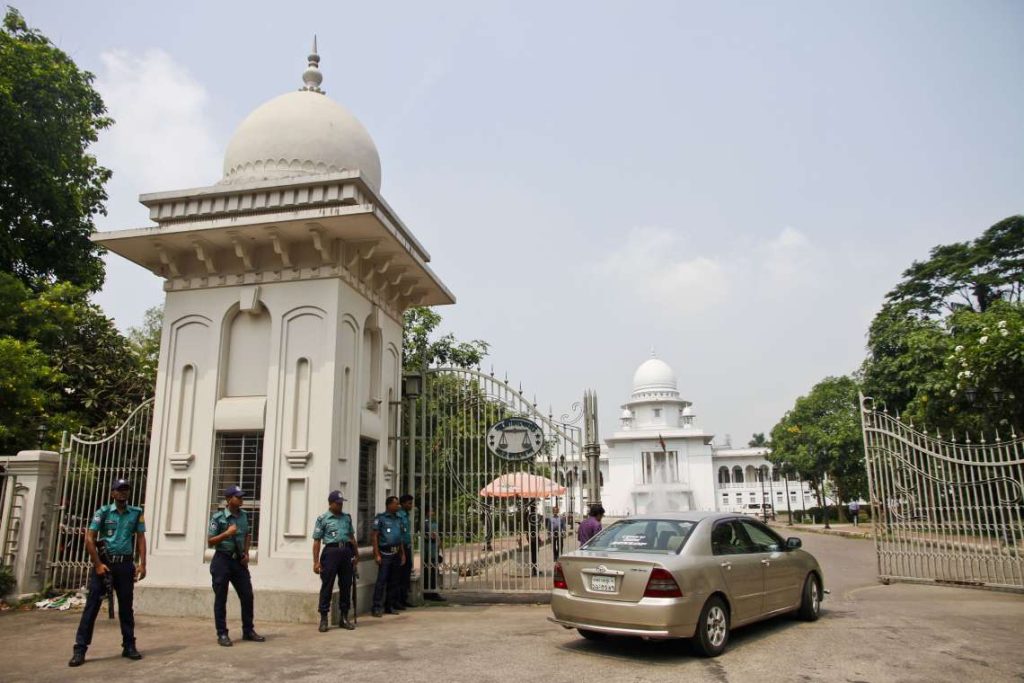
“Laws that enabled mass arrests and broad prosecutorial discretion, particularly under the guise of national security or digital regulation, must be carefully reviewed and refined to prevent abuse. Judicial appointments and disciplinary mechanisms need to be insulated from partisan influence,” Arifujjaman said.
“Cases widely perceived as politically motivated may warrant principled review to ensure fairness. Crucially, political leaders must exercise restraint: public commentary on ongoing cases or pressuring of investigators erodes confidence. Institutional culture evolves slowly, but leadership that respects boundaries can accelerate sustainable reform,” he added.
According to the legal expert, while Bangladesh’s politics have seldom been placid, mass arrests, disputed trials, and the intertwining of political conflict with judicial proceedings have gradually undermined public confidence.
Arifujjaman noted that restoring trust cannot be achieved through speeches or legislative calculations but will develop gradually, case by case, as citizens witness whether the law is applied consistently, irrespective of political affiliation. He further stressed that the independence of the judiciary must be practiced, not merely proclaimed.
“A two-thirds majority in parliament can make or amend statutes with ease, but it cannot compel public belief. That must be earned through visible fairness, procedural rigour, and a demonstrable departure from the patterns that have led many in Bangladesh to question whether justice was blind, or merely blindfolded depending on the circumstance,” he mentioned.
Arifujjaman emphasised that if the new government can keep the law free from partisan influence, it will accomplish more than institutional reform.
It will reaffirm, he said, the foundational ideal of Bangladesh: that “power is subordinate to principle, and that courts exist not to shield the powerful but to protect the rights of all.”
“ For a country long harbouring democratic aspirations, the next chapter will be written on the steady, unglamorous work of restoring faith in justice. Whether those courtrooms can once again command trust may prove the defining test of Bangladesh’s democratic resilience,” Arifujjaman noted.