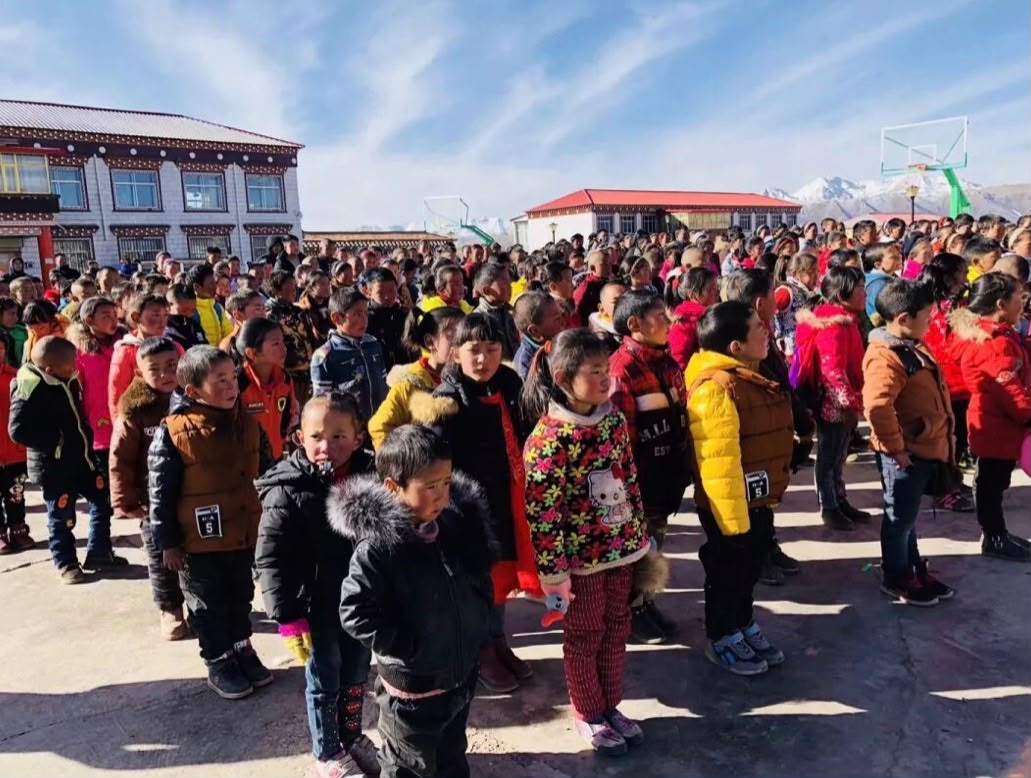
China has reportedly closed three Tibetan schools in Golog, raising concerns over Tibetan-language education, cultural identity and children’s rights….reports Asian Lite News Desk
Chinese authorities have shut down at least three privately run Tibetan schools in Golog Tibetan Autonomous Prefecture within a few weeks, affecting hundreds of children and raising concerns about access to education in the Tibetan language. The closures have prompted allegations of a broader effort to move Tibetan children into state-run institutions where Mandarin Chinese is the main language of instruction, according to a report by the Central Tibetan Administration (CTA).
The report, published on October 20, cited sources in the region and said increasing surveillance of telephone and internet communications had made it difficult to obtain independent information from Tibetan areas.
One of the institutions affected was the Golog Tadrak Orphan School in Tabo Village, Machen County, which authorities reportedly closed on September 2, 2026. Established in 2005 with funding from the late Dr Tawu Lobsang Palden and his wife, who lived in Germany, the school provided education and shelter to more than 300 children who had lost both parents or came from broken families.
Another institution, the Ra-Gya Jigme Gyaltsen Grassland Girls’ School, also known as Gangjong Tsathang Girls’ School, was reportedly shut down on August 27.
Founded in 2005, the school provided education and vocational training to girls from nomadic herding communities across Ü-Tsang, Kham and Amdo. Its curriculum included Tibetan language, Buddhist philosophy, science, traditional medicine, handicrafts, thangka painting and astrology.
The CTA described the institution as a prominent centre of learning whose graduates had become respected figures in Tibetan society. The report also noted that the same community had experienced another closure in 2024, when authorities shut down the Ra-Gya Gangjong Sherig Norbu Lobling School.
The third institution, a school in Jasak village in Machen County, was reportedly closed at the end of August after local authorities ruled that it could no longer teach in Tibetan.
Officials allegedly instructed the school to use the “national common language”, referring to Mandarin Chinese written in simplified characters. The report said the students were subsequently transferred to nearby government-run boarding schools.
According to the CTA, villagers had established and maintained the school through crowdfunding to preserve the Tibetan language for future generations.
The latest closures follow earlier shutdowns of private educational institutions across Golog. These include the closure of Sengdruk Taktse School in July 2021 and seven additional private schools across Darlag, Machen, Gade and Chikdril counties.
The report also cited the permanent closure of Hungkar Dorje Vocational High School on June 24, 2026. The institution had taught Tibetan language and culture since 2008.
The CTA described the closures as violations of educational, linguistic and cultural rights. It argued that transferring Tibetan children to Mandarin-medium boarding schools could weaken their connection to their mother tongue, religious traditions and cultural identity.
The report also referred to warnings issued by UN human rights experts in 2023 concerning the impact of boarding-school education on Tibetan children. The experts estimated that around one million children were affected by the system, which they characterised as involving “forced assimilation”.
The CTA further argued that the reported closures conflicted with international conventions protecting minority-language education, as well as provisions of China’s Constitution and its Regional Ethnic Autonomy Law.
The allegations highlight continuing concerns over the role of language in education in Tibetan areas and the ability of communities to maintain schools that teach their language and cultural traditions. The account of the closures and their implications was based on the CTA report; the supplied material did not include a response from Chinese authorities.