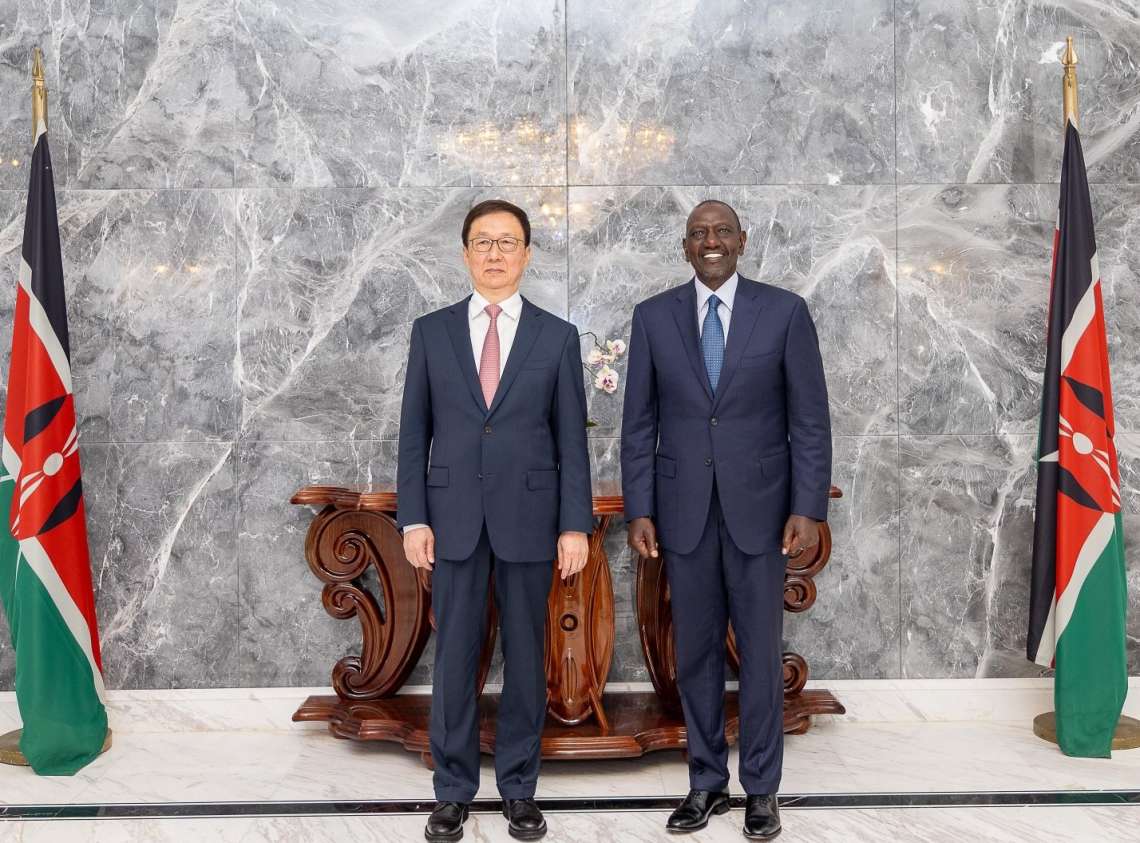
China is stepping up its Africa outreach with a high level three nation tour aimed at deepening strategic, economic, and diplomatic ties across the continent, reports Newsdesk
China is stepping up its diplomatic and economic engagement in Africa through a high level tour spanning South Africa, Kenya, and Seychelles, signalling a renewed push to deepen its strategic footprint across the continent.
The visit, led by Vice President Han Zheng, underscores Beijing’s intent to reinforce partnerships in infrastructure, trade, and key strategic sectors at a time when its global influence is increasingly tied to investments in emerging regions. Central to this outreach is the Belt and Road Initiative, which has reshaped transport, energy, and port infrastructure across East and Southern Africa over the past decade.
Flagship projects such as Kenya’s Standard Gauge Railway continue to symbolise China’s long term commitment to regional connectivity, linking major economic hubs and facilitating trade flows. The railway remains a cornerstone of Beijing’s infrastructure diplomacy in the region, even as new extensions and upgrades are being explored.

In Nairobi, Han Zheng held talks with Kenyan leaders, including Prime Cabinet Secretary Musalia Mudavadi, in a meeting that highlighted the growing depth of bilateral ties. The visit comes amid renewed regional efforts to revive rail links towards Uganda, with Kenyan President William Samoei Ruto and Ugandan President Yoweri Museveni pushing to expand connectivity to the Ugandan border. According to regional reporting, China is expected to continue playing a central role in financing and executing such projects.
Kenya has also been working to broaden its economic relationship with China beyond infrastructure. In a statement, President Ruto said the two countries are strengthening trade ties through a Framework Agreement on Economic Partnership for Shared Development. The deal will allow greater access for Kenyan exports to the Chinese market on a duty free, quota free basis starting in May.
Ruto added that cooperation under public private partnership frameworks is delivering major infrastructure schemes, including the planned extension of the Standard Gauge Railway from Narok to Kisumu and Malaba, as well as the Rironi to Mau Summit highway. He emphasised that collaboration is also expanding into digital innovation, intelligent transport systems, green energy, manufacturing, healthcare, and education.
During Han Zheng’s visit to State House in Nairobi, both sides witnessed the signing of four memoranda of understanding, including an early harvest arrangement on economic partnership and agreements covering agriculture, livestock, and trade cooperation.
Beyond Kenya, China’s engagement across Africa remains broad and multi layered. In South Africa, Beijing has deepened its involvement in mining, advanced technology, and renewable energy, aligning with Pretoria’s industrial and energy transition goals. In Seychelles, Chinese investments have supported port development and tourism infrastructure, reflecting Beijing’s interest in strategically located island nations in the Indian Ocean.

Analysts view the tour as a calculated move rather than routine diplomacy. It highlights China’s effort to consolidate its position as a leading development partner while strengthening its geopolitical influence in a region that is becoming increasingly important in global supply chains and strategic competition.
As African nations balance relationships with Western powers and China, such high level engagements provide both opportunities and challenges. Increased investment and infrastructure development can drive economic growth, but they also underscore the continent’s rising significance in a shifting global order where diplomacy, trade, and strategic interests are closely intertwined.