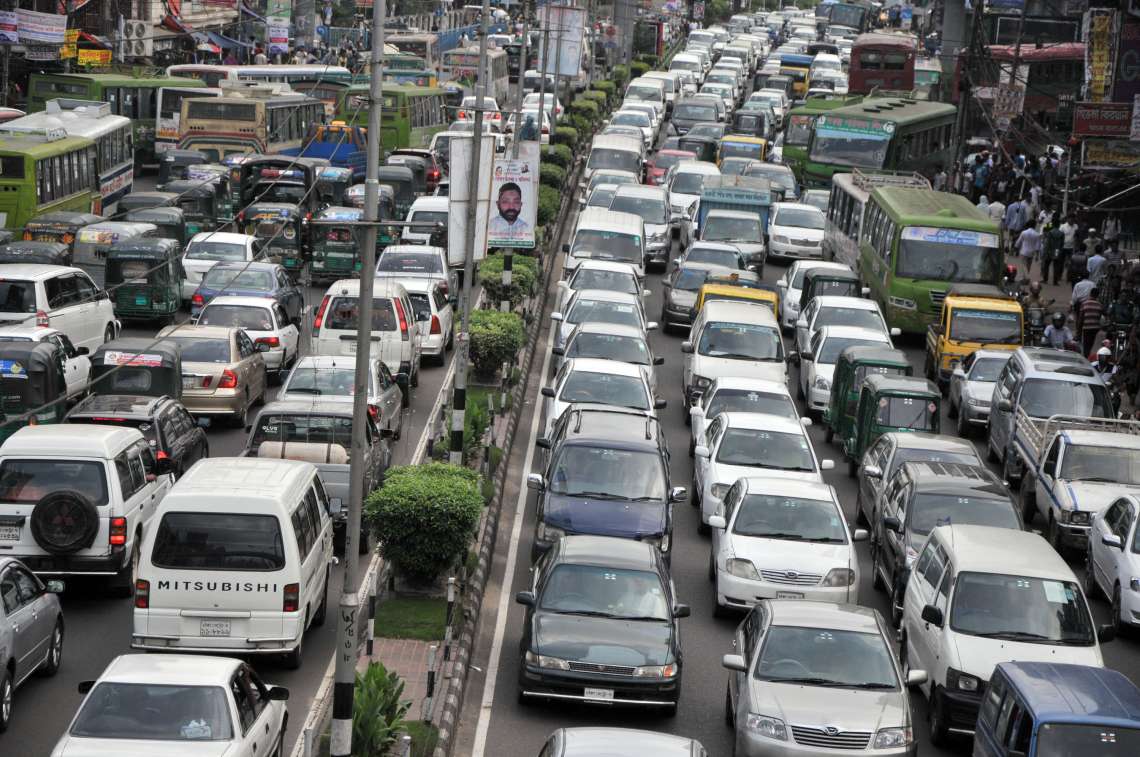
Dhaka recorded an AQI of 213 on Tuesday, placing Bangladesh’s capital at the top of the global pollution rankings….reports Asian Lite News Desk
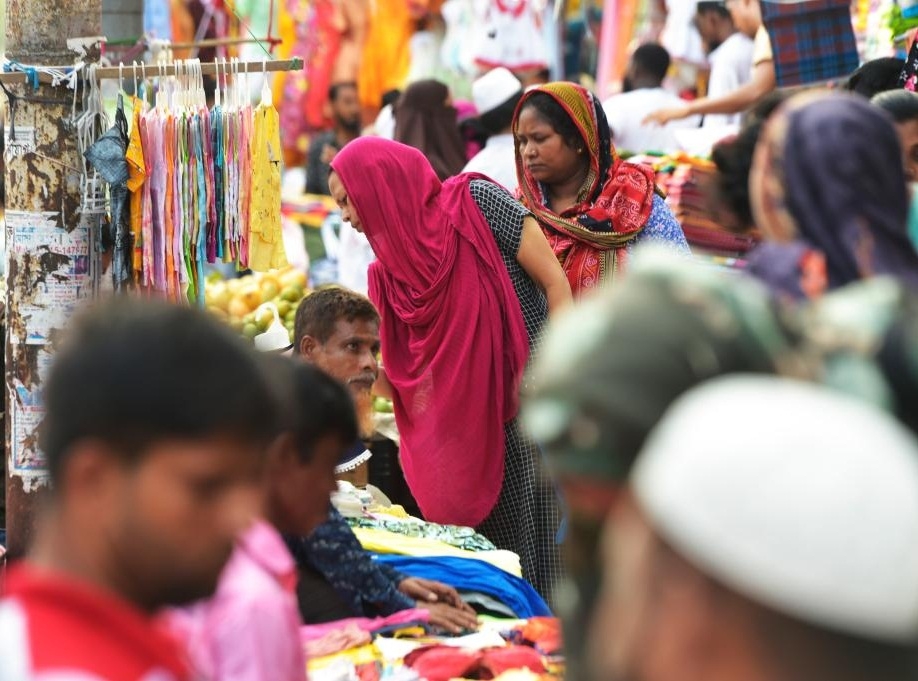
Bangladesh’s capital Dhaka was ranked the world’s most polluted city on Tuesday, recording an Air Quality Index (AQI) of 213 at 11.10am local time. The reading placed the city’s air quality in the “very unhealthy” category, signalling a serious health risk.
According to local media reports, Kuala Lumpur in Malaysia was ranked second with an AQI of 208, while Singapore was third with a reading of 179.
Under the AQI scale, readings between 201 and 300 are classified as “very unhealthy”, while levels between 151 and 200 are considered “unhealthy”. A reading of 101 to 150 is classified as “unhealthy for sensitive groups”, while readings above 301 are considered “hazardous”.
United News of Bangladesh (UNB) reported that Dhaka has struggled with air pollution for years, with air quality typically deteriorating during the winter months and improving during the monsoon season.
The AQI is calculated using concentrations of five major pollutants: particulate matter PM10 and PM2.5, nitrogen dioxide, carbon monoxide, sulphur dioxide and ozone.
Fine particulate matter, particularly PM2.5, is considered a major concern because the particles can penetrate deep into the respiratory system and contribute to serious health problems.
The World Health Organisation (WHO) estimates that air pollution is associated with around seven million deaths worldwide each year. Major health impacts include heart disease, stroke, chronic obstructive pulmonary disease, lung cancer and acute respiratory infections.
WHO data also indicates that almost the entire global population, around 99 per cent, breathes air that exceeds the organisation’s guideline limits and contains high levels of pollutants. Low- and middle-income countries are exposed to some of the highest levels of air pollution.
The latest ranking comes amid continuing concerns over the health and economic impact of air pollution in Bangladesh.
A study conducted by researchers at Jahangirnagar University and reported by Bangladesh-based newspaper The Daily Star in July estimated that PM2.5 pollution causes around 242 deaths every day across six major cities in the country.
The study estimated that PM2.5 pollution was responsible for about 88,240 premature deaths annually in Dhaka, Chattogram, Rajshahi, Khulna, Sylhet and Barishal. That was equivalent to roughly 260 deaths per 100,000 people, according to the report.
Researchers also estimated that Bangladesh loses nearly $23 billion each year because of PM2.5 pollution.
The research was based on data analysed by the Climate Change, Air Quality and Health Research (C2AHR) Unit under the Department of Public Health and Informatics at Jahangirnagar University. The analysis covered the period from 2013 to 2021.
The findings highlight the continuing challenge posed by air pollution in Dhaka and other major Bangladeshi cities, where pollution levels can fluctuate significantly depending on weather conditions and seasonal changes.
As Dhaka continues to experience periods of severely polluted air, health experts and researchers have continued to highlight the need for measures to reduce exposure to fine particulate matter and other harmful pollutants.