India and China will hold fresh border talks in Beijing as New Delhi and Beijing seek to consolidate a gradual thaw in ties…reports Asian Lite News Desk
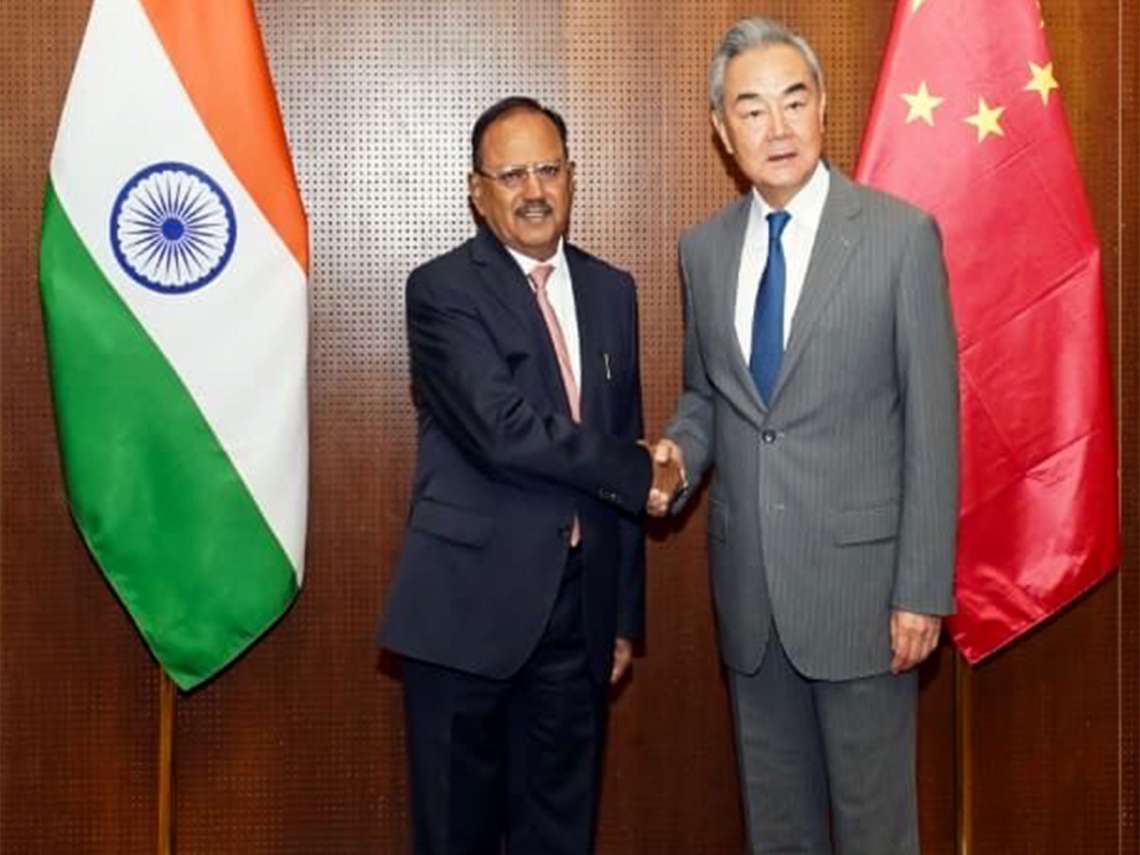
National Security Advisor Ajit Doval and Chinese Foreign Minister Wang Yi are set to hold the 25th round of Special Representatives’ talks on the India-China boundary question in Beijing on Tuesday, as the two countries continue efforts to stabilise bilateral relations.
Wang Yi, who is also China’s Special Representative on the boundary question, will co-chair the talks with Doval, India’s Special Representative and National Security Advisor.
China’s Ministry of Foreign Affairs confirmed the meeting in a post on X, saying the discussions would take place in Beijing on August 25 as agreed by the two sides.
The meeting comes as New Delhi and Beijing seek to build on recent diplomatic engagement following years of tensions along their disputed border.
India’s Ministry of External Affairs said Doval arrived in Beijing on Monday afternoon for a two-day visit at the invitation of Wang Yi. During the visit, the NSA is also scheduled to call on Chinese Vice President Han Zheng.
“NSA Doval and Foreign Minister Wang, who is China’s Special Representative, will hold the 25th round of the Special Representatives’ Talks on the India-China Boundary Question on 25 August. NSA will also call on China’s Vice President Han Zheng during his visit,” the Ministry of External Affairs said in a statement.
The latest talks follow a meeting between Doval and Wang in June on the sidelines of the BRICS National Security Advisers’ meeting in New Delhi.
India described those discussions as “constructive and forward-looking”, with both sides reviewing recent developments in bilateral relations and noting progress towards gradual normalisation.
External Affairs Ministry spokesperson Randhir Jaiswal said the two sides had reviewed developments in their relationship and noted progress towards restoring greater stability.
“The two sides reviewed recent developments in bilateral relations and noted progress towards gradual normalisation. NSA underlined that stable, predictable and constructive bilateral relations contribute to building trust and better understanding between the two sides. The discussions were constructive and forward-looking,” Jaiswal said in a post on X.
The Special Representatives’ mechanism remains an important channel for discussions on the long-standing India-China boundary dispute. The talks have also gained significance amid broader efforts by the two countries to reduce tensions and rebuild diplomatic and economic engagement.
Relations between New Delhi and Beijing deteriorated sharply following the 2020 military confrontation in eastern Ladakh. Subsequent diplomatic and military negotiations have focused on disengagement, de-escalation and maintaining peace and tranquillity along the Line of Actual Control.
Recent high-level engagement has nevertheless indicated a gradual improvement in ties.
Prime Minister Narendra Modi and Chinese President Xi Jinping have held subsequent meetings on the sidelines of international summits, including the Shanghai Cooperation Organisation summit in Tianjin last year. Their engagement followed their meeting in Kazan in October 2024.
During their discussions, the two leaders welcomed what they described as positive momentum and steady progress in bilateral relations.
India has maintained that the relationship between the two countries needs to be based on mutual respect, mutual sensitivity and mutual interests, while differences should not be allowed to develop into disputes.
Following the leaders’ meeting, the Ministry of External Affairs said India and China were development partners rather than rivals.
“A stable relationship and cooperation between India and China and their 2.8 billion peoples on the basis of mutual respect, mutual interest and mutual sensitivity are necessary for the growth and development of the two countries, as well as for a multipolar world and a multi-polar Asia befitting the trends of the 21st century,” the ministry said.
The latest round of talks comes against this backdrop of cautious diplomatic engagement. While the boundary question remains a major challenge, both countries have signalled an interest in maintaining communication and improving predictability in their relationship.
For New Delhi, progress on the boundary issue remains closely linked to the wider normalisation of bilateral ties. Beijing has also indicated a willingness to maintain high-level dialogue as the two sides seek to manage differences.
Tuesday’s meeting is therefore expected to provide another opportunity for India and China to assess progress on the boundary question and discuss the broader relationship.
The talks also come at a time when both countries are navigating a complex regional and global environment, with their relationship carrying implications for security, trade, connectivity and the wider balance of power in Asia.
While the outcome of the discussions will depend on the positions taken by both sides, the continuation of the Special Representatives’ dialogue signals that India and China are keeping diplomatic channels open as they work towards a more stable relationship.