SpaceX’s record IPO lifts Elon Musk into trillionaire ranks, reflecting surging investor demand, AI ambitions and the growing influence of private space companies on global markets, reports London Daily News Desk
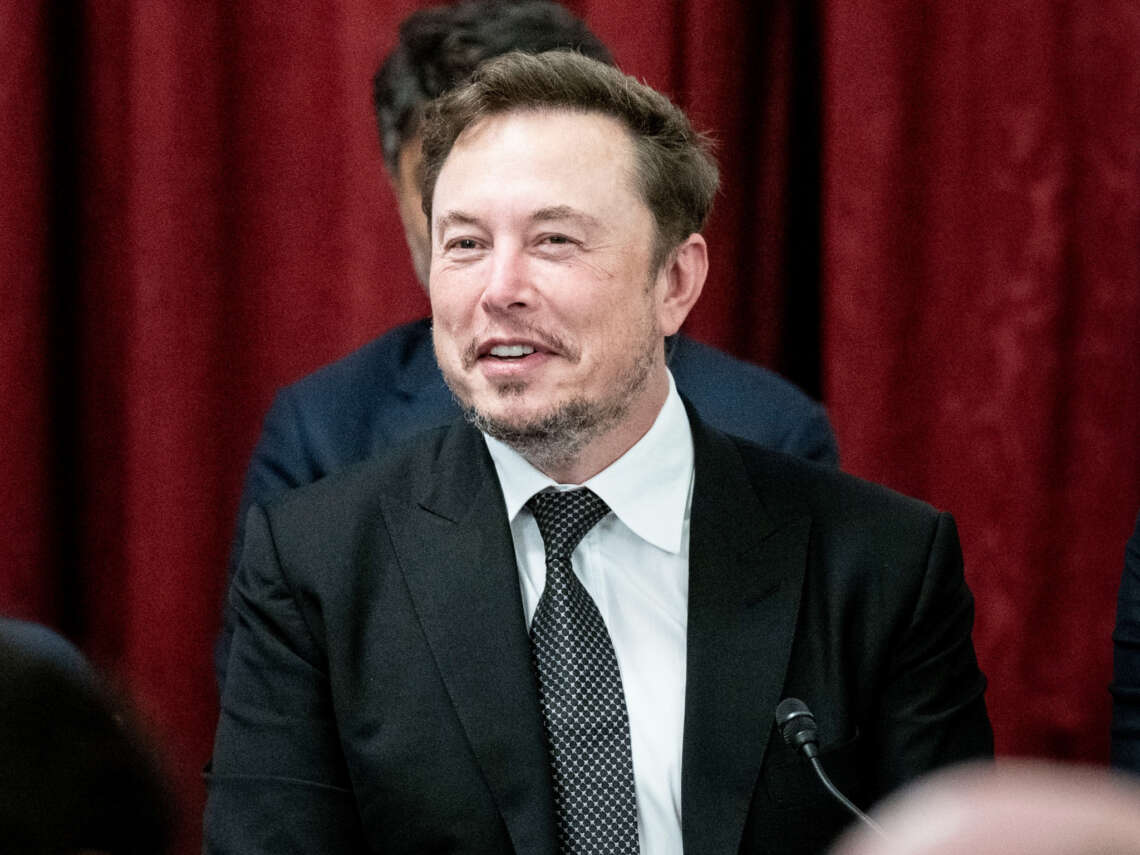
In a watershed moment for global finance and the commercial space industry, Elon Musk has become the world’s first trillionaire following the blockbuster public listing of SpaceX. The company’s debut on Wall Street, the largest initial public offering in history, pushed its valuation beyond $2 trillion and marked a decisive shift in both market dynamics and the strategic importance of private space enterprises.
SpaceX shares surged on their first day of trading, closing at $160.95, a gain of more than 19 per cent from the IPO price of $135. The rally lifted the company’s market capitalisation to roughly $2.1 to $2.2 trillion, placing it among the most valuable publicly traded firms in the United States. Musk, who holds close to half the company, saw his net worth rise past the trillion-dollar mark, securing his position as the richest individual in modern history.
The IPO raised about $75 billion, with demand far exceeding supply. Reports suggest that total investor orders crossed $350 billion, with retail participation alone accounting for more than $100 billion. A significant number of investors were unable to secure allocations, underlining strong appetite for high-growth technology and space-linked ventures.
The listing is being viewed as a test of investor confidence in artificial intelligence-led business models. SpaceX’s integration of AI ambitions, strengthened by its acquisition of xAI earlier in 2026, has positioned the company at the intersection of space infrastructure and next-generation computing. Analysts say the IPO reflects how markets are valuing companies that combine aerospace capability with AI ecosystems.
Founded in 2002, SpaceX began as a high-risk venture focused on reusable rocket technology. The company faced multiple launch failures and periods of financial strain before securing key contracts with NASA, which helped stabilise its operations. Its Falcon rocket programme later proved successful and enabled the company to dominate the global commercial launch market.
Today, SpaceX operates Starlink, the world’s largest satellite internet network. The business generated more than $11 billion in revenue in 2025 and reported a profit, helping offset losses in other divisions that continue to invest heavily in research and development. Government contracts in the United States, covering civil, defence and national security missions, remain a major source of revenue and are estimated to contribute around $4 billion annually.
Looking ahead, SpaceX is planning to expand into orbital computing systems and space-based data infrastructure designed to support artificial intelligence applications. Company filings estimate a total addressable market of $28.5 trillion, with a large share linked to AI-driven opportunities.
At the same time, the scale of SpaceX’s influence has raised concerns. Analysts and policy experts have pointed to the growing concentration of economic and strategic power around Musk and his companies. Researchers at the Center for Strategic and International Studies have highlighted SpaceX’s central role in US space capabilities, warning that such reliance could create leverage risks for government operations.
Despite the strong debut, questions remain about valuation. SpaceX reported a net loss of $4.28 billion in the first quarter of 2026, prompting some analysts to caution that the company’s market price may be running ahead of its financial fundamentals. Comparisons have also been drawn with previous high-profile IPOs that saw early gains fade over time.
The political reaction has been swift. Democratic lawmakers including Senator Elizabeth Warren and Representative Ro Khanna have renewed calls for wealth taxes on the ric