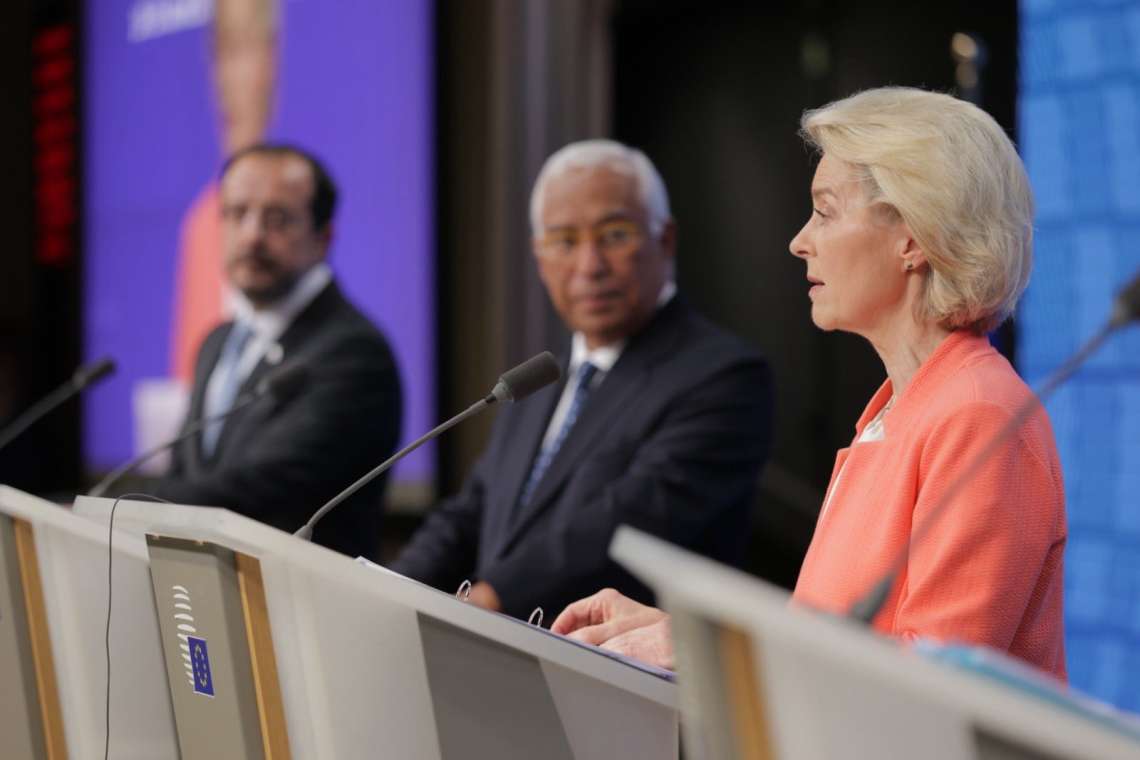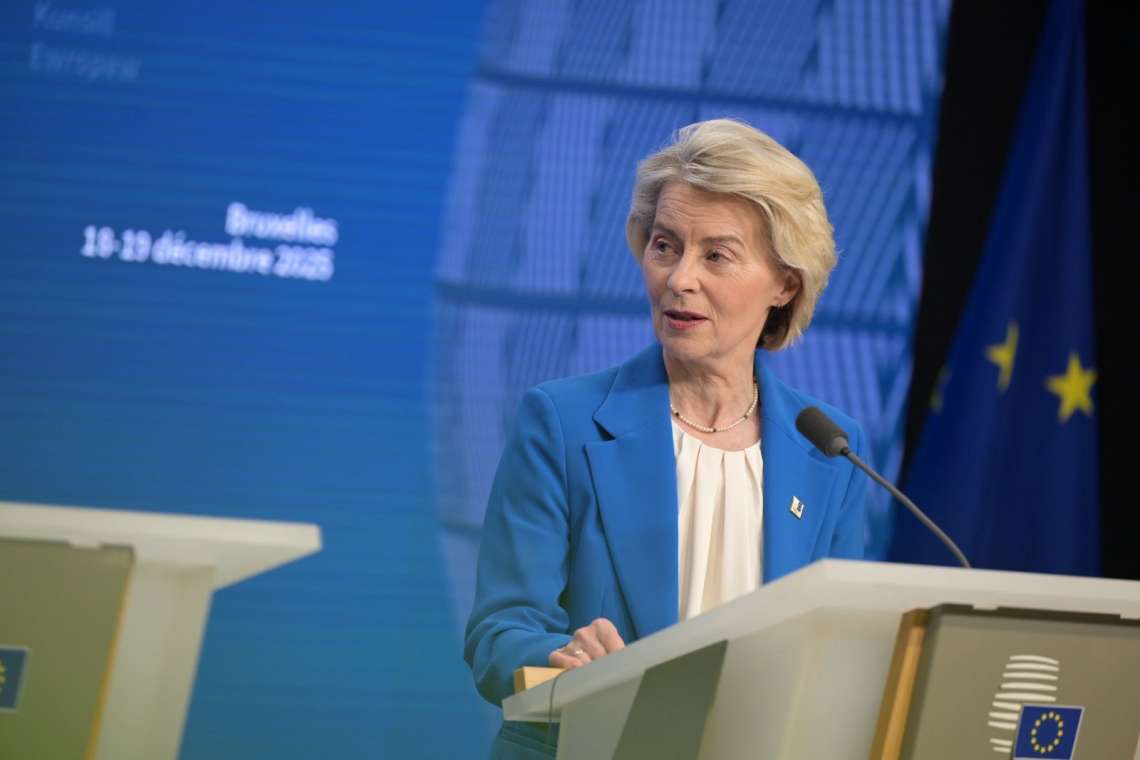
Von der Leyen argued that Europe must develop what she described as a “backbone of strategic enablers” — critical capabilities that would allow the continent to act independently if necessary…reports Asian Lite News
Ursula von der Leyen has called on Europe to assume far greater responsibility for its own security, declaring that the continent must build an independent and credible defence capability amid growing uncertainty over the future of the transatlantic alliance.
Speaking at the Munich Security Conference on Saturday, the European Commission chief said Europe could no longer rely on others to guarantee its safety.
“Europe needs to step up and has to take on its responsibility,” she told delegates, acknowledging that “Europe’s security has not always been seen as our primary responsibility.”
Her remarks come at a time of deepening debate over Europe’s defence posture, following signals from Washington that future US commitments to NATO could be scaled back. The prospect of diminished American engagement has accelerated efforts within the European Union to strengthen its own military capabilities.
Von der Leyen argued that Europe must develop what she described as a “backbone of strategic enablers” — critical capabilities that would allow the continent to act independently if necessary. These include investments in space systems, intelligence infrastructure and deep-strike capabilities.
“We must grow a European backbone of strategic enablers: in space, intelligence and deep-strike capabilities,” she said, adding that long-standing political sensitivities about defence integration should no longer stand in the way.
“No taboo can go unchallenged,” she declared, in an apparent reference to the EU’s mutual defence clause — a collective commitment by member states to assist one another in the event of armed aggression. “I believe the time has come to bring Europe’s mutual defence clause to life.”
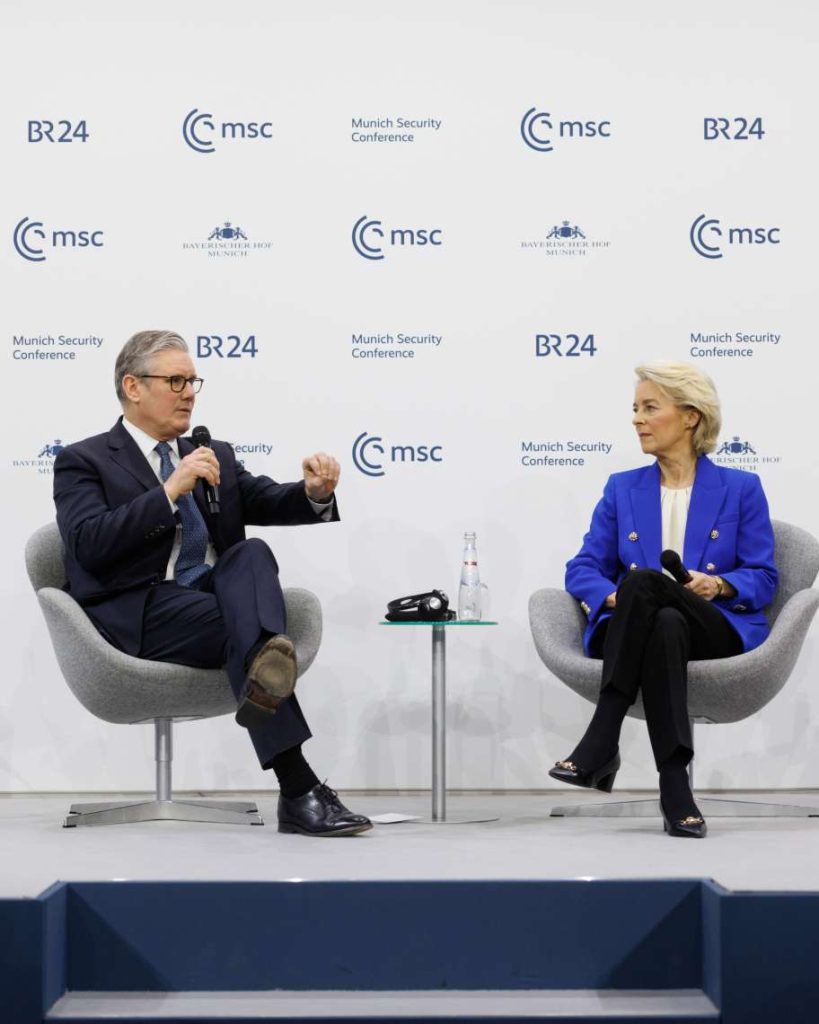
The Commission president framed the current moment as a historic turning point. “Today is a time for action,” she said, outlining what she described as “Europe’s plan for independence.”
Citing a former US Assistant Secretary of Defense, she underscored the principle of national responsibility in security matters: “Unless a nation feels itself primarily responsible for its own security and wellbeing, it will leave the task to others and fail to marshal its resources and political will in its own defence.”
Von der Leyen pointed to a sharp increase in defence spending across Europe since Russia’s invasion of Ukraine. Defence expenditure in 2025, she said, is nearly 80 per cent higher than before the war.
She also highlighted the EU’s ambition to mobilise up to €800 billion for defence-related investment. Through its SAFE programme, the bloc is directing funds toward priority areas including air and missile defence systems, drone technology and improved military mobility across European territory.
“By 2028, defence investment in Europe is projected to exceed the amount the US spent on such equipment last year. This is a true European awakening,” she said.
The remarks reflect a broader strategic recalibration underway within the European Union. Leaders have set 2030 as a target date for establishing credible, self-sustaining defence capabilities capable of deterring potential aggression, particularly from Russia.
While NATO remains central to European security architecture, von der Leyen’s speech signals a shift toward greater strategic autonomy. As geopolitical tensions mount and alliances evolve, European policymakers appear increasingly determined to ensure that the continent can defend itself — with or without unwavering American backing.