India will host the European Union’s two top leaders as chief guests at the 77th Republic Day celebrations, signalling a new peak in New Delhi’s engagement with Brussels…reports Asian Lite News
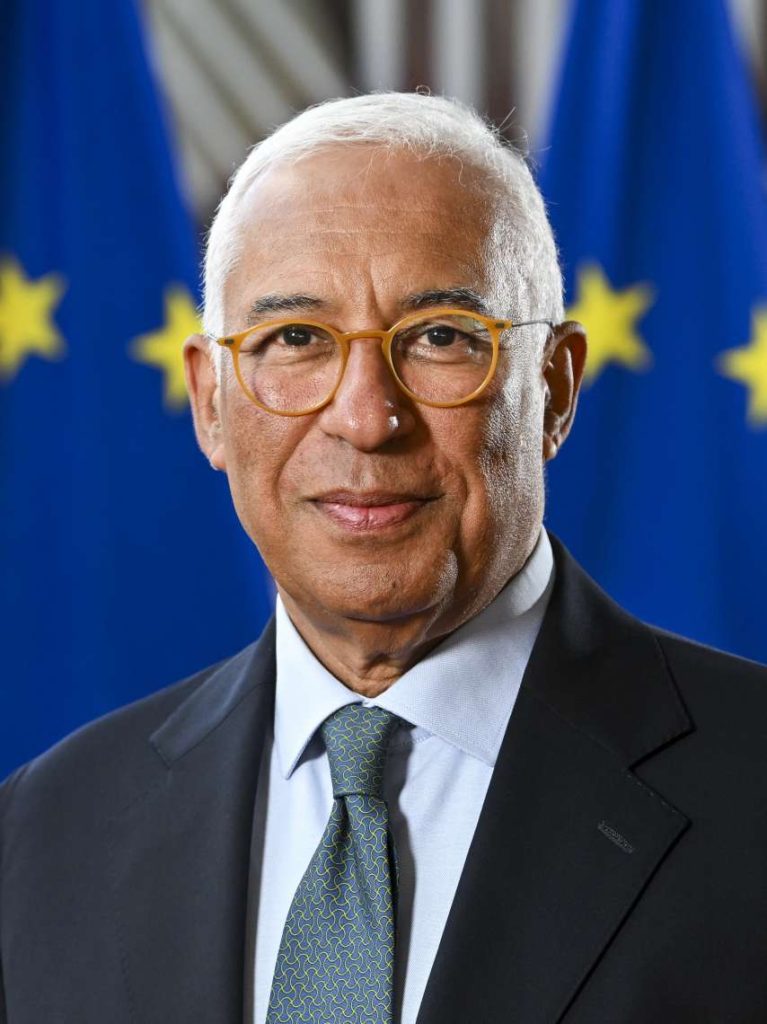
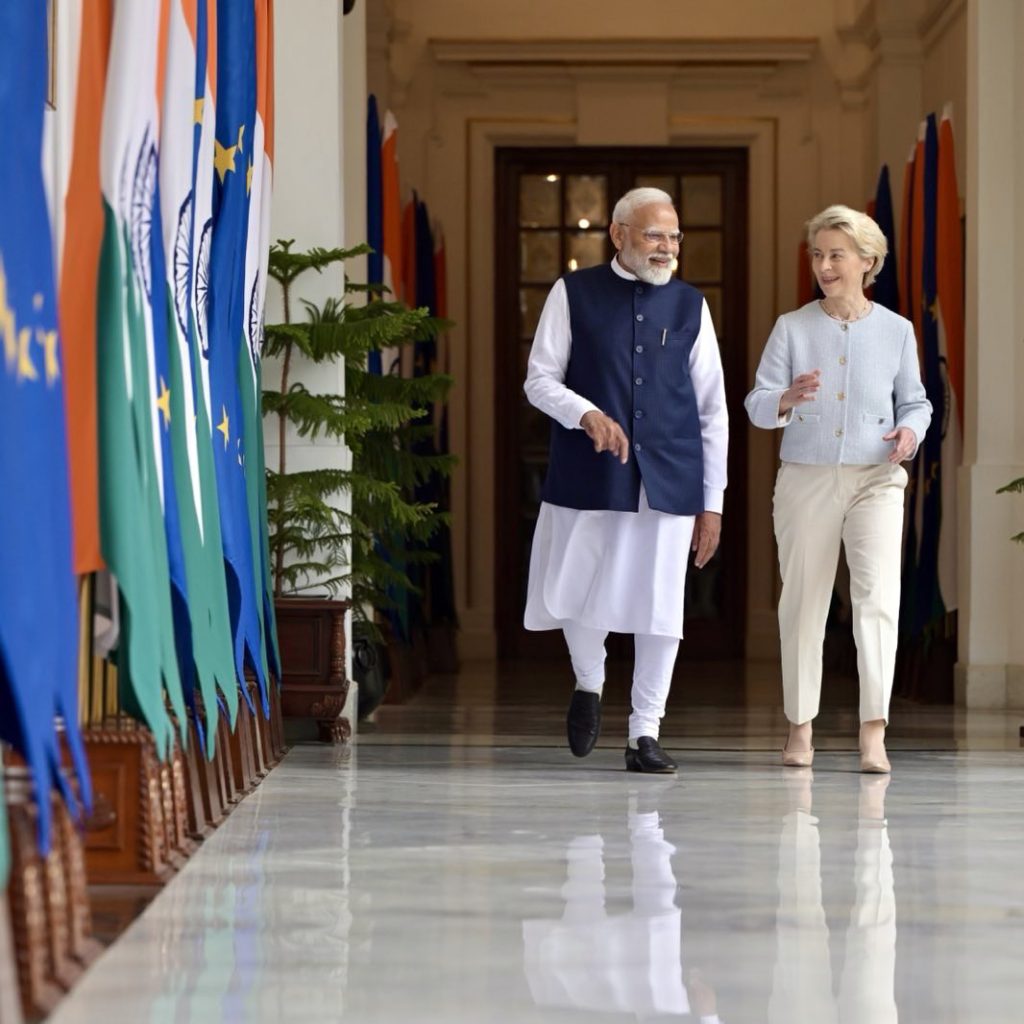
European Council President António Luís Santos da Costa and European Commission President Ursula von der Leyen will undertake a three-day state visit to India from January 25 to 27, during which they will serve as the chief guests at the country’s 77th Republic Day celebrations. The Ministry of External Affairs said the invitation from Prime Minister Narendra Modi underlines the growing weight India and the European Union attach to each other at a time of shifting global alliances and economic uncertainty.
It is unusual for the European Union’s two most senior leaders to travel together on a single bilateral visit, and the decision to place them at the centre of India’s most important national ceremony is being read in diplomatic circles as a strong political signal. Republic Day, which marks the adoption of India’s Constitution in 1950, is traditionally used by New Delhi to showcase priority relationships, and the presence of both the European Council and Commission presidents elevates the EU to the highest tier of partners.
Beyond the ceremonial aspect, the visit is packed with substantive engagements. Costa and von der Leyen will meet President Droupadi Murmu and hold both restricted and delegation-level talks with Prime Minister Modi. The centrepiece will be the 16th India-EU Summit on January 27, which the two leaders will co-chair alongside the Indian prime minister. An India-EU Business Forum is also expected on the sidelines, bringing together policymakers and business leaders from both sides to discuss trade, investment and regulatory cooperation.
India and the EU have been strategic partners since 2004, and their relationship has broadened steadily over the past two decades. What began largely as a trade-focused partnership has expanded to cover technology, digital governance, climate action, security and geopolitical coordination. The last formal summit, the 15th, was held virtually in July 2020 during the Covid-19 pandemic, and both sides have since spoken of the need to restore momentum through in-person diplomacy.
That momentum was given a boost by the visit of the EU College of Commissioners to India in February 2025, which both sides described as historic. It was the first time the full European Commission had travelled collectively to New Delhi, and it helped set the stage for the current push to deepen engagement. Officials in both capitals have pointed to that trip as evidence that Brussels is seeking a more visible and coordinated presence in the Indo-Pacific, with India as a central pillar.
The Ministry of External Affairs has said that the participation of the EU’s top leadership as Republic Day chief guests, combined with the summit, is expected to further deepen the India-EU Strategic Partnership and advance collaboration in priority areas of mutual interest. These include clean energy, supply chain resilience, critical technologies and a rules-based international order, all of which have taken on added urgency amid geopolitical tensions and economic fragmentation.
Trade, however, is likely to dominate the discussions. The visit comes at a crucial stage in negotiations on an India-EU Free Trade Agreement, which has been under discussion in various forms for years. Commerce Secretary Rajesh Agrawal has said that 20 of the 24 chapters of the proposed FTA have already been finalised, with talks continuing on the remaining issues. According to Indian officials, negotiating teams on both sides are engaged almost daily in an effort to narrow differences before the leaders meet.
While neither side has publicly detailed the unresolved chapters, the remaining gaps are widely understood to cover some of the most sensitive areas, including market access, regulatory standards and issues related to sustainability and labour. For India, securing better access for its goods and services to the EU’s vast market is a key objective, while Brussels is seeking assurances on investment protection, intellectual property and environmental commitments.
Union commerce and industry minister Piyush Goyal’s recent visit to Brussels has been seen as an important step in injecting political energy into the talks. His trip was aimed at resolving bottlenecks and giving negotiators clearer guidance as they work towards a deal that could significantly expand two-way trade and investment. If concluded, the FTA would be one of the EU’s most significant trade agreements and a major milestone in India’s push to integrate more deeply with global value chains.
The economic stakes are high on both sides. For India, closer ties with the EU offer diversification away from over-reliance on any single market and a chance to attract technology and capital to support its growth ambitions. For the EU, India represents one of the world’s fastest-growing large economies and a potential long-term counterweight in a global system increasingly shaped by rivalry between major powers.
The political symbolism of the Republic Day invitation is therefore closely linked to these broader calculations. By placing Costa and von der Leyen in the spotlight, New Delhi is signalling that it sees the European Union not just as a trading bloc but as a strategic actor. For Brussels, the trip offers an opportunity to present a united European front and to demonstrate that the EU can engage India at the highest level, both ceremonially and substantively.