The world’s leading economies have suffered a combined $4.5 trillion fall in nation brand value amid growing geopolitical tensions, trade disruption and economic uncertainty, according to new figures from Brand Finance. China strengthened its position as the world’s second-most-valuable nation brand, sharply narrowing the gap with the US, while several mid-sized economies outperformed major Western powers, reports London Daily News Desk
The world’s leading economies have suffered a combined $4.5 trillion decline in nation brand value this year as geopolitical instability, trade tensions and economic pressures reshape the global economic landscape, according to a new report from Brand Finance.
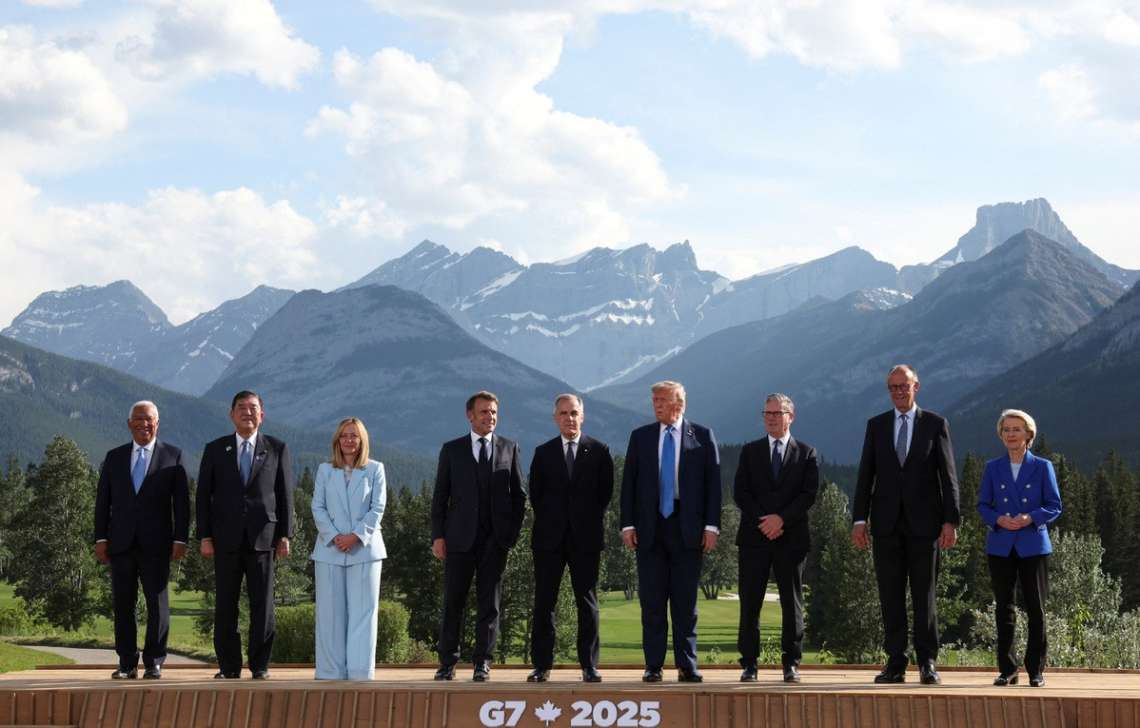
The study found that all G7 nations recorded significant declines in nation brand value in 2026, with analysts pointing to weakening Western cohesion, persistent inflation and high energy costs as key drivers behind the downturn.
Among the biggest economies, the United States saw its nation brand value fall by 7%, while Germany dropped 8%, the United Kingdom declined 5%, France fell 7%, Japan recorded a sharp 14% decline, Canada dropped 12%, and Italy slipped 4%.

Despite remaining the world’s most valuable nation brand at $34.7 trillion, the United States faced growing pressure from China, which strengthened its position with a 7% rise in nation brand value to $22 trillion.
According to Brand Finance, China narrowed the gap with the United States by almost a quarter in just one year as it continued to redirect exports and maintain economic resilience despite weaker domestic consumption and ongoing trade tensions.
The report suggested that countries with strong positions in non-cyclical industries such as pharmaceuticals, technology, logistics and energy were better placed to weather global instability.
Several mid-sized economies recorded strong performances in the latest rankings. Ireland climbed eight places after its nation brand value increased by 22%, while Denmark rose four places with a 10% increase. The United Arab Emirates posted a 5% increase, Saudi Arabia rose 2%, and Qatar increased 12%.

Brand Finance said the performance of these countries had been supported by resilient industries and globally recognised corporate brands that strengthened national reputations and economic appeal.
The report highlighted companies such as Novo Nordisk in Denmark, Emirates in the UAE, and Aramco in Saudi Arabia as examples of firms that generate positive spillover effects for their home countries. Ireland was also noted for hosting the regional headquarters of major technology firms, including Apple, Google and Meta.
Konrad Jagodzinski, Place Branding Director at Brand Finance, said: “The 2026 ranking demonstrates that nation brand value is increasingly shaped by resilience, strategic sector focus, and long-term reputation management. While many traditional Western powers are facing economic and geopolitical challenges, nations that have built clear positioning around non-cyclical sectors such as technology, pharmaceuticals, logistics, and energy, are continuing to grow in both perception and value.”

The findings also pointed to an emerging divide between nation brand value and Soft Power performance in several developing economies. Brazil recorded an improvement in its Soft Power score despite its nation brand value falling by $186 billion, or 19%, to $788 billion.
Similar patterns were identified in countries including Poland, Vietnam, Pakistan, Argentina, Bangladesh, Romania and Kazakhstan, where perceptions and reputational influence improved even as economic pressures weighed on overall nation brand value.
Brand Finance said the divergence reflected wider economic challenges, including inflation, currency volatility, fiscal tightening and global trade disruption. However, the report suggested that stronger reputations and improved Soft Power performance could support long-term growth once economic conditions stabilise.
Alex Haigh, Director of Nation Brand Valuation at Brand Finance, said: “Looking ahead, the lesson for nation brand leaders is clear: competitive advantage will increasingly come from combining economic strategy with strong reputation management. Countries that consistently invest in Soft Power, support globally recognised national champions and communicate a distinctive long-term vision will be better positioned to attract investment, talent, tourism, and trade in an increasingly fragmented global economy.”

The report ranked the United States as the world’s most valuable nation brand, followed by China, Germany, the United Kingdom and France. Japan and France were tied at $3.6 trillion, while Canada, Italy, Spain and India completed the top 10.
The United Kingdom remained the fourth most valuable nation brand globally despite its 5% decline, with a total value of $4.2 trillion. India ranked tenth with a nation brand value of $1.9 trillion.
Brand Finance said the results reflected a broader shift in how national strength and economic attractiveness are judged in an increasingly fragmented global economy. The consultancy argued that reputation, strategic positioning and investment in long-term national identity were becoming as important as economic size alone.
The findings were released at the Place Brand Forum in London as part of the Brand Finance Nation Brand Value 2026 study. The consultancy said the full Global Soft Power Index 2026 report includes detailed rankings, methodology, commentary and analysis on the performance of nation brands worldwide.