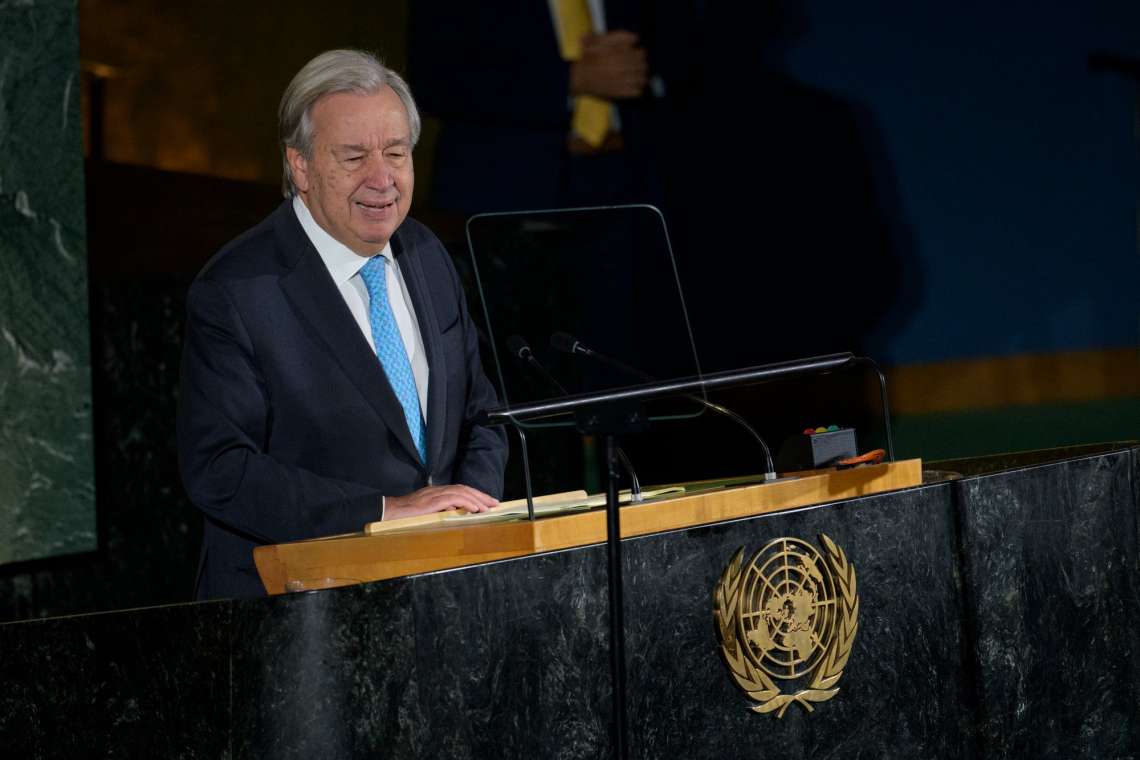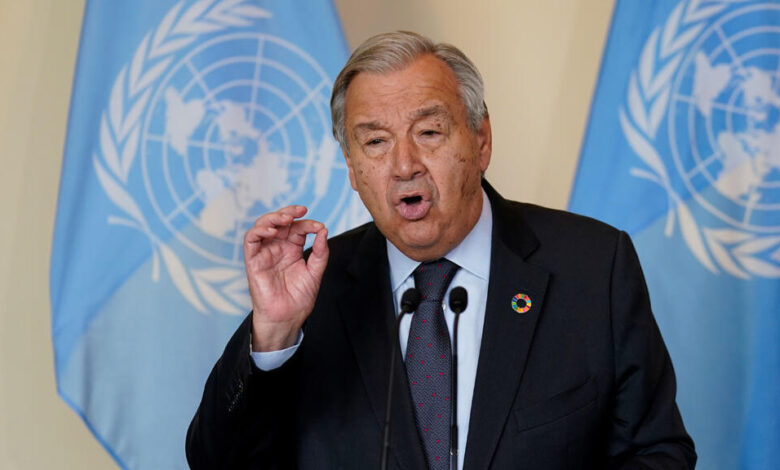
UN Secretary-General Antonio Guterres has warned that mounting tensions across the Middle East risk triggering wider instability with global consequences. Speaking at a high-level UN Security Council meeting, he urged renewed diplomatic efforts, ceasefires and political solutions to prevent further escalation…reports Asian Lite News Desk
UN Secretary-General Antonio Guterres has warned that the Middle East is sliding deeper into crisis, cautioning that escalating tensions across the region could have consequences far beyond its borders, including political instability, displacement, insecurity, disruption to trade routes, and rising food and fuel prices.
Guterres delivered the warning during a high-level meeting of the United Nations Security Council titled “Reaching political solutions in the Middle East: Mediation and dialogue for lasting peace”. The session was one of the flagship events of Colombia’s presidency of the Council for June and was chaired by Colombian President Gustavo Petro Arrego. More than 70 officials attended the meeting.
Addressing delegates, Guterres said recent developments had heightened concerns about the possibility of a broader return to conflict in several parts of the region.
“Recent developments raise deep concern about the possibility of a full-scale resumption of the conflict,” he said.
He began by referring to developments in Lebanon, where tensions have escalated since March. The Secretary-General called for a diplomatic settlement that respects Lebanon’s sovereignty and territorial integrity and is based on the full implementation of Security Council Resolution 1701. He said a political process should begin with a comprehensive ceasefire observed by all parties.
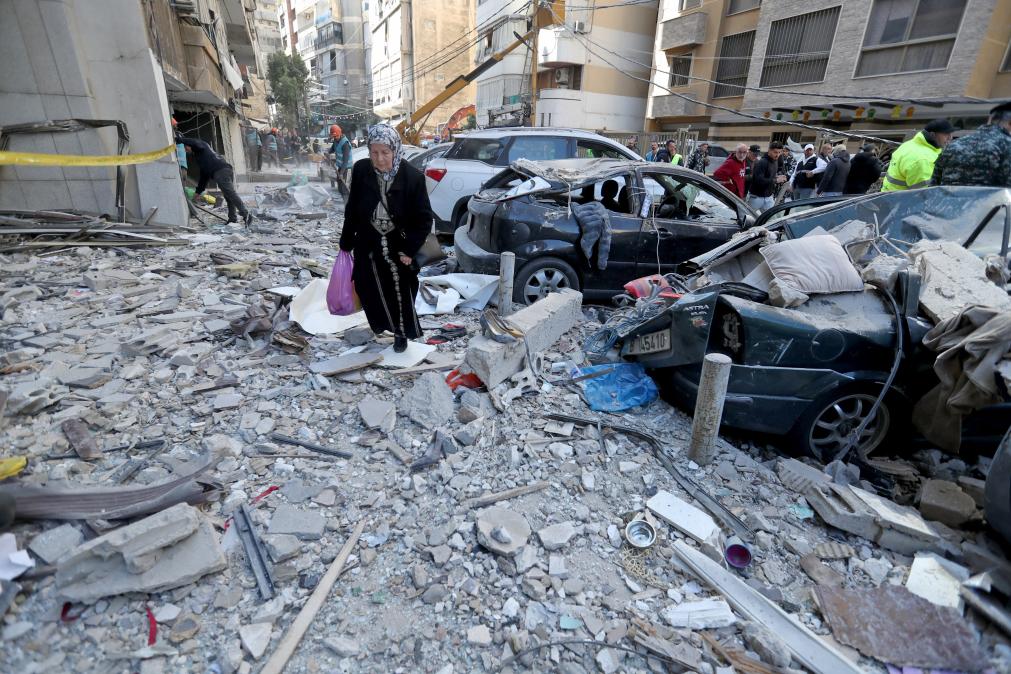
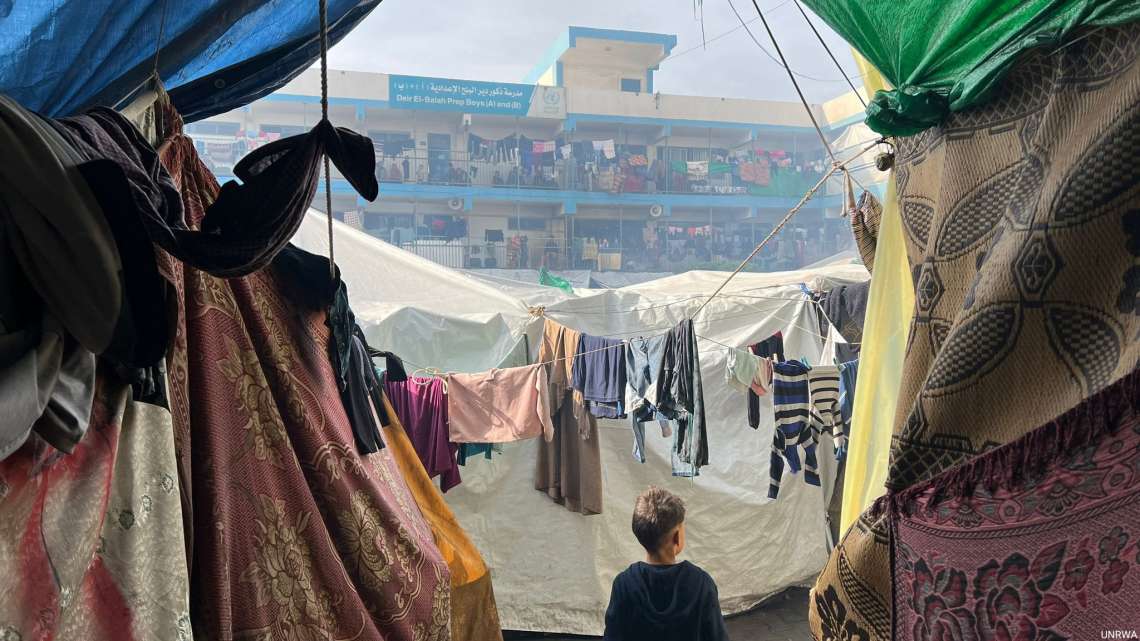
Turning to the Palestinian territories, Guterres said conditions in the occupied Palestinian territory were continuing to worsen. He described the situation in Gaza as one of profound uncertainty and immense human suffering, despite a ceasefire that was declared eight months ago.
According to the Secretary-General, civilian casualties continue to be reported daily, humanitarian operations remain restricted, and many basic needs are still unmet. He called for the full implementation of a comprehensive plan facilitated by the United States, Qatar, Egypt and Turkey.
Guterres stressed that humanitarian assistance must not be used as leverage in negotiations and reiterated the UN position on Gaza’s future status. He said that the provision of humanitarian aid should never be used as a bargaining chip and that Gaza is and will remain an integral part of the Palestinian state.
Discussing tensions in the Gulf region, the Secretary-General warned that the current ceasefire remains fragile. “The ceasefire appears to be more of a fragile lull or a temporary reduction in the intensity of the bombing,” he said.
He warned that the situation could deteriorate into a wider confrontation and called on all sides to respect the ceasefire and intensify efforts to secure a lasting agreement. He also called for the restoration of freedom of navigation in and around the Strait of Hormuz and urged serious negotiations on nuclear issues. Guterres also addressed developments in Syria and Yemen. He called for continued international support for Syria’s transitional phase following 13 years of violence and said progress achieved so far should be maintained.
On Yemen, he welcomed a UN-backed agreement that resulted in the release of 1,600 conflict-related detainees. He also called for the immediate and unconditional release of all arbitrarily detained UN personnel, as well as humanitarian and diplomatic staff.
Colombian President Gustavo Petro used his address to link global peace efforts to wider international challenges. “Global peace requires urgent action on two main fronts: combating climate change and rapidly decarbonising, and establishing a democratic global regulatory framework for artificial intelligence,” he said.
Petro also warned about the dangers posed by disinformation, anti-immigrant rhetoric, racism, wars and inequality. Representatives from several countries echoed calls for diplomacy and political dialogue as the primary means of resolving conflicts in the Middle East. Speakers highlighted mediation efforts involving a range of international and regional actors, including Saudi Arabia, Turkey, Egypt, Qatar and China.
Delegates said those efforts had helped contribute to ceasefires and de-escalation measures in parts of the region. Many stressed that sustainable peace could not be secured solely through military means. Participants argued that military victory cannot replace a political settlement and urged all parties involved in regional conflicts to exercise restraint, reduce tensions and continue pursuing diplomatic solutions aimed at achieving long-term stability and peace.