Nepal’s Foreign Ministry has clarified that Prime Minister Balendra Shah’s controversial remarks about Nepal encroaching on Indian territory referred to cross border occupation and encroachment in no man’s land areas…reports Asian Lite News Desk
Nepal’s Ministry of Foreign Affairs has moved to clarify Prime Minister Balendra Shah’s remarks suggesting that Nepal had also encroached on Indian territory, following a political row and criticism from opposition parties and foreign policy experts.
In a statement issued on Sunday, the Ministry said the Prime Minister’s comments were related to instances of cross border occupation and encroachment in no man’s land areas along the Nepal India frontier rather than any change in Kathmandu’s position on disputed border territories.
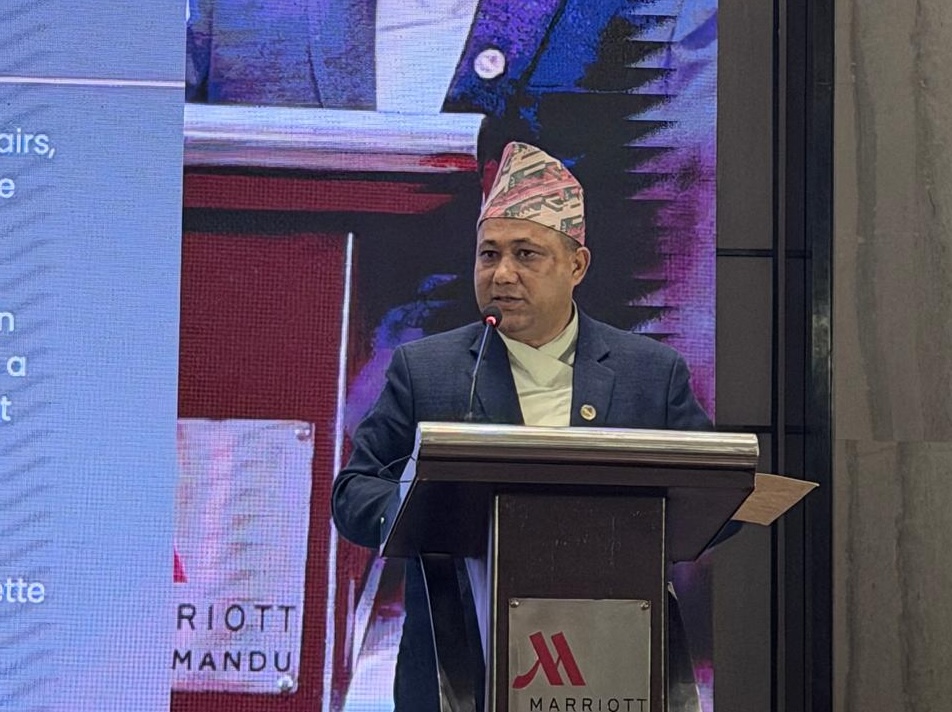
The controversy erupted earlier in the day when Shah, responding to lawmakers during his first question and answer session in Parliament as Prime Minister, said he had learned after taking office that not only had India encroached on Nepal’s land, but Nepal had also occupied Indian territory in several places.
His remarks drew immediate criticism from opposition leaders, foreign affairs experts and border analysts, who argued that the statement undermined Nepal’s long standing stance on border disputes with India and could weaken its position in future negotiations.
Seeking to address the backlash, the Foreign Ministry said the Prime Minister was referring to technical studies conducted in border regions where citizens of one country cultivate or reside on land that technically falls within the territory of the other country.
“The matter mentioned by the Prime Minister in Parliament was primarily related to encroachment in the no man’s land area and cross border occupation,” the Ministry said.
It explained that because of the Fixed Boundary Principle used in river boundary areas, situations have arisen where Nepali citizens use land technically located inside India, while Indian citizens occupy land that falls within Nepal’s territory.
The Ministry also reiterated that Nepal’s official position on disputed areas including Limpiyadhura, Lipulekh and Kalapani remains unchanged and that unresolved border issues would continue to be addressed through diplomatic dialogue and mutual understanding with India.
According to the Ministry, technical committees and border mechanisms involving both countries are currently working on repairing border pillars, addressing encroachment in no man’s land areas and documenting cross border occupation along mapped sections of the frontier.

Nepal and India share an open border stretching hundreds of kilometres, much of it defined by the 1816 Treaty of Sugauli. However, boundary demarcation remains incomplete in some areas, including Susta and the Limpiyadhura Lipulekh Kalapani region, which have remained sources of tension in bilateral relations.
Responding to questions in Parliament, Shah also addressed the issue of Indian pilgrims travelling to Kailash Mansarovar through the disputed Lipulekh area under an agreement between India and China. He said Nepal had already sent a diplomatic note to India and received a response.
According to Shah, India has proposed forming teams of historians, surveyors and territorial experts from both sides to seek a resolution through dialogue.
The Prime Minister also revealed that Nepal had held discussions not only with India and China but also with the United Kingdom regarding the border dispute. He argued that Britain should take an interest in the issue because it dates back to the period of British rule in India.
The disclosure is believed to be the first public acknowledgement by Nepal that it has engaged with the UK on the long running Nepal India border dispute.