India and Brazil have signed an MoU to expand cooperation in telecommunications, digital infrastructure and emerging technologies. ..reports Asian Lite News Desk
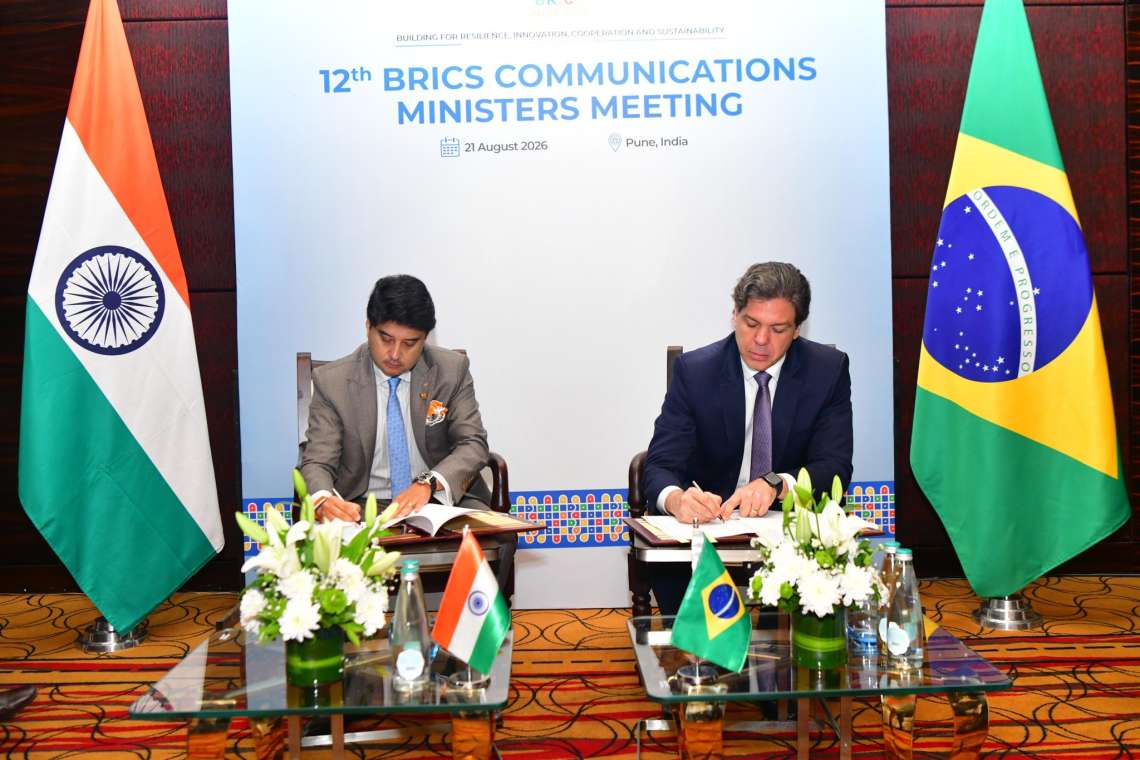
India and Brazil have signed a memorandum of understanding (MoU) to strengthen cooperation in telecommunications and information and communications technologies (ICTs), with a focus on digital innovation, connectivity and emerging technologies.
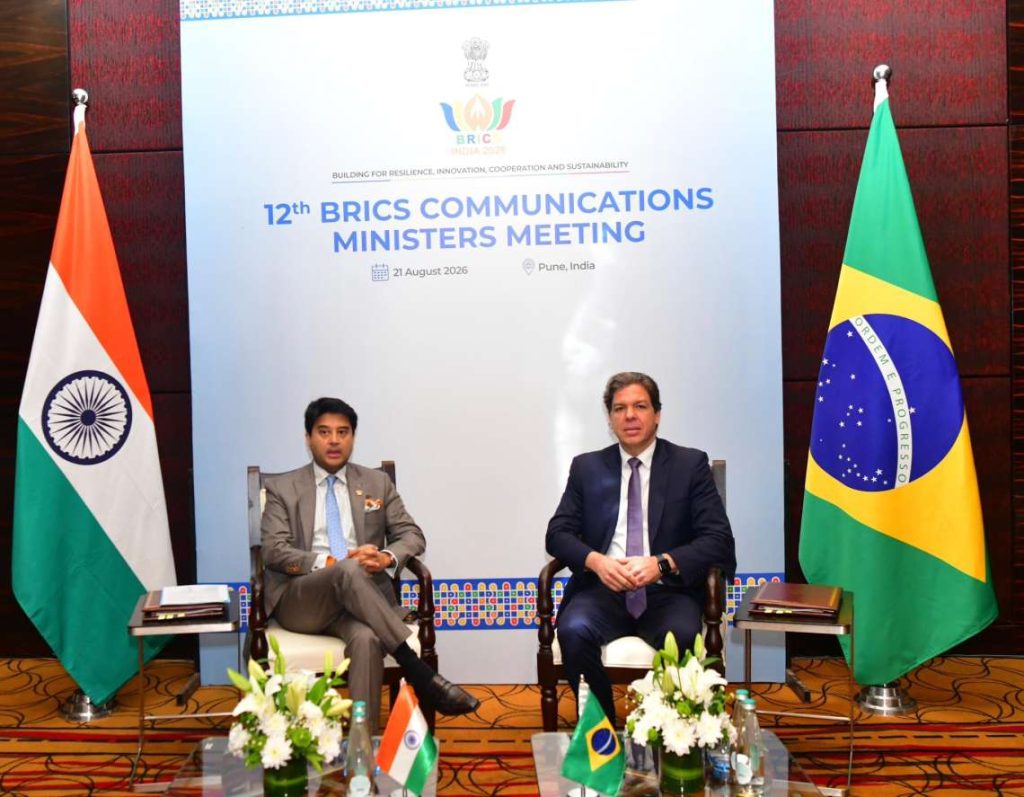
The agreement was signed on the sidelines of the 12th BRICS Communications Ministers Meeting in Pune by Union Minister of Communications Jyotiraditya M. Scindia and Brazil’s Minister of Communications Frederico de Siqueira Filho.
The Department of Telecommunications said the MoU would help advance digital innovation, strengthen digital infrastructure and promote cooperation in emerging technologies between the two countries.
Scindia described the agreement as a step towards strengthening India-Brazil collaboration in the digital and telecom sectors.
“Strengthening India-Brazil cooperation in the digital and telecom space,” Scindia said in a post on X.
He said the MoU would deepen bilateral cooperation in “universal connectivity, cybersecurity, digital public infrastructure, emerging technologies, capacity building and exchange of best practices”.
Scindia said the agreement represented a strong step forward in building a secure and inclusive digital future.
The signing took place as officials, industry leaders, academics, startups and research institutions from BRICS member countries gathered for discussions on digital and ICT-related issues.
The BRICS Communications Ministers Meeting forms part of the wider BRICS ICT Track, which focuses on cooperation in digital technologies, connectivity and the development of resilient digital ecosystems among member countries.
The BRICS ICT Forum was institutionalised during the 7th BRICS Communications Ministers’ Meeting hosted by India in 2021. It serves as a multi-stakeholder platform bringing together governments, industry, academia, startups and research institutions.
Discussions at the latest meeting focused on the challenges and opportunities emerging from rapid digital transformation.
The first thematic panel focused on cybersecurity and trustworthy ICTs, including child online protection. The session examined issues surrounding security and trust as countries expand the use of digital technologies.
BRICS ministers have repeatedly stressed the need for a balanced and comprehensive approach to digital development, combining technological growth with safeguards for privacy, public interest and the protection of vulnerable users.
The discussions also highlighted the growing importance of cybersecurity as governments and businesses expand digital infrastructure and services.
A second thematic discussion focused on sustainable and resilient digital and ICT ecosystems. It covered universal, meaningful and affordable connectivity, as well as the development of energy-efficient and climate-resilient digital infrastructure.
The session also examined emerging technologies and approaches, including satellite and non-terrestrial systems, which could play a role in expanding connectivity to underserved areas.
The India-Brazil MoU comes as both countries seek to expand cooperation in digital technologies and telecommunications while addressing challenges linked to cybersecurity, connectivity and emerging technologies.
The agreement provides a framework for greater exchanges between the two countries in areas including digital public infrastructure, capacity building and the sharing of technological expertise and best practices.
For India, the partnership also adds to its wider efforts to expand international cooperation around its digital infrastructure and technology capabilities.
Brazil, meanwhile, is seeking to strengthen its digital ecosystem and connectivity while working with international partners on emerging technologies and cybersecurity.
The two countries are expected to use the new framework to deepen engagement between government institutions, technology sectors and other stakeholders as digital transformation continues