India and the European Union are set to deepen cooperation on reforming the World Trade Organization following the conclusion of their landmark free trade agreement…reports Asian Lite News Desk
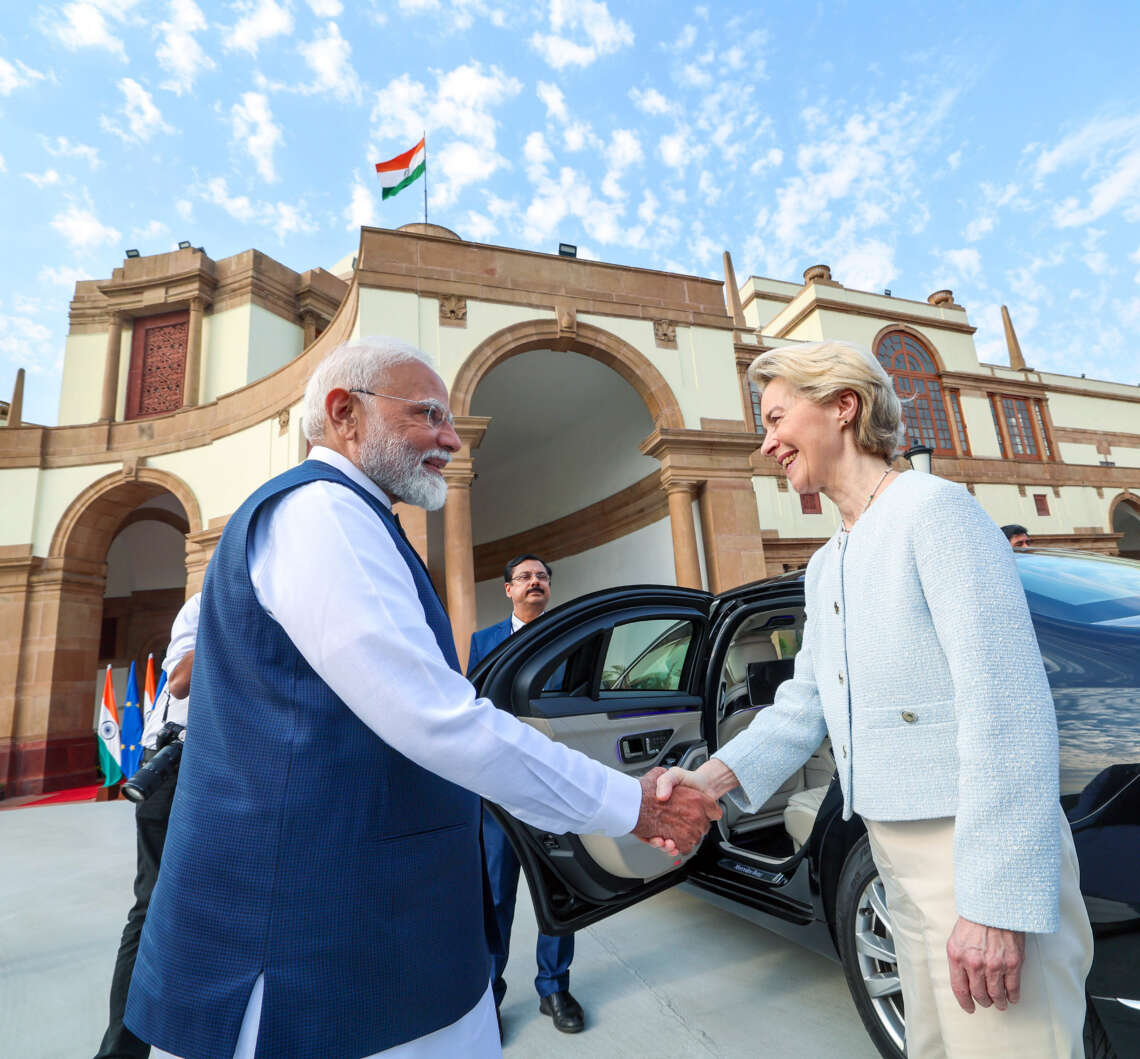
India and the European Union are set to intensify cooperation on reforming the World Trade Organization (WTO), with officials from both sides saying their recently concluded free trade agreement has created a stronger foundation for advancing changes to the global trading system amid increasing uncertainty in international commerce.
The issue is expected to feature prominently during the next meeting of the India-EU Trade and Technology Council (TTC) in Brussels on July 15, where ministers are scheduled to discuss a coordinated approach to strengthening the multilateral trading framework.
Speaking during a discussion hosted by the Peterson Institute for International Economics, India’s Chief Negotiator for the EU-India Free Trade Agreement, Darpan Jain, said WTO reform already forms part of the agenda under the Trade and Technology Council.
“There is a track in our engagement on the Trade and Technology Council on WTO as well,” Jain said.
“Fundamentally, I think, we both believe in strengthening WTO, but we also believe that there is a reform which is required,” Jain said. “Especially in the current context, my feeling is both India and the EU recognise that we need to work together.”
Jain acknowledged that reforming the WTO would remain a challenging process given its broad membership and consensus-based decision-making.

“As you know, WTO is a body which has 164 members, so very difficult to hatch consensus there. But I think our efforts are in that direction,” Jain said.
Christophe Kiener, the European Union’s chief negotiator for the agreement, said the European Commission was preparing a series of proposals as part of ongoing discussions on WTO reform in Geneva.
“We are working on a couple or three written contributions that we are about to table in the context of ongoing discussions in Geneva on the reform of the World Trade Organization,” Kiener said.
He said the India-EU Trade and Technology Council provides a dedicated forum for both sides to coordinate their positions on reforming the multilateral trading body.
“The Trade and Technology Council between the EU and India foresees that there is one strand of work that is about our bilateral dialogue on how to reform the WTO,” he said. “This is actually something that ministers will take up next week when they meet in the context of the TTC on the 15th of July in Brussels.”
Kiener also expressed optimism that the momentum generated by the newly concluded India-EU trade agreement could eventually support wider multilateral cooperation.
“I would just hope that now that we have climbed the Everest of all bilateral agreements, we could… jointly, I don’t know, go to the moon and indeed successfully clinch a multilateral trade deal that would enhance the legal certainty multilaterally in the WTO,” he said.
The remarks come after India and the European Union concluded negotiations on one of the world’s largest free trade agreements, covering goods, services, investment, digital trade and supply-chain diversification.
Both sides have described the agreement as a strategic partnership extending beyond trade to include cooperation in technology, security, mobility and clean energy.
Jain said the Trade and Technology Council had emerged as an important mechanism for expanding collaboration beyond the free trade agreement, with discussions covering technology, innovation and broader economic engagement.
He added that ministers meeting in Brussels next week are expected to pursue “a very ambitious plan” aimed at deepening cooperation and delivering tangible outcomes across a range of sectors.