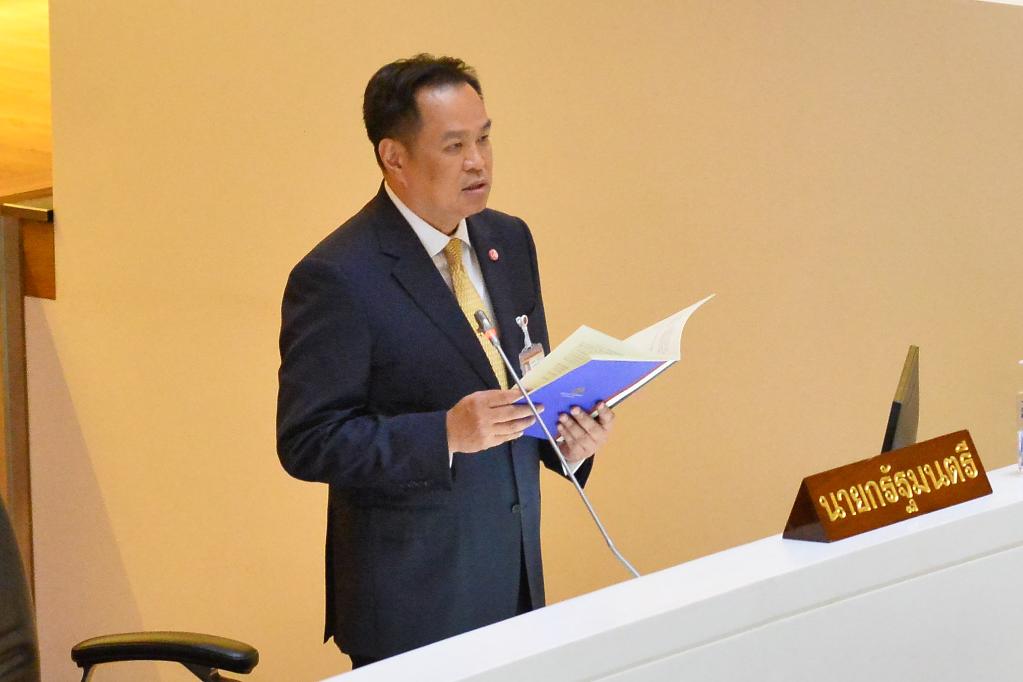
Anutin Charnvirakul , 59, was elected Prime Minister after securing 293 votes in Thailand’s House of Representatives, comfortably defeating his rival Natthaphong Ruengpanyawut of the People’s Party, who received 119 votes, reports Asian Lite Newsdesk
Prime Minister Narendra Modi on Friday congratulated Anutin Charnvirakul on his election as Thailand’s Prime Minister, expressing confidence that bilateral ties between the two nations will continue to strengthen under his leadership.
In a message posted on X, Modi said he looked forward to working closely with Anutin to further deepen the “multifaceted India-Thailand strategic partnership”, highlighting the strong historical and cultural bonds shared by the two countries.
“Our ties are rooted in shared civilisational heritage, close cultural connect and vibrant people-to-people ties. India and Thailand remain united in our shared aspirations for peace, progress and prosperity,” Modi said.
Anutin, 59, was elected Prime Minister after securing 293 votes in Thailand’s House of Representatives, comfortably defeating his rival Natthaphong Ruengpanyawut of the People’s Party, who received 119 votes. A total of 86 lawmakers abstained.
His Bhumjaithai Party emerged as the largest bloc with 191 seats in the 500-member House, later forming a coalition with 16 parties, including the influential Pheu Thai Party, to secure a parliamentary majority.
Anutin’s return marks a rare political comeback, making him the first Thai leader in two decades to be voted back into office, following a turbulent period in the country’s politics. He previously led a minority government after the court-ordered removal of Paetongtarn Shinawatra in 2025.
Best known for spearheading the decriminalisation of cannabis in 2022, Anutin now faces a challenging political landscape. Analysts point to ongoing economic pressures and renewed border tensions with Cambodia as key tests for his administration.
His leadership also comes against the backdrop of fluctuating relations with neighbouring countries, with recent clashes along the Thai-Cambodia border underscoring regional security concerns. Observers note that the conflict has also shaped domestic political narratives, strengthening nationalist positioning within Thailand’s political discourse.
Anutin began his political career in 2004 under the government of Thaksin Shinawatra. After a temporary ban from politics following the dissolution of the Thai Rak Thai party in 2007, he returned to lead the Bhumjaithai Party in 2012, steadily building his political base.