Modi, Takaichi condemn recent terror attacks and reaffirm commitment to Indo-Pacific security and UN reforms…reports Asian Lite News Desk
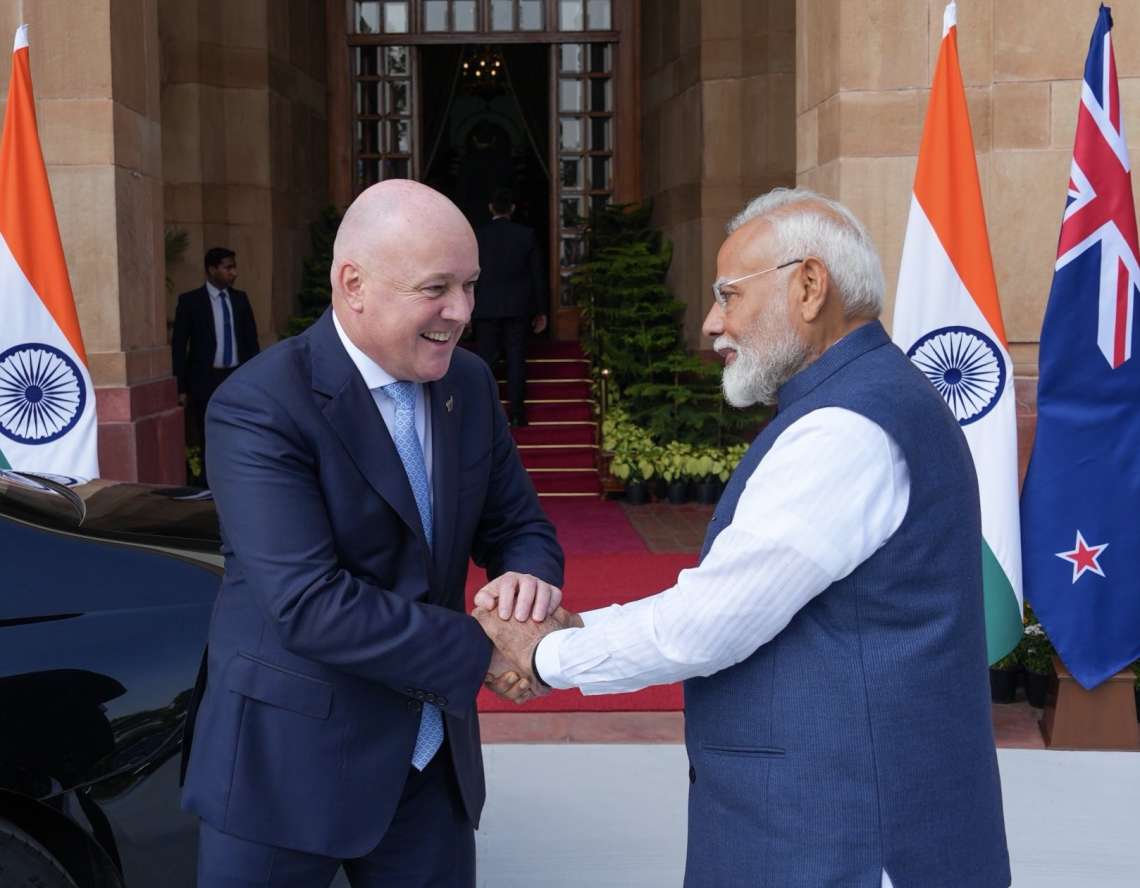
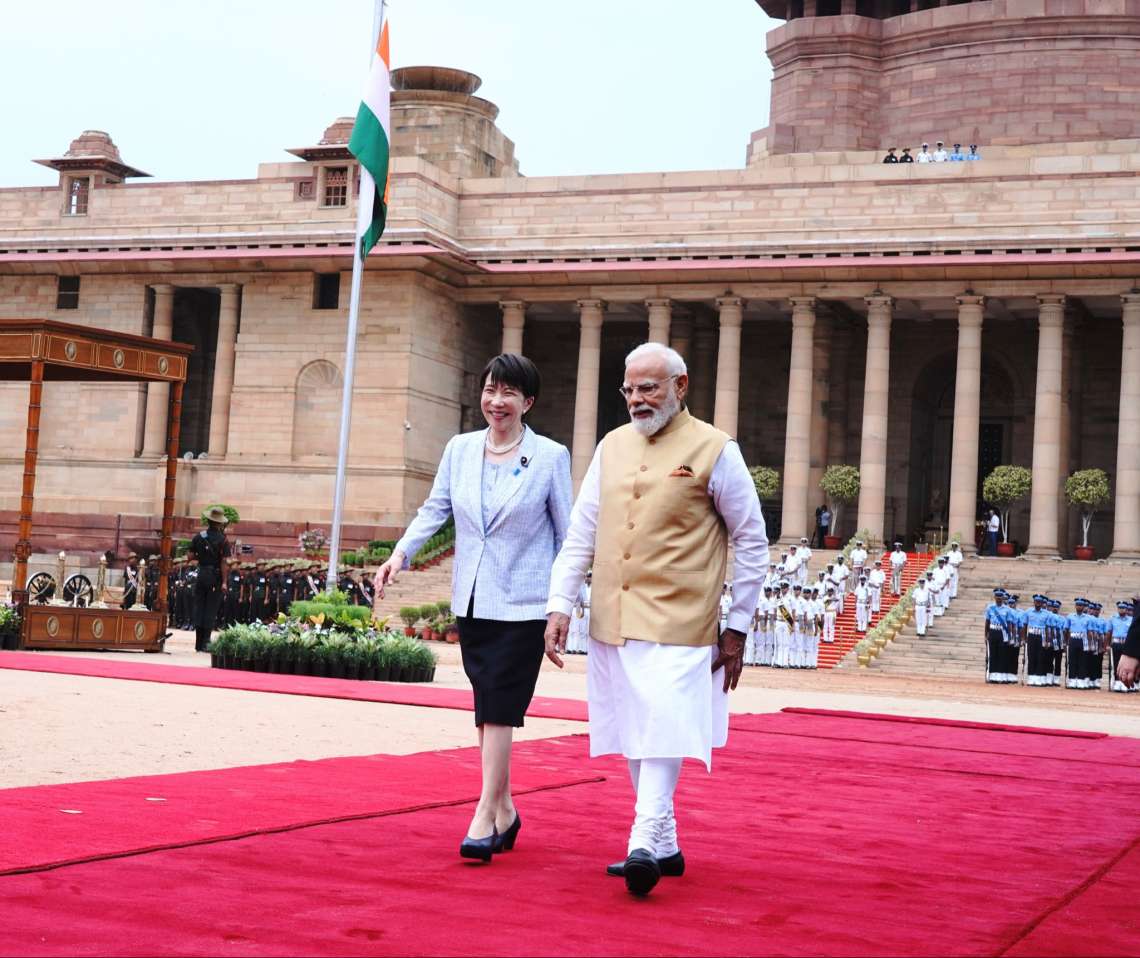
India and Japan on Thursday strongly condemned terrorism in all its forms and called for intensified international cooperation to dismantle terrorist infrastructure, financing networks and safe havens, as Prime Minister Narendra Modi and Japanese Prime Minister Sanae Takaichi held wide-ranging talks during the 16th India-Japan Annual Summit in New Delhi.
In a joint statement issued after the summit, the two leaders condemned the April 22, 2025, terror attack on tourists in Pahalgam, Jammu and Kashmir, and the November 10, 2025, car bombing near Delhi’s Red Fort. They called for those responsible, including the perpetrators, organisers and financiers, to be brought to justice.
The leaders reaffirmed their commitment to combating terrorism and urged coordinated global action against UN-designated terrorist organisations and their affiliates, including Lashkar-e-Tayyiba (LeT), Jaish-e-Mohammad (JeM), Al Qaeda and the Islamic State (ISIS). They stressed the need to eliminate terrorist safe havens, curb terror financing and prevent the cross-border movement of terrorists.
The joint statement also highlighted concerns over the security situation in the Indo-Pacific, particularly in the East China Sea and the South China Sea. Both sides opposed unilateral attempts to alter the status quo by force or coercion and reaffirmed the importance of maintaining freedom of navigation and overflight in accordance with international law.
The two Prime Ministers underscored the importance of resolving maritime disputes peacefully and reiterated their support for the United Nations Convention on the Law of the Sea (UNCLOS) as the legal framework governing activities in the world’s oceans.
On multilateral cooperation, India and Japan reaffirmed their commitment to comprehensive reform of the United Nations Security Council (UNSC). The two countries pledged to continue working with other G4 partners to expand both permanent and non-permanent membership categories, while supporting text-based negotiations under the Inter-Governmental Negotiations framework. They also reiterated mutual support for each other’s aspirations for permanent membership in a reformed UNSC.
The leaders exchanged views on major regional and global developments, including the Korean Peninsula, the Middle East and Ukraine. Expressing concern over North Korea’s nuclear and ballistic missile programmes, they called for the complete denuclearisation of the Korean Peninsula and full implementation of relevant UN Security Council resolutions.
On the Middle East, the two sides emphasised the importance of ensuring freedom of navigation through the Strait of Hormuz to safeguard global energy supplies. They also supported efforts towards the reconstruction of Gaza and reiterated their backing for a two-state solution to the Israel-Palestine conflict.
Regarding Ukraine, the leaders reaffirmed their support for a comprehensive, just and lasting peace based on the principles of the UN Charter.
Prime Minister Takaichi was on a three-day official visit to India from July 1 to July 3 at the invitation of Prime Minister Modi. During the visit, the two leaders reviewed the full spectrum of bilateral ties, discussed regional and global developments, and participated in the India-Japan Business Forum aimed at enhancing economic and commercial cooperation.