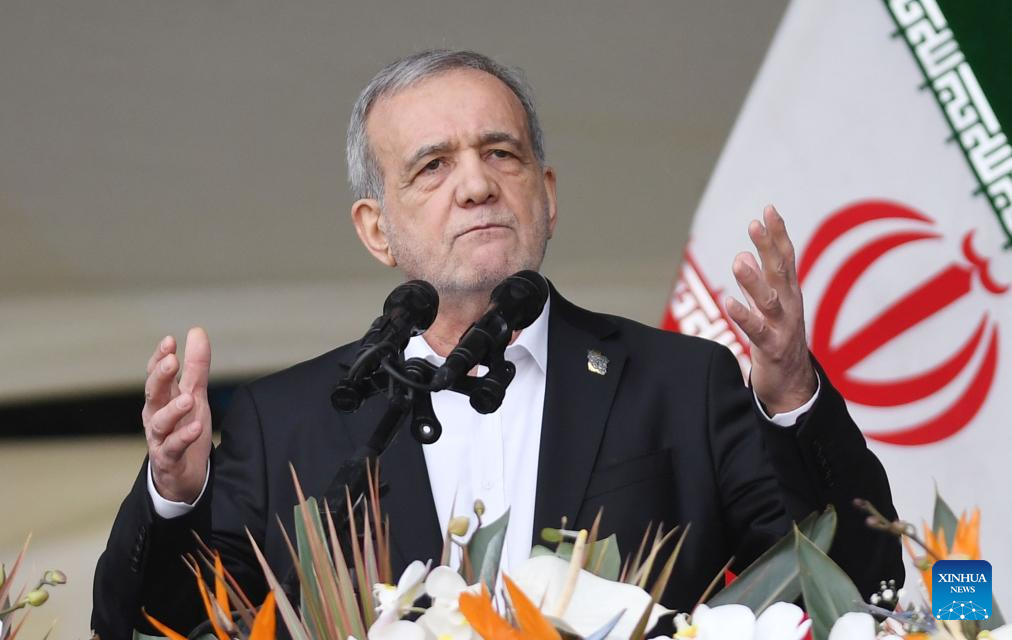
President Masoud Pezeshkian, the head of the judiciary, and a jurist from the Guardian Council would collectively assume leadership responsibilities…reports Asian Lite News
Iran will form an interim leadership council on Sunday pending the selection of its next supreme leader, according to state-run Islamic Republic of Iran Broadcasting (IRIB). Secretary of Iran’s Supreme National Security Council, Ali Larijani, said the temporary body would assume duties later in the day.
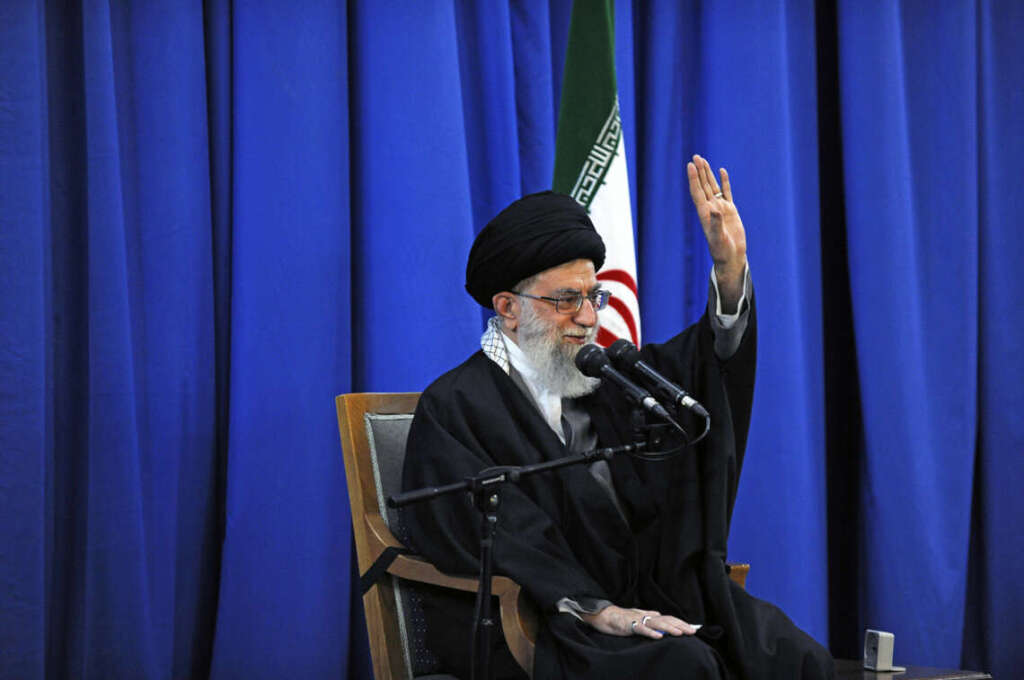
Separate Iranian reports said President Masoud Pezeshkian, the head of the judiciary, and a jurist from the Guardian Council would collectively assume leadership responsibilities following reports of the death of Supreme Leader Ali Khamenei.
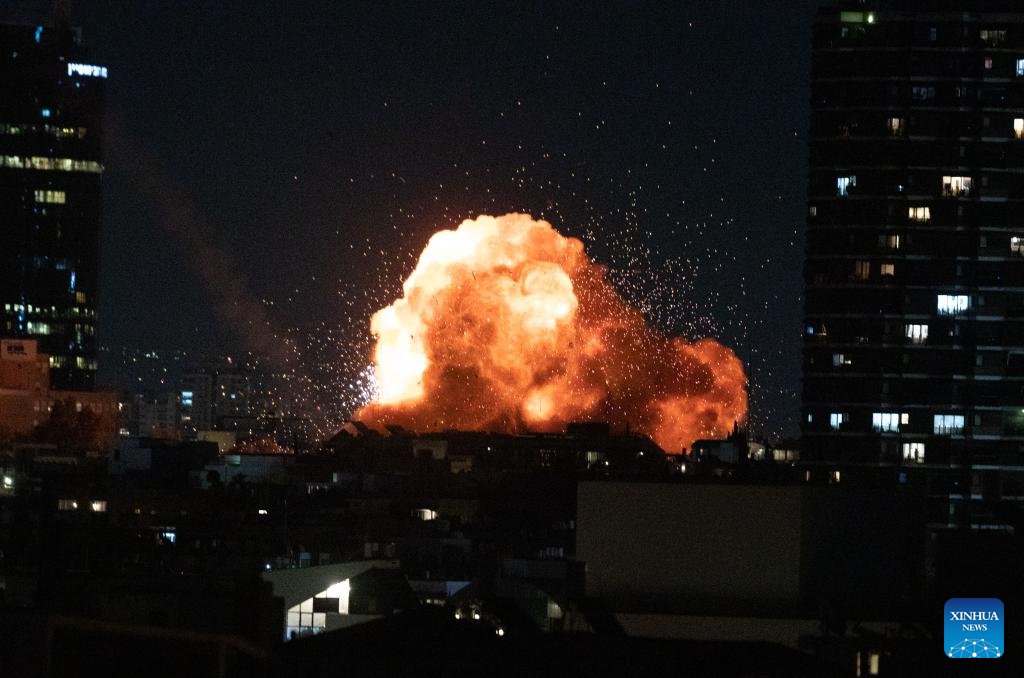
The leadership uncertainty comes amid a dramatic escalation after the United States and Israel launched coordinated airstrikes across Iran. Israeli officials described the operation — involving about 200 fighter jets — as the largest sortie in the history of the Israeli Air Force, striking hundreds of targets linked to the Islamic Revolutionary Guard Corps and defence infrastructure.
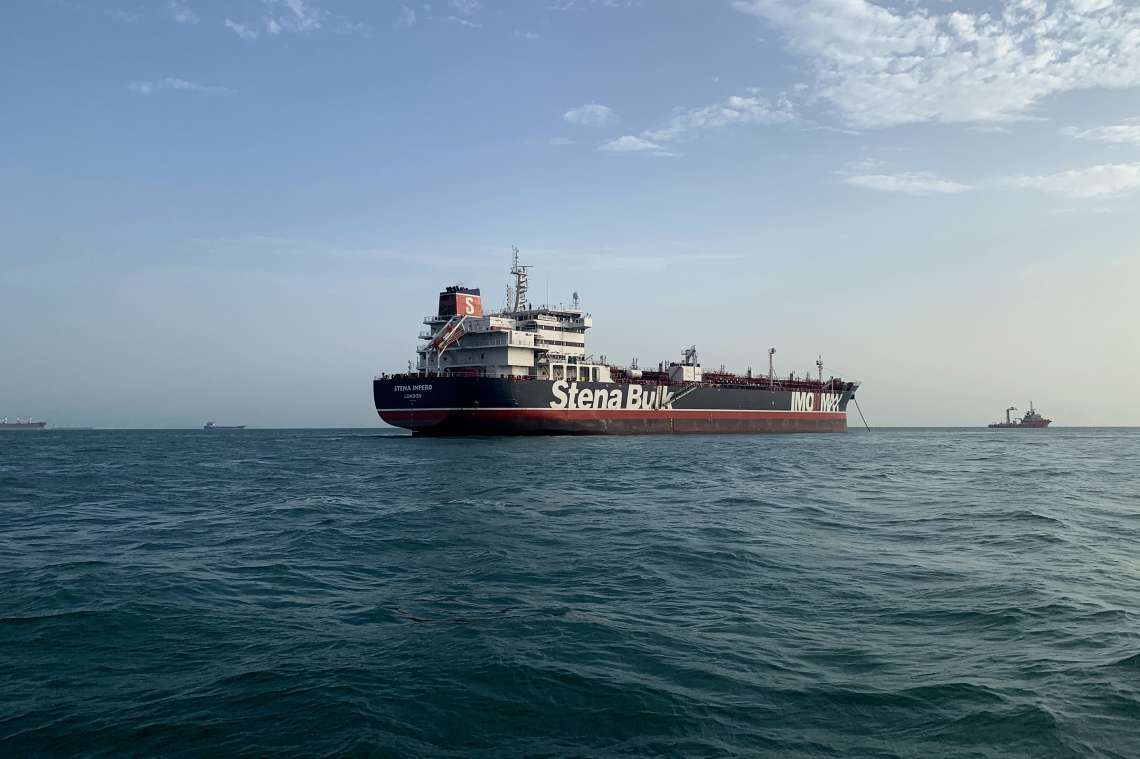
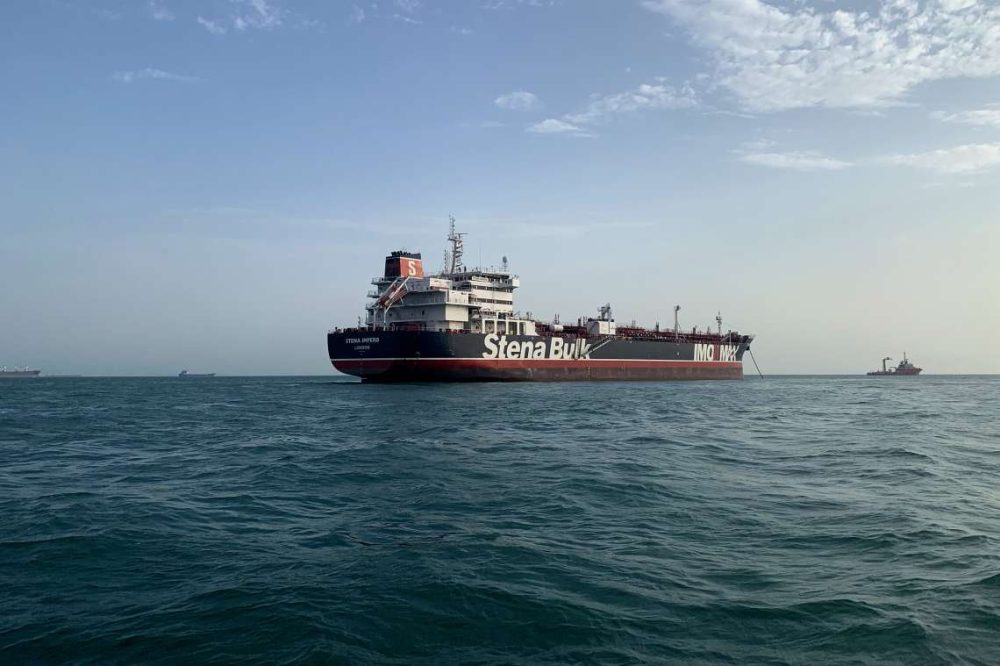
Iran responded with missile attacks on Israeli and U.S. targets across the Middle East, including bases in the United Arab Emirates, Qatar, Bahrain and Kuwait. Tehran also reportedly imposed restrictions in the strategic Strait of Hormuz, raising fears for global energy supplies.
The Arab League strongly condemned what it described as Iranian aggression against the UAE and other Arab states, calling the missile attacks a “flagrant violation of sovereignty.” The bloc expressed full solidarity with affected nations and supported their right to defend themselves.
In Riyadh, the Saudi Press Agency reported that Saudi Arabia had repelled Iranian attacks targeting Riyadh and the Eastern Province. The Kingdom condemned the strikes as “blatant and cowardly,” warning it would take all necessary measures to protect its territory.
UAE President Mohamed bin Zayed Al Nahyan received a call from Turkish President Recep Tayyip Erdogan, during which both leaders rejected the Iranian attacks and urged an immediate halt to military escalation through dialogue and diplomacy.
At the United Nations, Secretary-General Antonio Guterres warned that the spiralling violence undermines international peace and security, calling on all parties to return to negotiations.
With rising casualties reported in Iran and elsewhere, analysts caution that the conflict could either remain a short, contained confrontation or expand into a prolonged regional war — one that risks drawing in global powers and destabilising critical energy routes at the heart of the world economy.
Meanwhile, Egyptian President Abdel-Fattah al-Sisi emphasised the necessity of returning to dialogue and diplomacy to reach political solutions for the current crisis in Iran, noting that military solutions will not serve the interests of any party.
Sisi made the remarks during separate phone calls with the leaders of Jordan, Qatar, Saudi Arabia, Bahrain, and the United Arab Emirates (UAE), according to statements from the Egyptian Presidency.
Sisi noted that military solutions threaten to plunge the region into a vicious cycle of violence, instability, and bloodshed, which contradicts the aspirations of the region’s peoples for prosperity, security, and stability.
He further expressed Egypt’s full solidarity and support for the Arab nations that were subjected to Iranian missile attacks, underscoring Egypt’s rejection and profound condemnation of any infringement upon the sovereignty, security, and stability of Arab countries.
In another development, Houthi leader Abdulmalik al-Houthi said Saturday evening that his group stands in full solidarity with Iran and is “fully prepared for any developments,” calling on supporters to stage mass rallies in Sanaa and other provinces.
In a televised speech broadcast by the Houthi-run Al-Masirah TV, Abdulmalik urged Yemenis to participate in large-scale demonstrations on Sunday in solidarity with Iran in response to what he described as an “open U.S.-Israeli aggression.”
Speaking about the latest developments following the joint U.S.-Israeli attacks on Iran, Abdulmalik described solidarity with Iran as an Islamic and moral duty, claiming that Iran is engaged in a broader struggle against what he termed “U.S.-Israeli aggression targeting the entire region.”
The Houthi group has controlled Yemen’s capital Sanaa and most northern provinces since late 2014.