Israel and Lebanon have agreed to implement a ceasefire following two days of US brokered negotiations in Washington…reports Asian Lite News Desk
Israel and Lebanon have agreed to implement a ceasefire following two days of United States mediated talks in Washington, marking a significant step towards easing tensions along their volatile border and laying the groundwork for broader security arrangements in the region.
The agreement emerged from the fourth high level trilateral meeting involving representatives from the United States, Israel and Lebanon, held at the US State Department on June 2 and 3.
Announcing the outcome, US State Department Counsellor Dan Holler said the ceasefire was the result of intensive negotiations led by Washington.
According to a joint statement issued by the three governments, the ceasefire is contingent on a complete halt to Hizballah attacks and the withdrawal of all Hizballah operatives from the South Litani sector.
The parties also agreed to move rapidly towards establishing pilot zones in southern Lebanon where the Lebanese Armed Forces would exercise exclusive authority.
Holler said the zones would be created with US guidance and would ensure that no non state actors operate within the designated areas. The move is intended to strengthen state control and reduce the risk of renewed conflict along the border.
The joint statement described the measures as a foundation for achieving a comprehensive peace and security agreement between the neighbouring countries.
Israel and Lebanon also reaffirmed that they held no hostile intent towards one another and committed to continuing direct negotiations aimed at building trust, resolving outstanding disputes and advancing a broader settlement.
Discussions during the talks focused heavily on a proposed security framework that builds on earlier meetings held at the Pentagon on May 29. The framework is designed to safeguard the sovereignty, security and territorial integrity of both nations while ensuring the dismantling of non state armed groups and preventing their return.
All three countries stressed that future relations between Israel and Lebanon must be determined solely by their respective governments.
Holler said the parties rejected any attempt by state or non state actors to influence Lebanon’s future or undermine the authority of its elected government.
Regional security concerns also featured prominently during the negotiations. The joint statement condemned Iran’s attacks across the region and accused Tehran of undermining Middle East stability through support for proxy groups and other aggressive actions.
The United States reaffirmed its support for both governments and stressed that any long term agreement must be negotiated directly between Israel and Lebanon under American mediation.
Washington also pledged continued assistance to the Lebanese Armed Forces to strengthen their ability to exercise authority throughout the country. Holler reiterated comments made earlier by US Secretary of State Marco Rubio, describing Hizballah as an enemy of Lebanon as well as of Israel and the United States.
Israel maintained that its security could only be guaranteed through the disarmament of Hizballah and the dismantling of the group’s infrastructure across Lebanon.
Lebanon, meanwhile, reaffirmed its commitment to respecting internationally recognised borders, territorial integrity and full state sovereignty, while pledging to strengthen the capabilities of its armed forces with US support.
Israeli Ambassador Yechiel Leiter welcomed the agreement and credited the leadership of US President Donald Trump, Israeli Prime Minister Benjamin Netanyahu and Lebanese President Joseph Aoun for helping secure the breakthrough.
The parties agreed to resume political and security negotiations during the week beginning June 22, with the United States continuing to facilitate contacts between the two sides in the meantime.
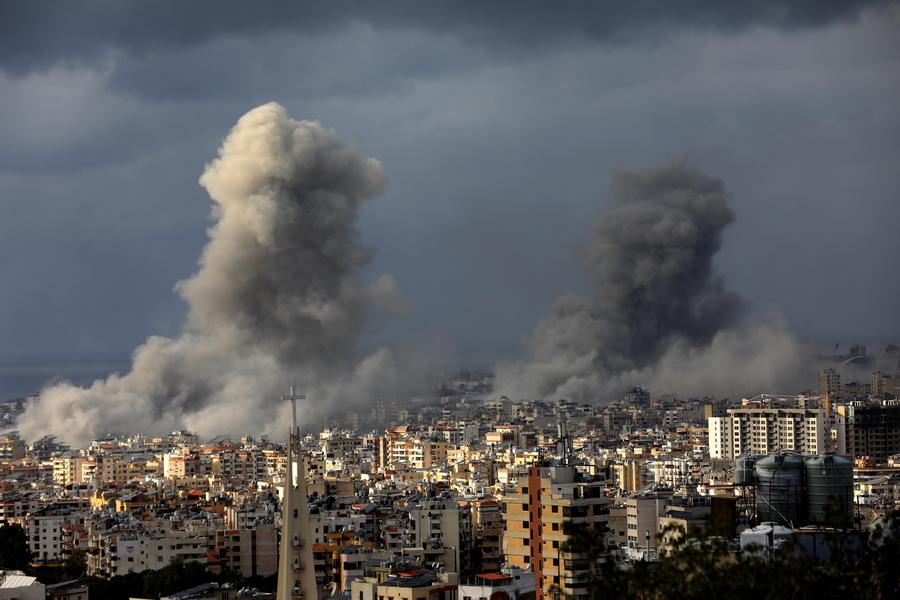
The agreement follows months of escalating tensions along the Israel Lebanon border and broader instability linked to Iran backed armed groups operating across the Middle East.