Jaishankar’s Mongolia visit reinforces strategic and spiritual ties, with both nations exploring cooperation in mining, energy and development while reaffirming long-standing partnership framework, reports India Daily News Desk
India and Mongolia have reaffirmed their commitment to deepening a long-standing strategic partnership, as External Affairs Minister S. Jaishankar held a series of high-level meetings in Ulaanbaatar during his ongoing official visit aimed at expanding cooperation across political, economic and cultural domains.
The visit, part of a four-day diplomatic tour that also includes the Republic of Korea, reflects New Delhi’s continued focus on strengthening engagement with key partners in East and Northeast Asia. Jaishankar’s engagements in Mongolia centred on translating traditionally warm ties into more tangible outcomes, particularly in sectors such as mining, clean energy and capacity building.
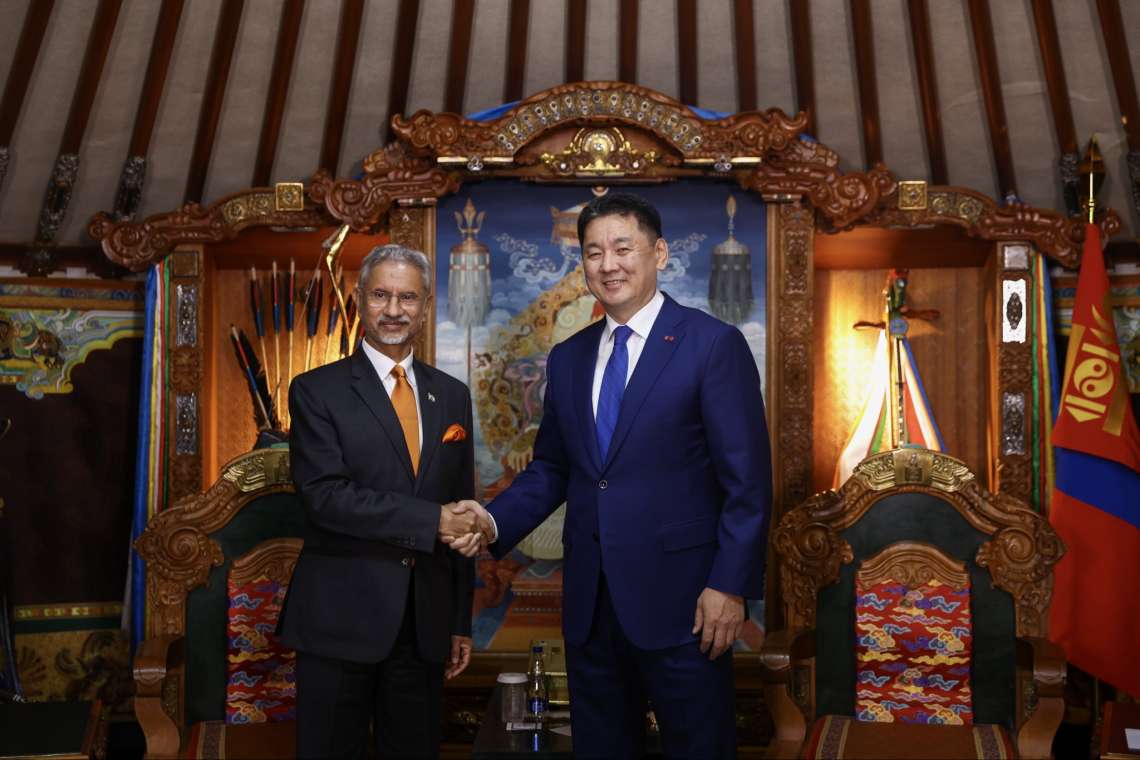
Shortly after his arrival in Ulaanbaatar, Jaishankar called on Mongolian President Khurelsukh Ukhnaa, conveying greetings from President Droupadi Murmu and Prime Minister Narendra Modi. The meeting revisited the momentum generated during President Ukhnaa’s visit to India last year, with both sides acknowledging a shared vision for the future of bilateral relations. Jaishankar later noted that the relationship between the two countries extends beyond conventional diplomacy, emphasising a “spiritual friendship” that underpins their engagement.
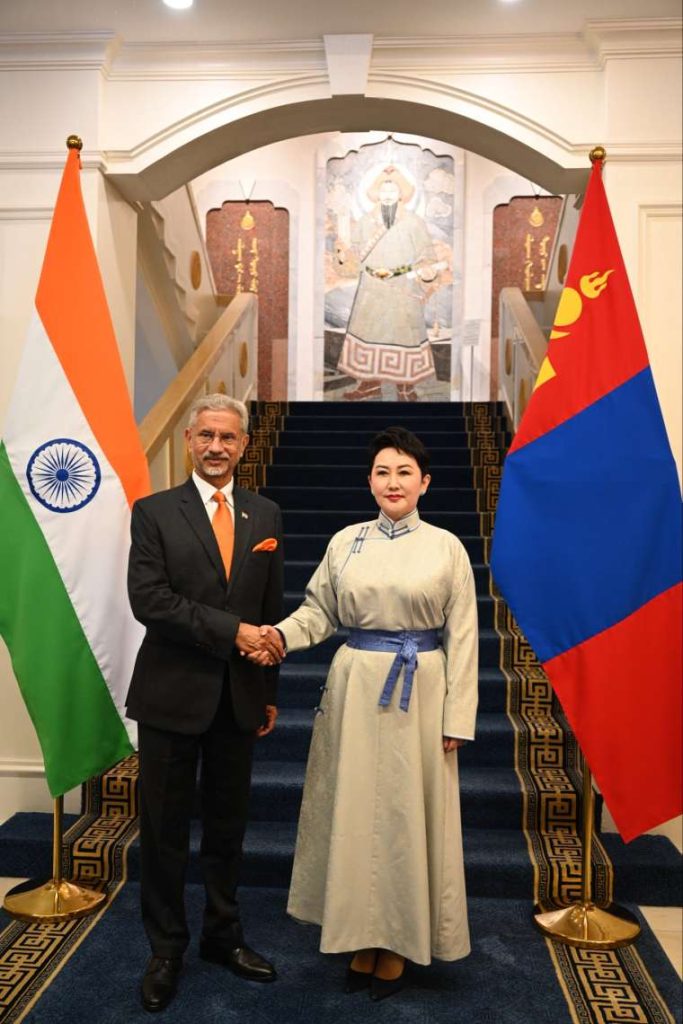
The External Affairs Minister also held wide-ranging talks with his Mongolian counterpart Battsetseg Batmunkh, reviewing progress across multiple sectors and identifying new areas for collaboration. Discussions covered ongoing development projects, capacity building initiatives and cooperation in education, security and multilateral platforms. Both sides also explored opportunities in mining, a sector central to Mongolia’s economy, as well as emerging areas such as clean energy and agricultural processing.
In a series of posts on X, Jaishankar described the talks as reflective of the “warmth, strength and promise” of the India Mongolia Strategic Partnership. He reiterated India’s readiness to deepen ties as a “third neighbour” and a “spiritual partner,” phrases that have long defined the unique character of bilateral relations.
Beyond executive-level engagements, Jaishankar also met Speaker of the State Great Khural Sandag Byambatsogt, welcoming his support for strengthening parliamentary exchanges between the two countries. The interaction highlighted the growing role of legislative diplomacy in reinforcing bilateral ties, particularly through friendship groups and institutional cooperation.
The minister’s schedule included meetings with Mongolia’s Education Minister L. Enkh-Amgalan and former President N. Enkhbayar, both of whom Jaishankar credited for their continued support in advancing the strategic partnership. These interactions underscored the importance of broad-based engagement across political and institutional stakeholders in sustaining momentum in bilateral relations.
Cultural diplomacy formed another key pillar of the visit. Jaishankar visited the Gandan Monastery, one of Mongolia’s most significant Buddhist institutions, where he met Chief Abbot Khamba Nomun Khan Geshe Lharampa D Javzandorj. The visit highlighted the deep-rooted spiritual and civilisational links between India and Mongolia, particularly through the shared heritage of Buddhism. Jaishankar described the blessings received at the monastery as meaningful for strengthening people-to-people ties and cultural goodwill.
India and Mongolia have long described their relationship through a distinctive framework that includes the notions of “Strategic Partners,” “Spiritual Neighbours,” and “Third Neighbours.” This formulation reflects both geographical realities and shared values, positioning India as a key partner for Mongolia beyond its immediate neighbourhood. Jaishankar’s visit is seen as a reaffirmation of this framework, with a renewed emphasis on practical cooperation and economic engagement.
The Ministry of External Affairs has said the visit is aimed at exploring new avenues for collaboration while consolidating existing partnerships. As part of his broader tour, Jaishankar is expected to continue similar high-level engagements in the Republic of Korea, further underlining India’s strategic outreach in the Indo-Pacific region.
The timing of the visit comes amid evolving geopolitical dynamics, where countries are increasingly seeking diversified partnerships to enhance economic resilience and regional stability. For India, strengthening ties with Mongolia aligns with its broader objective of expanding its footprint in East Asia while reinforcing relationships built on shared cultural and historical bonds.
While the India Mongolia partnership has traditionally been anchored in cultural and spiritual connections, recent engagements indicate a shift towards more outcome-oriented cooperation. The focus on sectors such as mining, energy and agriculture reflects a pragmatic approach to unlocking economic potential, even as both sides continue to celebrate their unique civilisational links.