Rights group calls on Islamabad to protect religious freedom and halt discrimination against Ahmadis….reports Asian Lite News Desk
A leading international human rights organisation has strongly condemned the continued persecution of the Ahmadiyya Muslim community in Pakistan, citing a sustained pattern of discrimination ranging from criminal prosecutions and mosque closures to grave desecrations, economic boycotts and targeted killings.
The UK-based International Human Rights Committee (IHRC) said recent incidents underscore the deepening institutionalisation of anti-Ahmadi sentiment in Pakistan, warning that discrimination against the community now extends from childhood indoctrination to interference in funeral rites after death.
Expressing serious concern, the rights body highlighted two recent cases that it said reflect the entrenched nature of religious intolerance.
“The first incident involves the public indoctrination of children with sectarian ideology centred on Khatme Nabuwwat, while the second concerns police interference in the funeral and mourning arrangements of deceased Ahmadis in Badin, Sindh, reportedly following pressure from extremist clerics,” the IHRC said.
According to the organisation, police intervention in Badin prevented Ahmadi families from carrying out funeral-related religious practices without intimidation or interference.
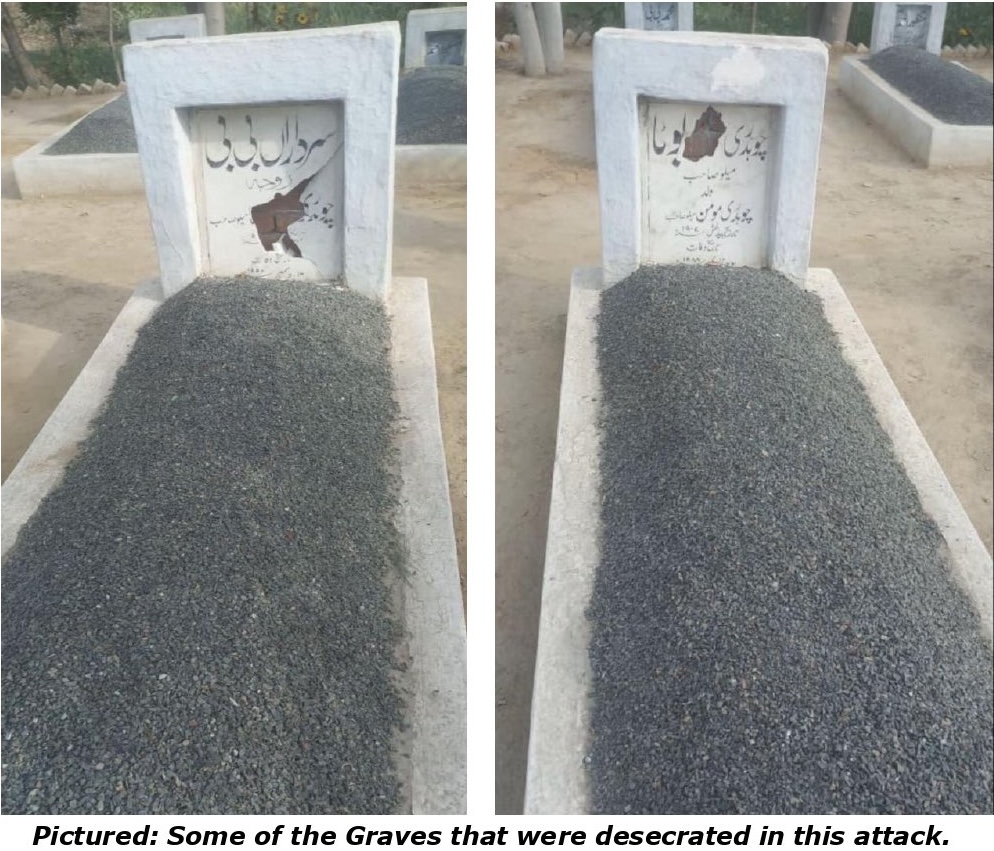
“The persecution of Ahmadis increasingly extends beyond their lifetime. In recent years, authorities have overseen or permitted the desecration of Ahmadi graves, prevented burials in public cemeteries, exhumed deceased Ahmadis, and interfered with funeral ceremonies solely because of the deceased’s religious identity. Such actions inflict additional suffering upon grieving families while violating the dignity owed to every individual after death,” the IHRC said.
The organisation stressed that these incidents are part of a broader and continuing campaign of persecution against the Ahmadiyya Muslim community across Pakistan.


The IHRC said it has documented widespread human rights violations against Ahmadis, including targeted killings, attempted murders, arbitrary arrests, restrictions on religious worship, demolition of mosques, desecration of graves, denial of burial rights, criminal prosecutions under Pakistan’s Penal Code, economic boycotts and sustained hate campaigns.
It also expressed concern over what it described as the growing influence of extremist groups on administrative and policing decisions.
“Rather than protecting vulnerable religious minorities, state institutions frequently appear to act in response to pressure from groups promoting sectarian intolerance,” the organisation noted.
The rights body further warned that the indoctrination of children with narratives of religious hostility perpetuates discrimination by portraying prejudice against Ahmadis as socially and religiously acceptable.
Calling for immediate action, the IHRC urged the Pakistani government to protect the Ahmadiyya Muslim community from violence, intimidation and discrimination, while ensuring that education promotes religious tolerance, peaceful coexistence and respect for fundamental human rights rather than sectarian hatred.
It also appealed to the United Nations, UN Special Rapporteurs, international human rights organisations and democratic governments to closely monitor the worsening situation and press Pakistan to uphold its obligations under international human rights law, including safeguarding freedom of religion or belief without discrimination.
“The continued indoctrination of children with sectarian ideology, together with interference in the funeral and mourning arrangements of religious minorities, reflects a broader culture of intolerance that requires urgent international attention,” the IHRC said.