The killing of protesting civilians exposes the limits of China-Pakistan development model in Pakistan-occupied Jammu and Kashmir (PoJK) … writes Dr Sakariya Kareem
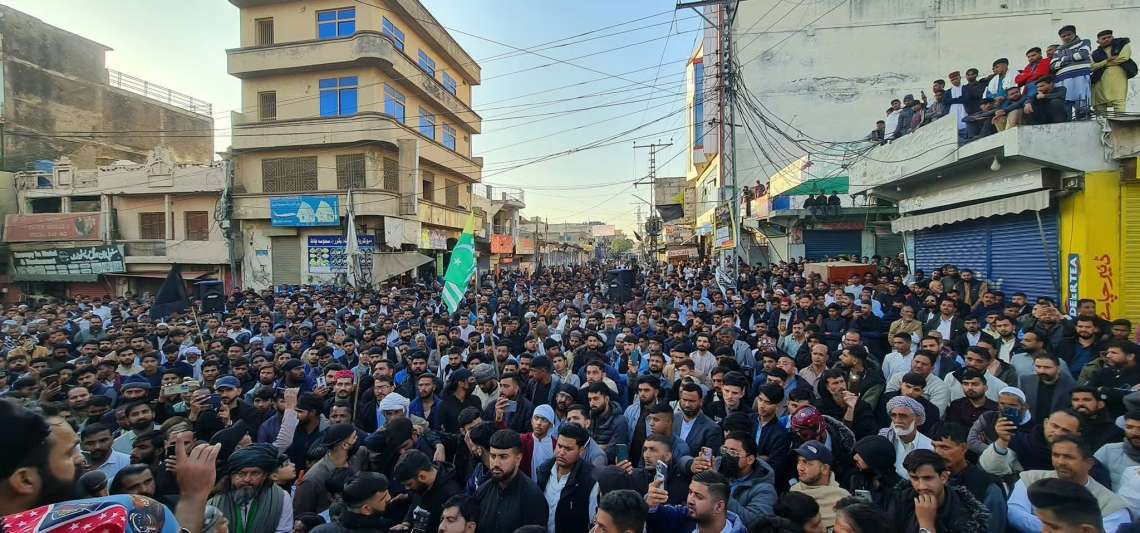
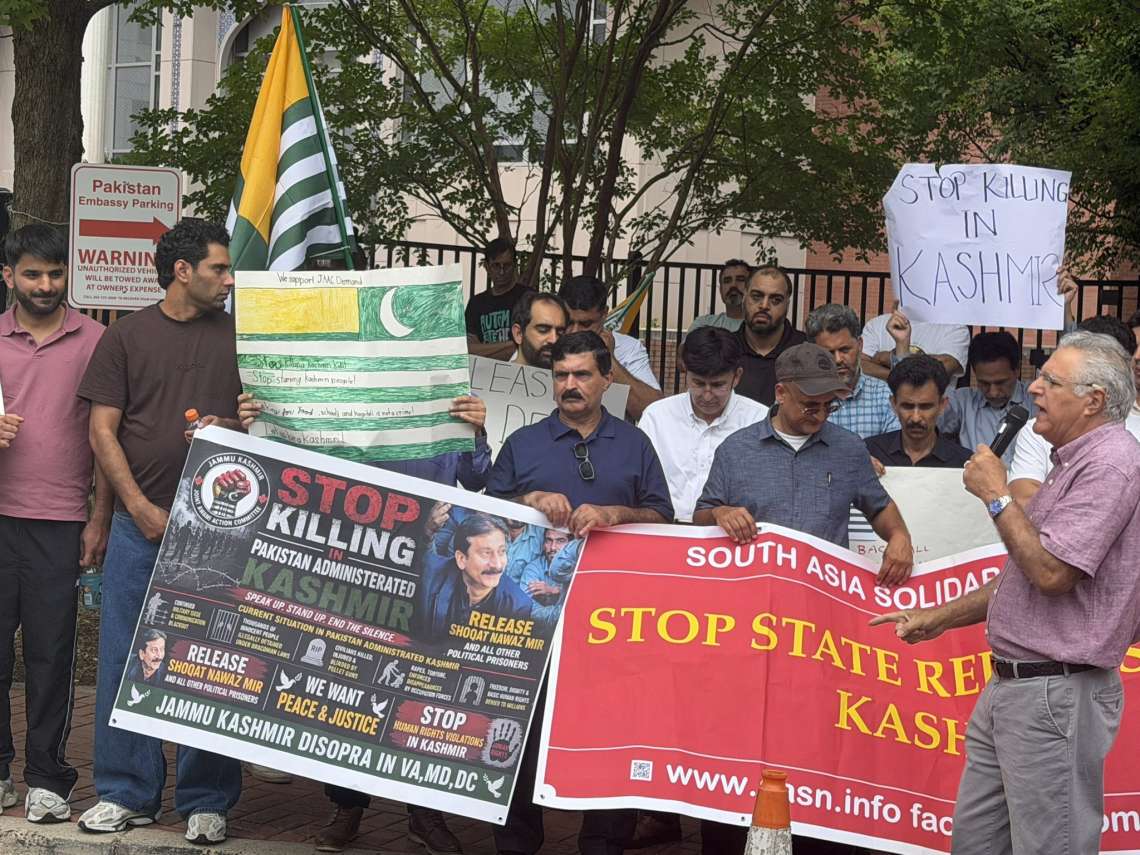
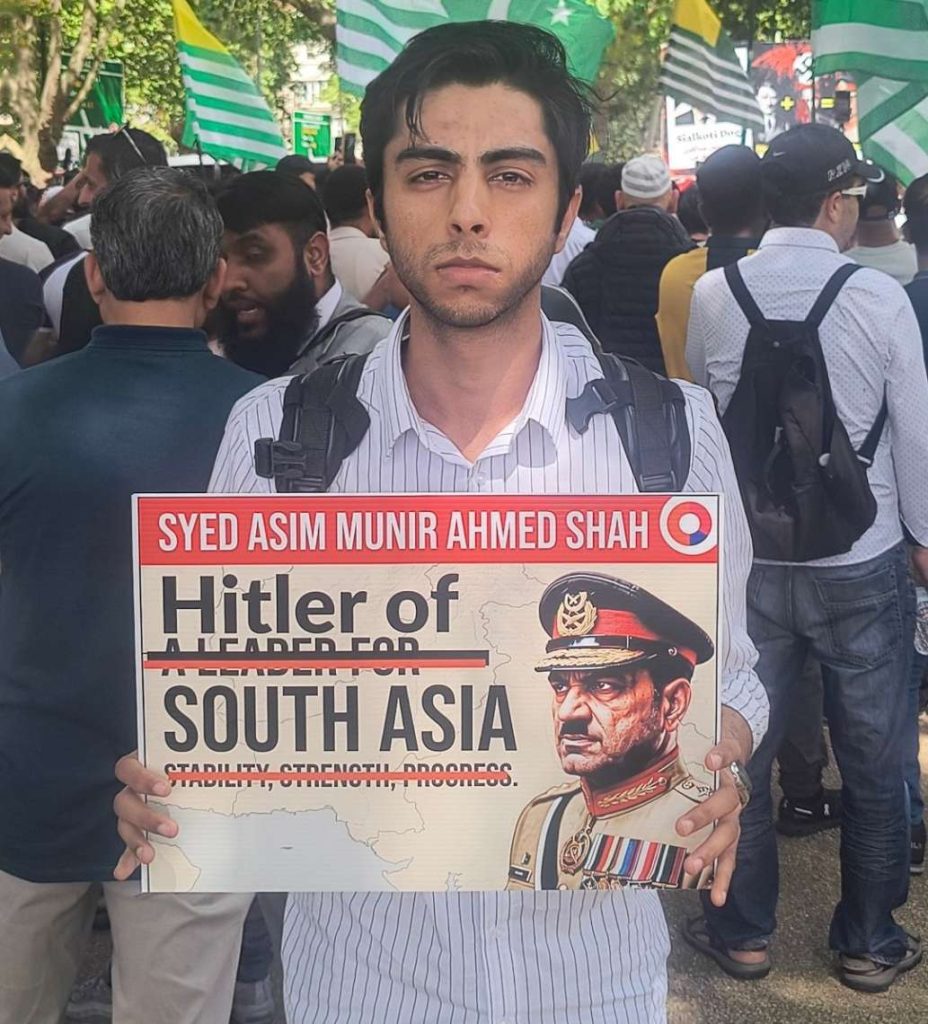
The latest unrest in Pakistan-occupied Jammu and Kashmir (PoJK) has once again brought the territory’s uneasy relationship with Islamabad into the open. Weeks of demonstrations, arrests and restrictions have culminated in violent confrontations between protesters and security forces, with casualties reported on both sides.
With communications repeatedly disrupted and competing accounts emerging from the territory, the full scale of the violence remains difficult to establish. What is clearer is that the confrontation is not an isolated eruption of anger, but the latest expression of grievances that have gathered force over the past several years.
At the centre of this mobilisation is the Jammu Kashmir Joint Awami Action Committee (JKJAAC), a coalition that has brought together traders, transporters and civil society groups around demands ranging from electricity tariffs and food prices to government privileges and political representation. Rather than emerging principally from the familiar India-Pakistan contest over Kashmir, the movement has grown around questions of everyday governance and access to resources. Islamabad’s increasingly coercive response has, in turn, pushed these grievances into the security domain, narrowing the space for political negotiation.

This is particularly uncomfortable for Pakistan, which has long positioned itself as an advocate of Kashmiri political rights and self-determination. The use of coercive measures against protesters in territory under its own administration complicates that position, especially when the grievances concern representation, economic rights and the distribution of local resources.
The region is also increasingly integrated into Islamabad’s infrastructure ambitions and, through the China-Pakistan Economic Corridor (CPEC), into Beijing’s economic presence in the region. The current unrest therefore exposes a broader contradiction: infrastructure can increase the economic and strategic value of a territory without necessarily giving its residents a greater role in determining how that value is used.
Hydropower and CPEC
The Jhelum River running through the territory has made PoJK important to Pakistan’s energy plans, while Chinese investment has added another dimension to that importance. Under CPEC, hydropower projects have incorporated the region into the larger infrastructure partnership between Islamabad and Beijing.
The 720 MW Karot Hydropower Project, located on the Jhelum at the boundary between Punjab and Kotli district in PoJK, began commercial operations in June 2022. Pakistan’s official CPEC portal lists its cost at around US$1.72 billion and identifies China Three Gorges-linked entities as its sponsors. The 1,124 MW Kohala and roughly 700 MW Azad Pattan hydropower projects have also been incorporated into the CPEC framework, although both have faced delays.
There is nothing inherently contradictory about building hydropower infrastructure in a region with substantial energy potential, nor can Chinese investment be held responsible for grievances surrounding electricity in PoJK. The more pertinent issue is the relationship between infrastructure, local benefit and political agency.
Electricity has repeatedly featured among the concerns driving mobilisation, even as the territory and its rivers occupy an important place in Pakistan’s energy plans. This produces a noticeable gap between the language of infrastructure development and the politics surrounding it. A territory can generate electricity and host billion-dollar projects while its residents continue to contest how resources are priced, distributed and governed.
Beijing’s Role
Beijing has generally presented CPEC as an economic partnership centred on connectivity, energy and development. In practice, the model relies heavily on the Pakistani state to negotiate projects, provide security and establish the political legitimacy under which Chinese companies operate. Questions about how local communities view those arrangements remain largely within Islamabad’s domain.
This distance is useful for Beijing. It allows China to emphasise megawatts generated, capital invested and infrastructure constructed while remaining removed from debates over representation, resource distribution and political consent.
The unrest therefore points to a wider limitation of China’s state-to-state development model. Political consent is largely assumed through agreements with the partner government, even where the relationship between central authority and local communities remains contested.
Beijing has repeatedly demonstrated that territorial status matters in its approach to the wider Kashmir dispute, including through objections to Indian administrative changes. Yet Chinese companies have simultaneously entered long-term infrastructure arrangements in territory whose political status remains unresolved.
The protests ultimately raise a question larger than either CPEC or the latest confrontation: whether infrastructure-led development can remain politically sustainable when economic integration moves faster than political accommodation.
For Islamabad, repeated mobilisation has increasingly become a problem of authority and public order. Yet coercion does little to resolve the conditions that have sustained protests over several years. Economic grievances have gradually become intertwined with questions of representation, elite privilege and the relationship between PoJK and the Pakistani state. Treating these concerns primarily through a security lens may contain demonstrations, but it risks deepening the political dissatisfaction behind them.
For Beijing, the consequences are less immediate. China has invested heavily in the proposition that infrastructure can produce development and that development can reinforce stability. CPEC remains one of the most visible demonstrations of that approach.
The interests of Pakistan and China converge here without being identical. Islamabad seeks to maintain authority while drawing economic value from a strategically important territory; Beijing seeks a stable environment in which infrastructure investments can proceed without becoming entangled in local politics. Both consequently have an interest in presenting development through measurable outputs such as investment, electricity generation and construction.
The latest unrest reflects a widening distance between the way PoJK is valued within larger strategic and economic plans and the way governance is contested by sections of its population. Pakistan’s reliance on coercion may suppress that tension temporarily, while Chinese investment can continue expanding the territory’s infrastructure. Neither, however, resolves the underlying question of how communities participate in deciding how resources are developed and how their benefits are distributed.
For China, it raises a quieter but equally important question about a development model that relies on agreements with governments as sufficient political consent. The unrest in PoJK brings these contradictions together, demonstrating that increasing the economic value of a territory does not necessarily resolve the politics surrounding who controls it or who benefits from its development.