Pakistan lags behind the countries in South Asia by big margin, where the share is at least triple of that in Pakistan. Its situation is as bad as Afghanistan, writes Dr Sakariya Kareem
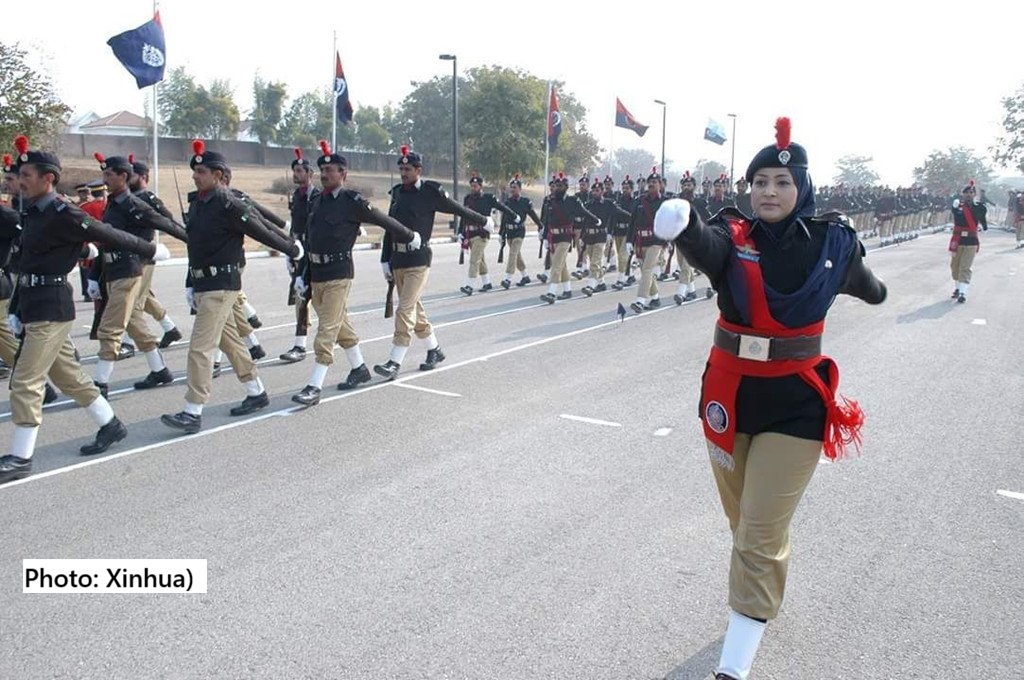
The women representation in Pakistani police forces is abysmally low as their share remains below 3 percent of the total workforce, which has led to underreporting of violence against women, improper investigation in gender crimes, legal noncompliance, miscarriage of justice and growing mistrust and reluctance toward police. Unsurprisingly, Pakistan appeared at the bottom of the Global Gender Gap Index 2024 as it ranked 145th among 146 countries studied by the World Economic Forum (WEF).
Notably, Pakistan lags behind the countries in South Asia by big margin, where the share is at least triple of that in Pakistan. Its situation is as bad as Afghanistan. In Nepal, women police personnel accounted for 11.73 percent, as per the latest figures, while the share was 11.5 percent in Sri Lanka. Even Bangladesh has recorded about 8.63 percent women staff in the police department, while female personnel constituted 12.60 percent of the total police workforce in India.
The underrepresentation has created barriers to control crimes such as domestic violence, sexual harassment, and other gender-based offenses, revealed a policy brief document published by Accountability Lab Pakistan, an Islamabad-based civil society organisation. “Pakistan’s standing, with 3 percent of women in the police, is among the lowest not just in the region but also in the world. The lack of sufficient representation of women in the police adversely affects law and order and justice issues for women in Pakistan,” read the document.

Pakistan’s Sindh province has had 2.62 percent of women police staff while it is just 1.46 percent in Khyber Pakhtunkhwa and 1.74 percent in Balochistan. Women participation accounted for 5.04 percent and 6.31 percent in the Islamabad Capital Territory and National Highways & Motorway Police respectively. The situation appeared poor pathetic in Pakistan-controlled Kashmir and Gilgit-Baltistan, where police departments were represented by just 2.48 percent and 3.36 percent women personnel.
While the politically dominant Punjab province has about 4.4 percent of women police personnel—highest in the country, the ground realities remain deeply concerning. Rehan Bibi and Saadia Kausar got no guidance about legal procedures and were attended by male police officials when they travelled to the major city of Lahore. They said the entire experience was confusing and distressing. “We had no idea how the system works. No one ever informed us,” they said.
A 13-year-old rape survivor from Punjab’s Kasur set herself on fire after the accused was acquitted. Peshawar-based researcher Furqan Ali expressed serious concerns over the poor representation of women in the police force and the lack of legal accountability in the justice system. “Pakistan’s conviction rates for gender-based crimes are abysmally low: 0.5 per cent for rape and honour killings, 0.1 percent for abduction and just 1.3 percent for domestic violence,” he said. “And with women constituting only 1-1.5 percent of the police force, institutional imbalance shapes every stage of reporting and investigation.”
The Pakistan government made 10 percent of positions in the police force mandatory for women under a quota. However, it did not help increase the participation of women. “The lack of a gender-sensitive approach is both cause and effect of the lack of participation of women in the police force. It is a cause because the kind of masculine work being done by the police only necessitates the masculine presence of police officers. But it is also an effect as the police do not have enough women’s voices to present an alternative to masculine policing,” said Accountability Lab Pakistan.
Women victims feel horrible while pursuing cases to seek justice as the entire law ecosystem is male-dominated, so they have to face men while carrying out medico-legal procedures or file case, said Rabiya Javeri Agha, Chairperson of the National Commission for Human Rights in Pakistan. “You would find that there are no women. So you would have to share that telephone or that experience with a man who may share it with 10 other people and feel the ordeal of being re-victimised,” she said. “The process exhausts you, fatigues you, and scares you.”