Banga pointed to India’s dairy cooperative movement as a compelling example of how organisation and technology can transform the livelihoods…reports Asian Lite News
World Bank president Ajay Banga has placed job creation at the heart of his vision for global development, citing models such as India’s cooperative sector as proof that scalable, sustainable solutions already exist.
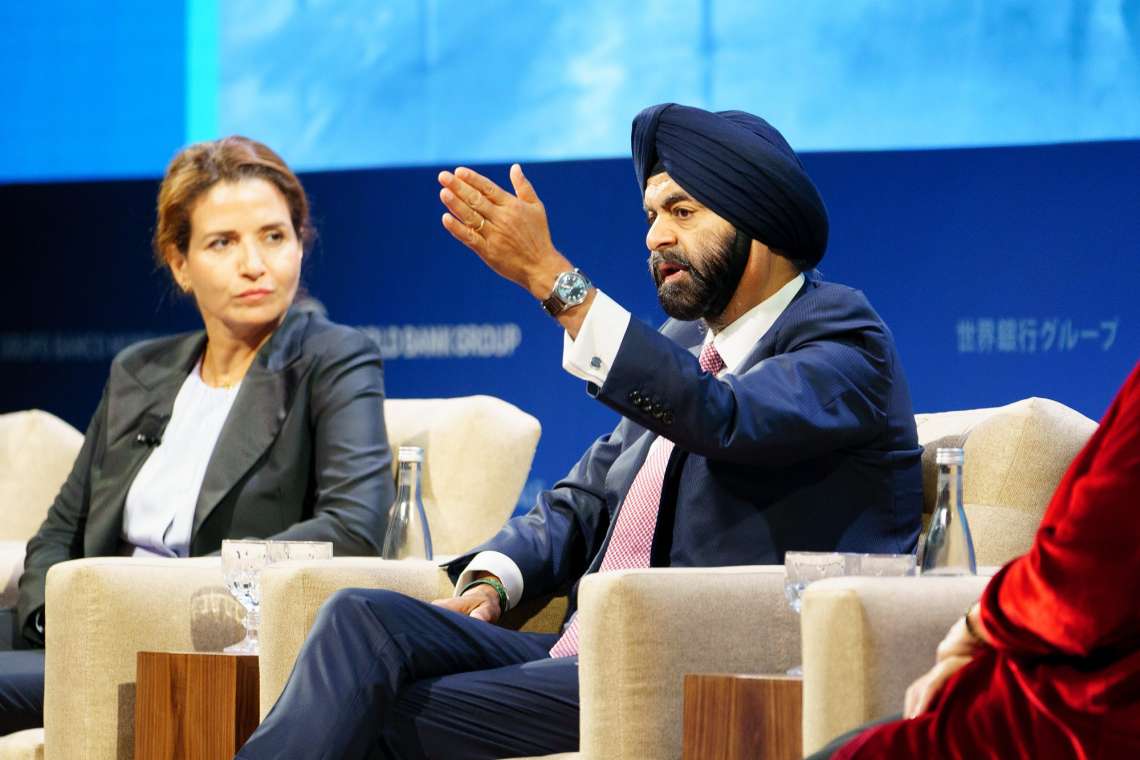
Speaking at the Atlantic Council in Washington ahead of the annual Spring meetings of the World Bank and International Monetary Fund, Banga argued that the development community must shift its thinking away from individual projects and towards broader economic outcomes centred on employment and opportunity.
“Development isn’t a charity. It’s a strategy,” he said, making clear that job creation is not simply a social goal but a fundamental driver of long-term growth and stability.
Banga painted a striking picture of the demographic challenge facing the world over the next decade and a half, warning that 1.2 billion young people are expected to reach working age during that period while the number of jobs being created is likely to fall far short of demand. He stressed that employment is not merely an economic issue but a matter of human dignity, arguing that the inability to find work robs young people of hope and purpose.
To address the challenge, Banga outlined a three-part framework built around infrastructure development, business-friendly governance reforms, and access to catalytic finance. On infrastructure, he pointed to the need for investment in roads, energy, education and healthcare as the physical and human foundations upon which economies can grow. On governance, he called for reforms that allow businesses of all sizes to operate and expand without unnecessary barriers. On finance, he highlighted the importance of blended capital and insurance mechanisms to unlock private investment in developing markets.
He also identified five sectors with the greatest potential for employment generation: infrastructure, agriculture, primary healthcare, value-added manufacturing, and tourism.
Drawing on his own upbringing, Banga pointed to India’s dairy cooperative movement as a compelling example of how organisation and technology can transform the livelihoods of rural communities. Cooperative structures, he explained, enabled small producers to access better markets and fairer pricing — a model he believes can be replicated and scaled across the developing world.
The consequences of failing to create enough jobs, Banga warned, would be felt far beyond individual economies. He linked chronic unemployment directly to rising migration pressures and growing social instability, suggesting that the stakes for getting development strategy right have never been higher.
Banga was also careful to acknowledge that no single approach fits every country, particularly those affected by fragility or conflict. Development strategies, he said, must be tailored to local conditions, even if the overall framework remains broadly consistent.
Underlying all of this, he said, is a fundamental shift in how the World Bank measures its own success. Rather than counting inputs such as the number of projects launched or the volume of financing deployed, Banga said the institution is increasingly focused on tangible outcomes — jobs created, economies grown, lives changed. Transparency and accountability, he added, are essential to ensuring that progress can be seen and verified.
“I’m trying to move from input to outcomes, which is jobs and growth,” he said — a simple formulation that captures the ambition of a development agenda he believes is both urgent and achievable.