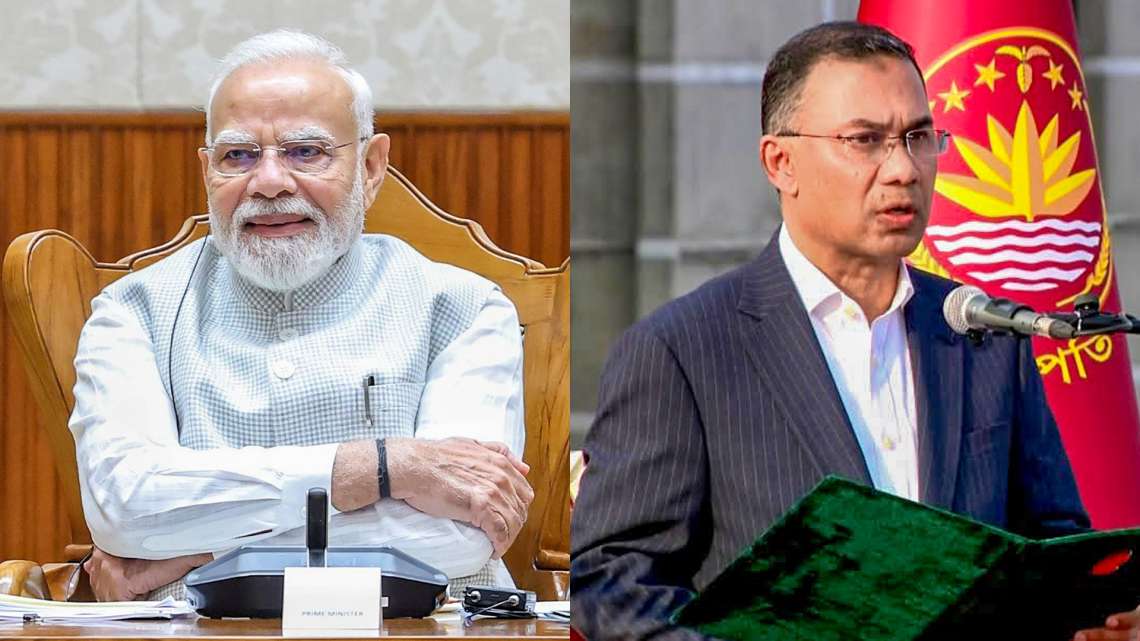
Narendra Modi’s journey from Gujarat to New Delhi is now one of the defining political stories of contemporary India. His supporters will point to development, infrastructure, welfare, technology, national confidence and India’s global standing. His critics will continue to raise questions about social cohesion, political centralisation, institutional independence and the treatment of dissent…writes Virendra Sharma, former Member of UK Parliament
Twenty-five years in public office at the head of government is a remarkable milestone in any democracy. In India, where political competition is intense, electoral mandates are fiercely contested and public opinion can change rapidly, such longevity deserves reflection.
On 7 October 2001, Narendra Modi became Chief Minister of Gujarat. Thirteen years later, in May 2014, he became Prime Minister of India. He has now completed twenty-five continuous years as the head of a government — first at state level and subsequently at the national level.
As someone of Indian origin who has spent a lifetime in public service and political activity in Britain, I look at this milestone neither through the lens of party politics nor through personal loyalty. I look at it from the perspective of a democrat: what does twenty-five years tell us about political leadership, public confidence and the relationship between an elected leader and the people?
My own political journey has taught me one fundamental lesson: politicians are temporary custodians of public office. The people are the ultimate authority.
The verdict of the people
Democracy is not simply about winning an election. It is about continually earning the confidence of citizens.
Mr Modi’s political journey has involved repeated elections and repeated opportunities for the Indian electorate to express its judgement. His three consecutive victories in national elections — in 2014, 2019 and 2024 — demonstrate the considerable electoral support he has been able to command. In June 2026, he also became India’s longest-serving elected Prime Minister in terms of continuous service, surpassing Jawaharlal Nehru’s previous record.
But records should not become substitutes for accountability.
A democratic leader should always remember that yesterday’s mandate does not automatically become tomorrow’s mandate. Every generation of voters has the right to ask new questions, demand new answers and expect government to respond to changing circumstances.
That is the beauty — and sometimes the difficulty — of democracy.
From Gujarat to India
Mr Modi’s political identity was substantially shaped by his thirteen years as Chief Minister of Gujarat. He came to office in October 2001 during a period of considerable difficulty for the state, including the devastating earthquake earlier that year. He subsequently developed a political reputation around administration, infrastructure, investment and economic development.
When he moved to New Delhi in 2014, he brought that experience of state government with him.
His governments have subsequently placed considerable emphasis on infrastructure, digital technology, financial inclusion, manufacturing, welfare delivery and India’s international standing. Programmes such as Digital India, Make in India and the expansion of digital public infrastructure have become associated with his period in office.
Supporters see this as evidence of transformation. Critics have legitimate questions about inequality, employment, institutional balance and the manner in which political power is exercised.
Both perspectives have a place in a democracy.
A statesman should be able to acknowledge achievement without abandoning scrutiny, and acknowledge criticism without dismissing those who disagree.
Leadership and responsibility
There is another dimension to twenty-five years in power: responsibility.
The longer a political leader remains in office, the greater the responsibility to maintain strong democratic institutions, respect constitutional principles and ensure that government remains accountable to Parliament, the courts, the media and, above all, the people.
India’s democracy is larger than any individual political leader or political party.
It has survived governments of very different ideological traditions. It has experienced periods of enormous political change. It has accommodated different languages, religions, cultures, regions and political movements.
That diversity is not a weakness. It is India’s strength.
The responsibility of leadership is therefore not merely to represent those who voted for you. It is to govern for those who did not.
India on the world stage
One cannot discuss the Modi years without recognising the increased visibility of India internationally.
India today seeks to play a larger role in global diplomacy, trade, technology, climate policy and the affairs of the Global South. The G20 presidency, India’s growing engagement with major economies and its increasing emphasis on partnerships across the developing world have contributed to a stronger international profile.
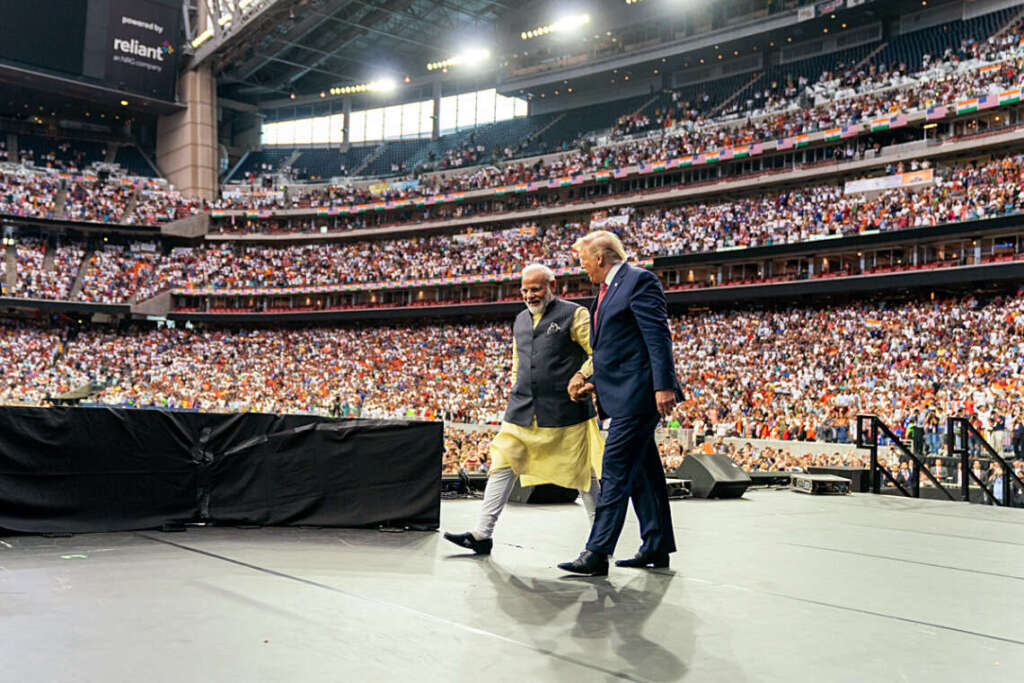
For those of us in the Indian diaspora, this matters.
We have lived between two worlds — proud of our Indian heritage while being deeply committed to the countries in which we have made our homes. I have always believed that the Indian diaspora should act as a bridge between Britain and India rather than a dividing line.
A confident India should also be an inclusive India.
The importance of public opinion
My own political experience has reinforced my belief that public opinion is the lifeblood of democracy.
Politicians can make speeches. Governments can introduce legislation. Parties can produce manifestos. But ultimately citizens decide.
They decide in elections, but they also express their views through civil society, the media, community organisations, professional bodies, young people and ordinary conversations around the country.
A mature democracy listens even when it does not agree.
That principle applies equally to supporters and opponents of Narendra Modi.
Those who admire his leadership should not believe that admiration removes the need for scrutiny. Those who oppose him should not underestimate the reasons why millions of Indians have repeatedly supported him.
Understanding political success requires understanding voters.
Twenty-five years — and the next chapter
Twenty-five years at the head of government is not merely a personal record. It is an opportunity for reflection.
Narendra Modi’s journey from Gujarat to New Delhi is now one of the defining political stories of contemporary India. His supporters will point to development, infrastructure, welfare, technology, national confidence and India’s global standing. His critics will continue to raise questions about social cohesion, political centralisation, institutional independence and the treatment of dissent.
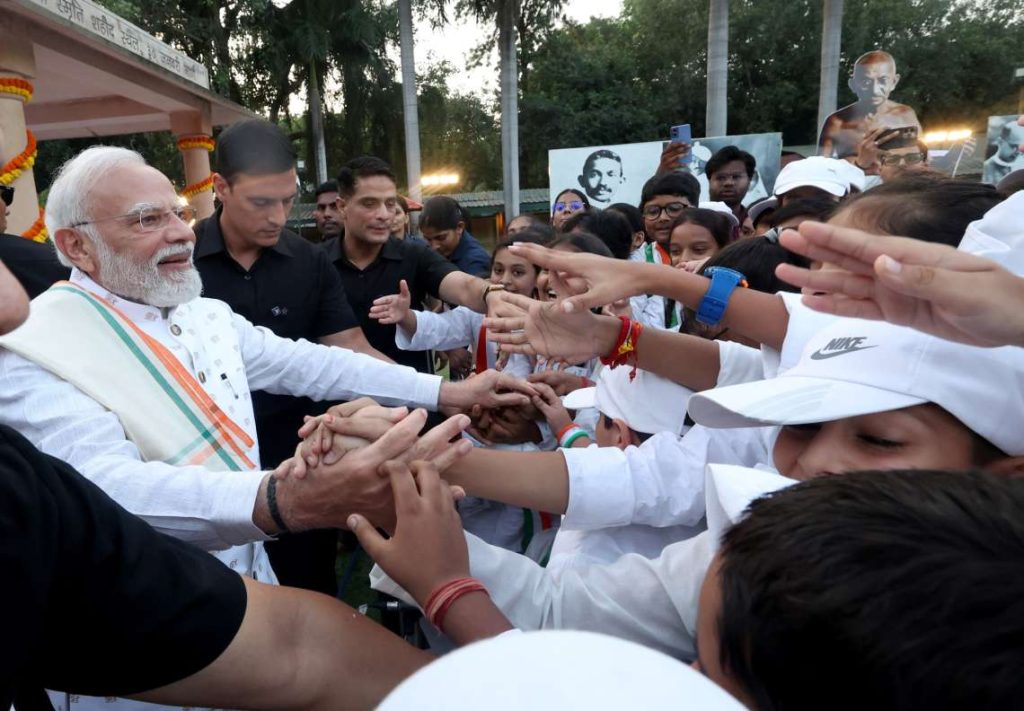
The democratic answer is not to silence either side.
The answer is to allow the people to judge.
As an Indian-origin political activist who has spent decades believing in public service, I have never regarded politics as a possession. Public office is a responsibility entrusted temporarily by citizens.
That is why I believe the most appropriate way to view Narendra Modi’s twenty-five years is neither through unquestioning celebration nor through automatic condemnation.
It is through democratic reflection.
Twenty-five years is a remarkable achievement. It reflects political resilience, organisational ability and, above all, a sustained relationship with the electorate. But the true measure of any political career is ultimately larger than longevity.
It is whether the leader leaves behind a stronger democracy, stronger institutions, greater opportunity and a society in which every citizen feels that they belong.
India belongs to all Indians.
Its democracy belongs to all Indians.
And ultimately, the final word must always belong to the people.
That, in my view, is the enduring lesson of twenty-five years of Narendra Modi’s political leadership: leaders may occupy office, but sovereignty rests with the people.