PMML represents the latest chapter in LeT’s evolution: from militant organization to charitable network, from banned entity to political aspirant…writes Dr SaKariya Kareem
Pakistan Markazi Muslim League (PMML) represents one of the most striking examples of how a proscribed militant ecosystem can reinvent itself under the veneer of democratic participation.
What appears on the surface as a political party with a religious agenda is, in reality, the latest iteration of Lashkar‑e‑Taiba’s (LeT) long‑standing strategy: to survive state pressure, preserve its networks, and cultivate influence by embedding itself within Pakistan’s social and political fabric.
The roots of this transformation stretch back to 2002, when Pakistan formally banned LeT under international pressure. Yet the organization’s charitable arm, Jamaat‑ud‑Dawa (JuD), continued to operate openly for years, running an extensive network of seminaries, hospitals, ambulance services, and publishing houses. This dual structure—militant core, humanitarian façade—allowed LeT to maintain legitimacy among segments of the population while shielding itself from scrutiny.

Only in 2019 did the state finally move decisively, shutting down JuD and its sister organization, Falah‑e‑Insaniat Foundation (FIF), and arresting Hafiz Saeed and his associates on charges including illegal funding. Analysts widely viewed these actions as a response to the Financial Action Task Force (FATF), which had blacklisted Pakistan for failing to curb terror financing.
But even before the crackdown, discussions within JuD had already begun about entering electoral politics. The creation of the Milli Muslim League (MML) in 2017 was the first formal attempt to rebrand LeT’s ideological project into a political movement. Although the MML contested the 2018 general elections, it failed to gain traction and was eventually banned. Out of its ashes emerged the Pakistan Markazi Muslim League, a new name, a new symbol, but the same ideological lineage.

PMML’s political ambitions are framed in the language of religious revivalism. Its manifesto calls for institutionalizing the five daily prayers, implementing a centralized Zakat system, and nationalizing mosques so that prayer leaders receive state salaries, mirroring the Saudi model. The party positions itself as a unifying force against sectarianism, yet its leadership and core membership are overwhelmingly drawn from the Ahle‑Hadith tradition—the same doctrinal base from which LeT and JuD historically drew their strength. In this sense, PMML is less a broad‑based political movement and more a reconstituted Ahle‑Hadith power bloc seeking legitimacy through electoral participation.
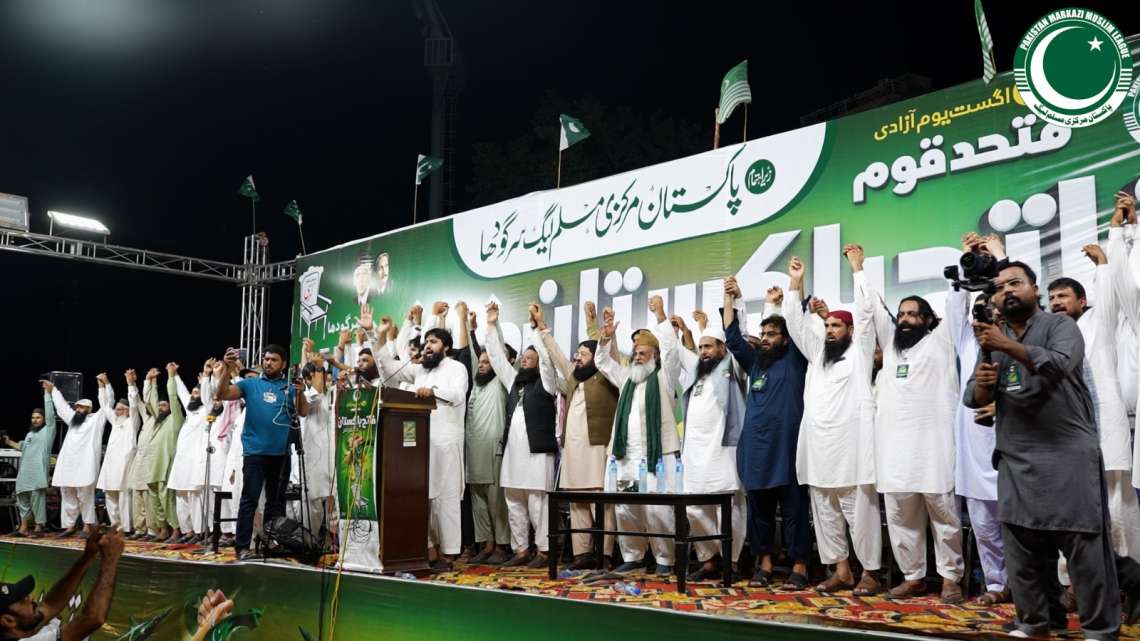
Despite contesting every provincial and national seat in the 2024 general elections, PMML failed to win a single constituency. But electoral victory is not the only metric of success for such an organization. Its real strategy lies in building influence from the ground up, embedding itself in local communities, cultivating youth, and presenting itself as a socially conscious, service‑oriented movement. The party’s leadership frequently emphasizes humanitarian work, unity, and moral reform. At a membership drive in Upper Dir, PMML leaders spoke of serving vulnerable communities, supporting orphans, and defending the oppressed—language designed to soften the organization’s image and distance it from its militant origins.
This grassroots strategy is reinforced by a network of micro‑outfits designed to penetrate different segments of society. The Muslim Student League (MSL) and Muslim Youth League (MYL) operate across Punjab, Sindh, and Khyber Pakhtunkhwa, conducting campus study circles that propagate Salafist ideology. Events such as the December 2025 scout camp in Bahawalpur reveal a more troubling dimension: the recruitment of youth through subtle exposure to jihadist narratives. These student wings serve as ideological incubators, ensuring that LeT’s worldview continues to find new adherents even as its militant activities face state pressure.

PMML has also expanded into gendered outreach. The formation of a Women’s Wing, and the appointment of female representatives in regions like Gilgit‑Baltistan, is part of a broader effort to portray the organization as inclusive and socially engaged. This is a calculated move: by mobilizing women, PMML not only broadens its support base but also normalizes its presence in communities that might otherwise be wary of its militant associations.
The party’s political messaging often aligns with state narratives, particularly on national security. After Operation Sindoor, PMML organized rallies across more than fifty cities in May 2025, expressing support for the Pakistani military and its response to Indian aggression. This alignment reinforces the perception that PMML, like many Islamist groups before it, occupies a space close to the establishment benefiting from a long history of tacit accommodation between religious parties and powerful state institutions.
Taken together, PMML represents the latest chapter in LeT’s evolution: from militant organization to charitable network, from banned entity to political aspirant. Each transformation reflects a strategic adaptation to pressure whether from the international community, domestic law enforcement, or shifting political realities. By embedding itself in electoral politics, youth organizations, women’s groups, and community service initiatives, PMML seeks to sanitize its image while preserving the ideological core that has defined LeT for decades.