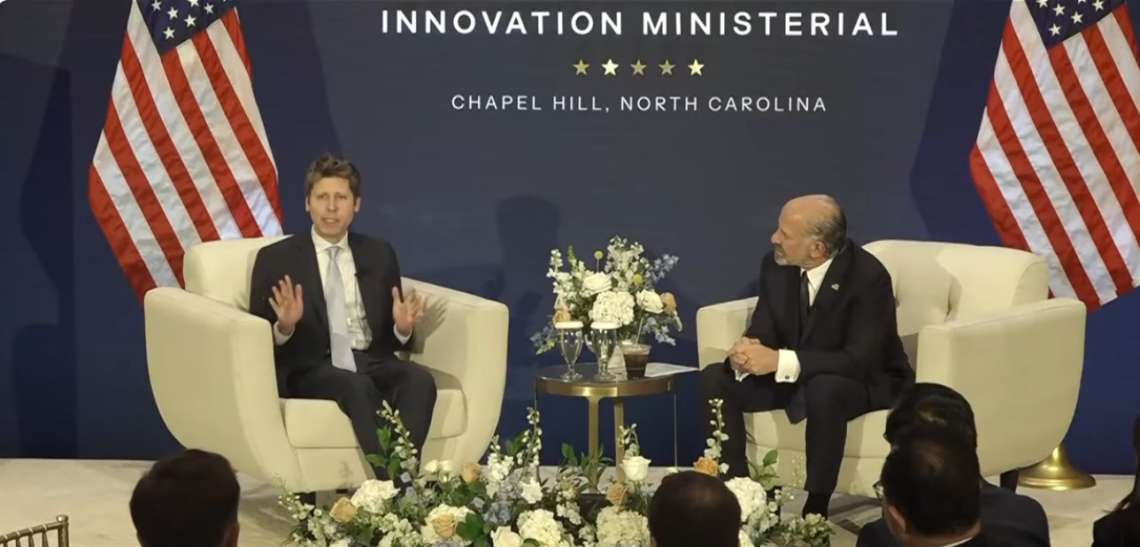
OpenAI chief Sam Altman says governments can regulate artificial intelligence differently, but warns that refusing to adopt it could carry a huge economic cost….reports Asian Lite News Desk
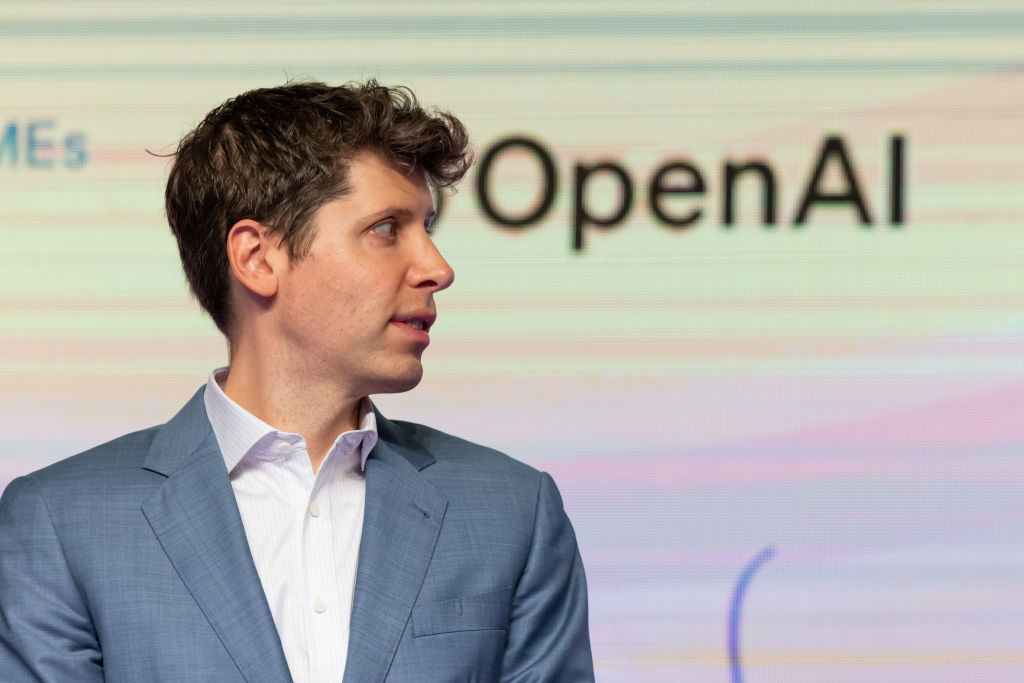
OpenAI chief executive Sam Altman has urged governments not to shut artificial intelligence out of their countries, comparing such a decision to rejecting electricity more than a century ago and arguing that AI adoption will be essential for future economic growth.
Speaking during a fireside chat with US Commerce Secretary Howard Lutnick, Altman told representatives of G20 economies that while countries could choose different approaches to regulating AI, using the technology was becoming increasingly unavoidable.
“I think it would be approximately as bad of an idea to say we’re not gonna have AI in our country as it was to say we’re not gonna have electricity in our country,” Altman said.
Governments could decide how to regulate AI and whether to build their own data centres or rely on external infrastructure, he said, but added: “You have to use it.”
“The economic growth and benefit to people that can come from this, the value to a country is too high to ignore,” Altman said.
He predicted that AI could trigger the biggest boom in entrepreneurship and small business creation the world has seen by giving individuals access to expertise, software and resources that were previously costly or difficult to obtain.
Altman cited the example of a laundromat owner who used ChatGPT for marketing, legal guidance and managing vendor relationships, illustrating how small businesses could increasingly use AI to perform tasks once requiring specialist support.
The OpenAI chief also said the speed at which entrepreneurs could turn ideas into businesses was accelerating dramatically.
“The work that we expected a startup to accomplish in three months is now probably doable in, like, 17 minutes with Codex,” he said, referring to OpenAI’s AI-powered coding tool.
Altman predicted that future AI systems would evolve into persistent virtual collaborators working continuously alongside humans and could significantly expand access to healthcare, education and other services.
Within a decade, he said, AI could become so deeply integrated into everyday products that people would no longer think of it as a separate technology.
However, Altman warned that rapid AI adoption also carried significant risks, particularly in cybersecurity and biosecurity. He also raised concerns that control over powerful AI systems could become concentrated in the hands of a small number of companies or individuals.
“I think some things are gonna go very wrong with cybersecurity unless people act quite urgently,” he said.
Altman stressed that expanding access to AI would require massive investment in computing infrastructure. Without sufficient capacity, he warned, the technology could remain expensive and accessible primarily to wealthy users rather than becoming an equalising force.
His comments come as governments around the world grapple with how to regulate the fast-growing technology while seeking to harness its potential economic and social benefits.