Women and children faced particular hardship of separated families, lack of shelter upon return, and exposure to Taliban reprisals for perceived collaboration with Pakistani authorities, writes Dr Sakariya Kareem
Pakistan’s Illegal Foreigners Repatriation Plan (IFRP), launched in October 2023, has evolved into one of the world’s largest and most criticised forced deportation campaigns, targeting Afghan refugees who have lived in the country for decades. By early 2026, the policy has driven the return of more than two million Afghans, including those with legal documentation, amid widespread reports of arbitrary arrests, extortion, and coercion. International human‑rights organisations and the United Nations have repeatedly condemned the plan as opaque, indiscriminate, and in violation of the principle of non‑refoulement, which prohibits returning refugees to places where they face serious risks.
The IFRP was announced amid heightened security tensions following suicide bombings in Pakistan, with authorities blaming Afghan nationals for rising crime and terrorism. Phase one targeted undocumented Afghans, giving them 30 days to leave voluntarily or face deportation in which over 468,000 returned between October and December 2023. On 7 March 2025, Pakistan revived the plan, initially focusing on Afghan Citizenship Card (ACC) holders, roughly 800,000 people issued temporary cards by the Pakistani government between 2017 and 2019 and ordering their voluntary departure by 31 March or deportation from 1 April. By 31 January 2026, a cumulative 2,009,241 Afghans had been repatriated since September 2023.
Since April 2025, over 144,300 individuals including PoR holders were apprehended, detained, and deported, with more than 50,000 PoR cardholders arrested since September. In October 2025, Pakistan announced the closure of all 54 Afghan refugee villages nationwide, including in Kohat district, forcing entire communities to dismantle lives built over generations. UNHCR expressed deep concern over the denotification of these villages and urged that any repatriation be voluntary, gradual, and dignified. By February 2026, a one‑year recap showed over one million Afghans, many undocumented, had been pushed back amid limited resources and service access.

Amnesty International has led criticism of the plan’s illegality and inhumanity. In March 2025, the organisation called for its withdrawal, arguing that opaque executive orders demonise Afghans as criminals and terrorists while ignoring their refugee status and risks in Taliban‑controlled Afghanistan. The policy breaches non‑refoulement by sending people back to persecution, torture, or indiscriminate violence, contravening the 1951 Refugee Convention, the International Covenant on Civil and Political Rights, and customary international law. Amnesty documented forced relocations even within Pakistan for instance, moving PoR holders from Islamabad and Rawalpindi by 31 March 2025 which upended homes, businesses, and communities for families resident for decades.
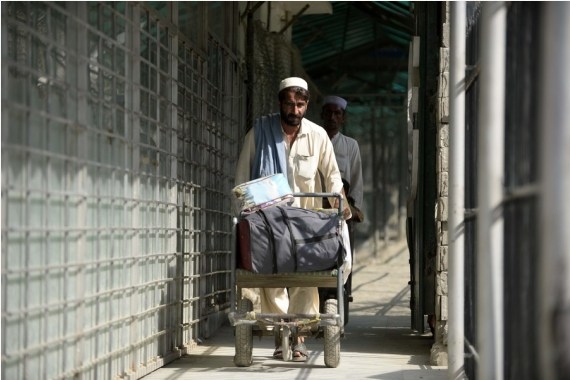
Returnees report police extortion, beatings, and arbitrary arrests during night raids, with families paying bribes to avoid detention. In the second phase starting April 2025, 230,500 Afghans returned, including 42,800 deportees. 70 per cent were undocumented, 19 per cent ACC holders, and 11 per cent PoR holders. Women and children faced particular hardship of separated families, lack of shelter upon return, and exposure to Taliban reprisals for perceived collaboration with Pakistani authorities. UNHCR data as of 31 December 2025 shows voluntary repatriations continuing, but, with blue PoR cardholders (issued April 2021) directed straight to borders from August 2025. An estimated 1.7 million PoR holders and 737,000 ACC holders remain in Pakistan, alongside 115,000 asylum seekers, living in fear.
Pakistan justifies the IFRP on security grounds, citing TTP attacks allegedly launched from Afghan soil and claiming Afghans commit disproportionate crime. Officials argue the country has hosted millions generously for over four decades and now seeks to manage an unsustainable burden amid economic crisis. Yet evidence undermines these claims. UNHCR and independent analyses show no statistical spike in Afghan‑linked crime, and many deportees are women, children, and long‑term residents born in Pakistan.

Legally, the IFRP flouts Pakistan’s obligations despite its non‑signatory status to the 1951 Refugee Convention. Customary non‑refoulement binds all states, as affirmed by UN human‑rights bodies reviewing Pakistan in 2024. PoR and ACC holders enjoyed prima facie refugee status via UNHCR registration. Their mass deportation without individual risk assessments violates due process and arbitrary expulsion bans under ICCPR Article 13. Pakistan’s assurances of voluntary is factually incorrect amid documented coercion. Authorities claim most departures are self‑initiated, but UNHCR and Amnesty note psychological pressure, economic desperation, and fear of arrest drive the numbers. Extortion at checkpoints, property seizures, and school expulsions for Afghan children create a coercive environment tantamount to forced return. As of late 2025, over 144,300 detentions signal a shift from voluntary to expulsion.
The international community has responded with concern but limited leverage. UNHCR has scaled up border monitoring and aid but urged Pakistan to halt forced returns and renew registrations for 1.4 million at risk. Western donors, funding much of Pakistan’s economy, have called for humane treatment, yet economic pressures mute stronger action. Neighbours like Iran mirror the policy, compounding the regional crisis. Pakistan’s IFRP exemplifies state‑driven refoulement on an industrial scale, prioritising political expediency over human lives. With over two million uprooted and counting, the plan has shattered communities, violated international norms, and deepened Afghanistan’s despair.