Artemis II astronauts battle toilet glitch as they near historic Moon flyby, pushing deeper into space while preparing to capture rare images of the lunar far side, reports Asian Lite Newsdesk
The crew of Artemis II are approaching a landmark moment in modern space exploration, as they prepare to fly around the Moon and venture farther into space than any humans since the Apollo program more than five decades ago.
The four astronauts — three Americans and one Canadian — are expected to reach the Moon on Monday, capturing images of the lunar far side, a region rarely seen directly by human eyes. The mission marks the first crewed journey to the Moon in over 53 years, signalling a major step forward in NASA’s long-term ambitions for deep space exploration.
Aboard the Orion spacecraft, pilot Victor Glover described the changing view from space, noting that Earth now appears increasingly distant as the Moon grows larger in their field of vision.
Despite the historic significance of the mission, the crew has encountered a more down-to-earth challenge. A malfunction in the spacecraft’s onboard toilet system has forced astronauts to rely on backup measures, including urine collection bags, after the system began experiencing issues shortly after launch.
Engineers at NASA believe the problem may be caused by ice blocking part of the waste disposal line, preventing proper operation. While the system remains partially functional, astronauts have reported intermittent performance and an unpleasant odour emanating from the unit.
Officials say the issue, while inconvenient, does not pose a risk to the crew or mission. Spaceflight systems, particularly waste management, have historically been a persistent engineering challenge, with similar problems recorded during earlier missions, including the space shuttle era.
Mission managers emphasised that the astronauts are well-trained to handle such situations and continue to operate effectively as the mission progresses.
As the spacecraft nears the Moon, attention is also turning to the scientific significance of what the crew will observe. According to NASA astronaut Chris Williams, the lunar surface offers a unique record of the Solar System’s history. The Moon’s far side, in particular, is densely covered with impact craters that have remained largely unchanged for billions of years.
These craters, Williams explained, provide insights into the early conditions of Earth and its cosmic environment. While Earth has experienced similar impacts, geological processes such as plate tectonics, erosion and volcanic activity have erased much of that evidence over time.
By contrast, the Moon preserves this history in remarkable detail, offering scientists a clearer picture of the violent processes that shaped the early Solar System.
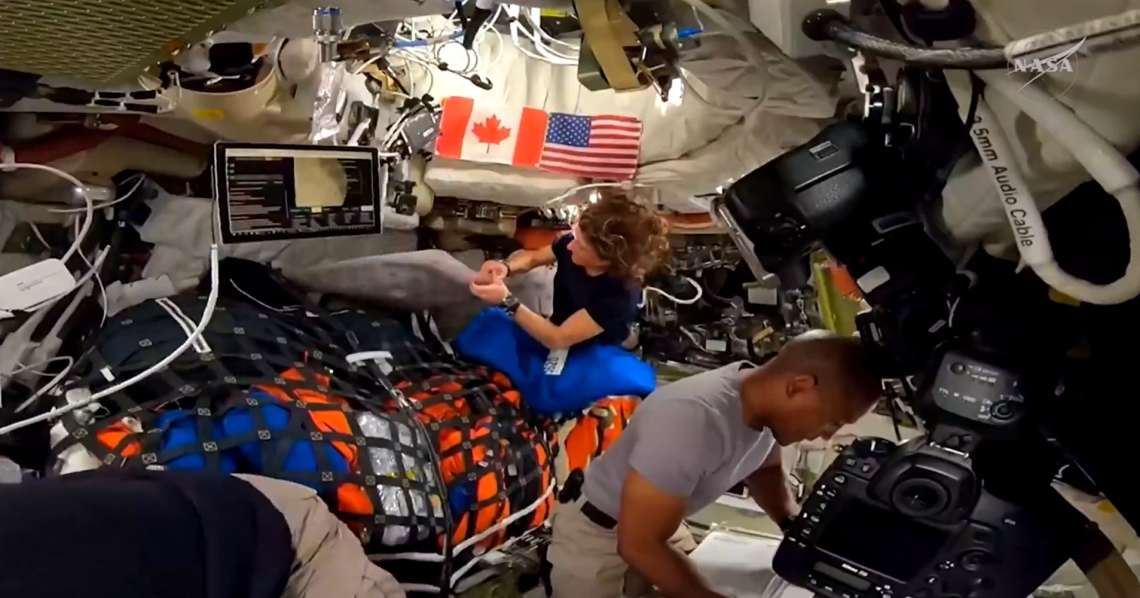
Meanwhile, crew members continue preparations for the upcoming lunar flyby, balancing routine tasks such as exercise and system checks with the demands of operating in deep space. NASA has shared updates showing astronauts maintaining strict schedules, underscoring the intensity and precision required for such missions.