The alleged theft of donations from the Ram temple in Ayodhya has become more than a criminal investigation. It is now a defining test of whether India’s most significant religious institution can match the devotion of its millions of donors with equally uncompromising standards of transparency and accountability, writes Manoj Menon
There are scandals that expose corruption, and there are scandals that wound the very idea of public trust. The alleged siphoning of donations from the Ram temple in Ayodhya belongs firmly in the second category. If the allegations are proven, this is not simply a story about stolen money. It is about the betrayal of millions who offered their hard-earned savings as an act of faith.
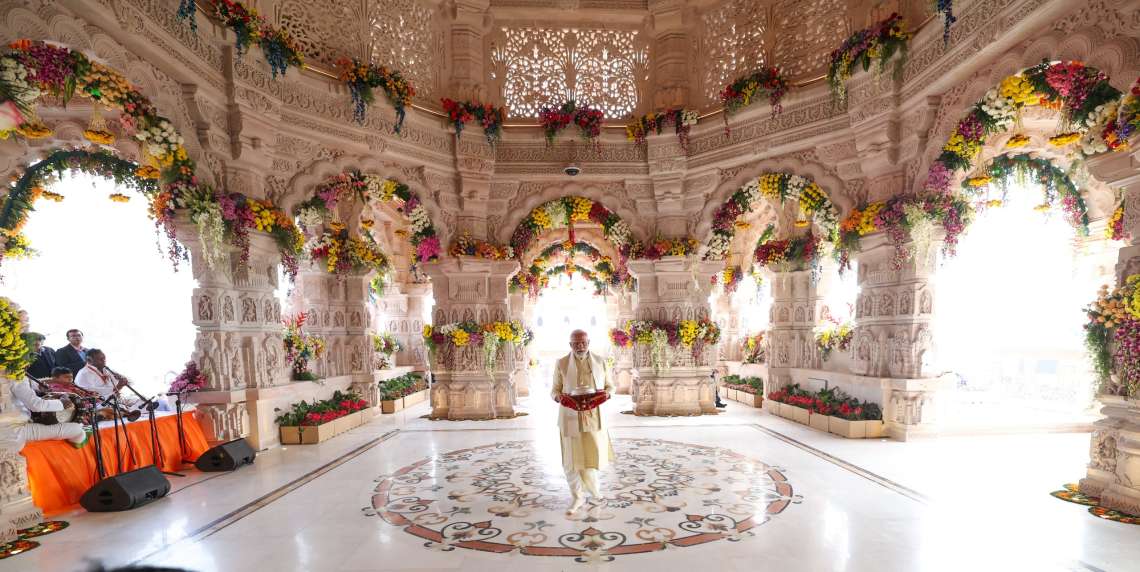
The Ram temple occupies a unique place in modern India. It was built not through royal patronage or state funding, but through donations from ordinary devotees across the country and beyond. Every contribution, whether a handful of coins or a large cheque, carried the belief that it was helping build something sacred. That belief was the temple’s greatest asset, far more valuable than the Rs 2,000 crore spent on constructing the complex or the Rs 153 crore reportedly collected through donation boxes in FY25.

The allegations now under investigation suggest that some entrusted with protecting that faith instead chose to exploit it.
Eight people have been arrested. Among them are a primary school teacher, a former car mechanic, a retired bank employee, contract workers involved in counting donations and a trusted aide linked to the temple administration. Investigators allege they exploited weaknesses in the donation-counting process, using CCTV blind spots, unauthorised access to keys and poor supervision to divert cash meant for the temple. Police are examining assets, financial transactions and the individual roles of each accused.
The details are disturbing. Cash worth lakhs of rupees has allegedly been recovered during searches. Investigators claim some accused accumulated houses, farmland, expensive vehicles and jewellery despite modest salaries. One accused allegedly kept a donation chest labelled “Ramrajya Kosh” with a digital payment QR code at his residence. Another reportedly described how money was hidden in washrooms before being removed from the counting centre. If established in court, these are not isolated lapses but signs of a system that had become dangerously vulnerable.
Yet the bigger question lies beyond the eight arrests.
Institutions do not fail because one individual steals. They fail when governance allows theft to continue unnoticed or unchallenged. Reports that CCTV footage was automatically deleted after 45 days, that unauthorised individuals had access to donation box keys and that standard frisking procedures were allegedly not followed point towards institutional weaknesses rather than merely individual wrongdoing.
Fresh questions have emerged over whether warnings were missed. Sources claim the State Bank of India had recommended replacing the donation-counting staff months before the alleged embezzlement surfaced, but the process was reportedly halted. The Uttar Pradesh government has now extended the Special Investigation Team’s tenure, and the scope of the inquiry may widen further. Police are also examining allegations surrounding recruitment practices connected to the temple trust.

The temple trust has responded by making frisking mandatory for staff entering and leaving the complex, while discussions continue over governance reforms, including proposals for stronger professional management. Those are welcome first steps. They should not be the last.
India already has examples of how religious institutions can combine devotion with rigorous financial discipline. Tirupati, Shirdi, Siddhivinayak, Puri and Somnath have developed systems designed to minimise opportunities for abuse through multiple layers of oversight, transparent procedures and regular reporting. Ayodhya deserves no less.
This case must not become another scandal that ends with a few arrests while deeper questions remain unanswered. If anyone beyond the accused bears responsibility, the investigation must establish it without fear or favour. If the trust’s systems failed, they must be rebuilt from the ground up.
Millions donated not because they expected recognition, but because they believed their offerings would serve a sacred purpose. That silent covenant between devotee and institution now stands damaged. Recovering stolen money, if that proves possible, will be difficult. Restoring public trust will be harder still.