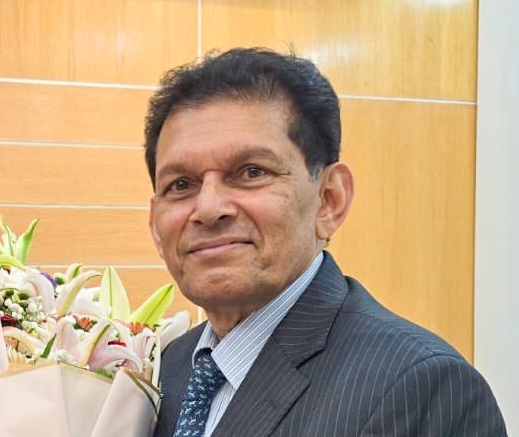
Tarique Rahman forms cabinet, appoints Khalilur Rahman as Foreign Minister, unveils 180-day reform agenda as India signals readiness to strengthen bilateral cooperation….reports Asian Lite News
Bangladesh has entered a new political chapter after Prime Minister Tarique Rahman appointed former national security adviser Khalilur Rahman as the country’s new Foreign Minister, signalling both continuity and recalibration in Dhaka’s diplomatic approach.
The announcement came as the Prime Minister allocated portfolios to the 50 members of his newly formed cabinet following the Bangladesh Nationalist Party’s sweeping victory in the February 2026 general election. Khalilur Rahman, who previously served as National Security Adviser under the interim administration led by Muhammad Yunus, was sworn in at the South Plaza of the Parliament complex alongside other ministers.
In a move that has drawn political attention, senior BNP leader Shama Obaid has been appointed State Minister for Foreign Affairs. Meanwhile, Rahman has retained direct control of three crucial ministries — the Cabinet Division, the Ministry of Defence, and the Armed Forces Division — underscoring his intention to keep a firm grip on governance during the early months of his tenure.
Other key appointments include BNP Secretary General Mirza Fakhrul Islam Alamgir as Minister for Local Government, Rural Development and Cooperatives, Standing Committee member Amir Khasru Mahmud Chowdhury as Finance and Planning Minister, and Joint Secretary General Salauddin Ahmed as Home Affairs Minister.
The 2026 general election marked a dramatic shift in Bangladesh’s political landscape. After years of turbulence culminating in the 2024 uprising that removed former Prime Minister Sheikh Hasina from power, the BNP secured more than 200 seats in the 300-member Jatiya Sangsad, gaining a decisive parliamentary majority. Tarique Rahman, son of former Prime Minister Khaleda Zia and late President Ziaur Rahman, returned from years in exile to lead his party to victory and assume the premiership.

Khalilur Rahman’s elevation to the foreign ministry is particularly notable given his complex recent history with the BNP. In May 2025, the party had publicly criticised him and demanded his resignation over remarks concerning dual residency and political exile. During an event at Dhaka’s Foreign Service Academy, he had referenced Tarique Rahman’s then self-imposed stay in the UK when questioned about his own US residency — comments that triggered backlash from BNP leaders at the time.
His appointment has also sparked questions from opposition figures. Nahid Islam, chief of the National Citizen Party, suggested that Khalilur Rahman’s inclusion in the cabinet may revive debates over alleged “election engineering” and constitutional reform controversies linked to the interim government period.
However, the new Foreign Minister has sought to frame Bangladesh’s external engagement under a clear guiding principle: “Bangladesh First”. He indicated that Dhaka would prioritise national interests while maintaining friendly relations with all countries, echoing the foreign policy approach associated with the late President Ziaur Rahman.
India was quick to respond to the appointment. India’s External Affairs Minister S. Jaishankar congratulated Khalilur Rahman on social media, expressing hope for advancing bilateral cooperation for “mutual progress and prosperity”. The message signals New Delhi’s readiness to engage with the new government despite the political churn in Dhaka over the past two years.
Domestically, Prime Minister Tarique Rahman has unveiled an ambitious 180-day priority plan — extending beyond the traditional 100-day roadmap usually announced by incoming governments in Bangladesh. Addressing the nation, he outlined four immediate areas of focus: restoring law and order, controlling prices of essential commodities, ensuring uninterrupted electricity and gas supplies, and improving public transport, particularly rail connectivity. He also pledged a strong crackdown on corruption and criminal syndicates.
“Restoring peace and security in the minds of the public by eliminating crime and strictly controlling corruption is the primary focus of our government’s agenda,” Rahman said, urging ministers to develop and implement ministry-specific action plans within the 180-day framework.
Home Minister Salauddin Ahmed has already declared an end to mob violence and vowed stricter enforcement against drugs and organised crime. Meanwhile, Rahman extended assurances to citizens across religious and ethnic lines, emphasising inclusivity and national unity.
As Bangladesh recalibrates its domestic priorities and foreign policy under a new leadership, the appointment of Khalilur Rahman represents both reconciliation within the ruling party and a test of diplomatic steadiness. With regional dynamics shifting and economic pressures mounting, the coming months will reveal how effectively the new administration can balance political consolidation at home with strategic engagement abroad.