UK Education Hub launched in New Delhi to drive India-UK Vision 2035, boost university partnerships, mutual recognition of qualifications and skills collaboration…reports Asian Lite News
A new UK Education Hub aimed at accelerating academic and skills collaboration between Britain and India has been launched in New Delhi, marking a significant step forward in the India-UK Vision 2035 partnership.
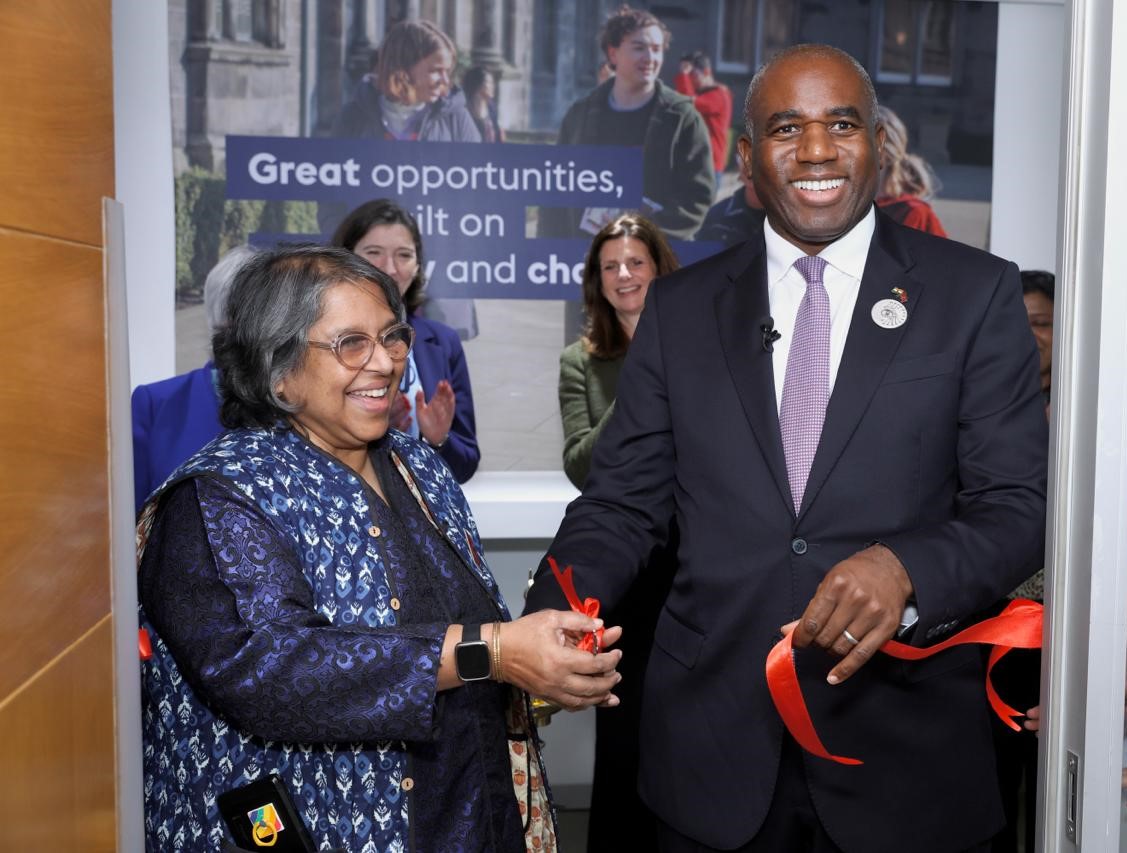
The initiative was formally inaugurated at the British Council by David Lammy, in the presence of senior education leaders and diplomats from both countries. Among those attending were Lindy Cameron, the British High Commissioner to India, Alison Barrett, Country Director India at the British Council, Professor Eloise Philips of the University of Southampton Delhi, and Steve Smith, the UK’s Champion for International Education.
The Hub will operate from the British Council, the UK’s international organisation for educational opportunities and cultural exchange, which has led education cooperation between the two countries for more than 78 years. It is designed as a single, structured platform to strengthen engagement between governments, universities, regulators and sector bodies in both nations.

The move comes as India and the UK seek to translate their broader India-UK Vision 2035 roadmap into tangible outcomes, particularly in education, research and skills development. That long-term framework aims to deepen strategic cooperation across trade, climate, defence, technology and people-to-people ties.
Speaking at the launch, Lammy emphasised the importance of investing in young people to shape the future. He said expanding access to education would create lasting change and that bringing together governments, universities and institutions would help forge deeper partnerships between the two countries. By sharing expertise and encouraging innovation, he argued, the Hub would support economic growth on both sides.
The UK Education Hub will oversee the Annual Ministerial India-UK Education Dialogue, a key mechanism for setting priorities and reviewing progress in bilateral education cooperation. It will also coordinate requests for information and support for UK universities seeking to establish or expand their presence in India.
One of its core functions will be to manage the UK Universities in India Members Programme, providing structured guidance and support to institutions exploring partnerships, joint research projects, transnational education models and campus developments.
The Hub is also expected to facilitate progress on the mutual recognition of qualifications — an area of longstanding interest for students and professionals in both countries. By helping align regulatory processes and standards, officials hope to smooth mobility for students, academics and skilled workers.
India’s National Education Policy has opened new avenues for foreign university collaboration, while the UK’s International Education Strategy aims to expand global partnerships and attract international students. The new platform is intended to align these ambitions more effectively, creating a clearer interface between Indian and British education systems.
Beyond higher education, the initiative will support inward and outward education and skills missions, encouraging exchanges between institutions, researchers and industry partners. In doing so, both governments hope to build stronger links in areas such as digital technology, green skills, health sciences and advanced manufacturing.
Officials say the Hub represents a practical step towards reinforcing people-to-people connections, which remain central to the India-UK relationship. With hundreds of thousands of Indian students choosing the UK for higher education in recent years, and increasing British institutional engagement in India, the demand for coordinated frameworks has grown.
By creating a unified channel for dialogue and cooperation, the UK Education Hub aims to reduce fragmentation, speed up collaboration and ensure that policy ambitions translate into measurable outcomes.
As India and the UK look ahead to 2035, the new platform is intended to serve as both a bridge and a catalyst — strengthening educational ties while supporting broader economic and strategic goals shared by the two democracies.