US president predicts swift end to war and promises lower petrol prices, while Iran demands an end to hostilities on all fronts and accuses Washington and Israel of violating a diplomatic understanding…reports Asian Lite News Desk
US President Donald Trump has vowed that Iran will never be allowed to acquire a nuclear weapon, claiming American military operations have destroyed the country’s nuclear capabilities and predicting that the ongoing war will end “very quickly”.
Addressing supporters at a Republican election rally at Northern Kentucky University’s Truist Arena on Saturday, Trump defended his decision to launch military operations against Iran, arguing that preventing Tehran from developing nuclear weapons was essential to US national security.
“They cannot have a nuclear weapon. They can’t because they’ll use it,” Trump told the crowd, insisting that the military campaign had successfully struck Iran’s nuclear infrastructure.
“We have to make sure it doesn’t come back,” he said, referring to his instructions to senior administration officials to prevent Iran from rebuilding its nuclear programme.
Trump later declared: “Iran won’t have, doesn’t have, and never will have a nuclear weapon, very simple.”
The president described the military campaign as a major achievement of his second administration, arguing that previous governments should have addressed the Iranian nuclear threat years ago.
“Should have been done years ago,” he said.
Trump also linked the conflict to the American economy, promising that fuel prices would fall once military operations ended. He acknowledged that the campaign required resources and attention in the Middle East but maintained that preventing Iran from obtaining nuclear weapons was more important than any short-term economic consequences.
“It’s gonna end very quickly,” Trump said, predicting that petrol prices would fall below their previous levels after the fighting stopped.
He also highlighted increased US defence spending, claiming that his administration and the Republican-controlled Congress had delivered more than $1 trillion for the armed forces.
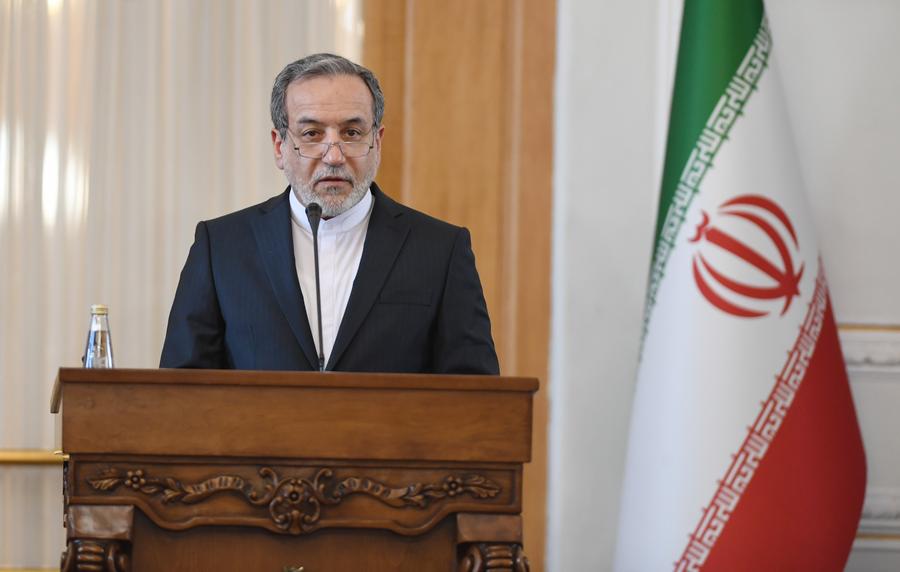
Iran demands end to war on all fronts
Iran’s Deputy Foreign Minister Saeed Khatibzadeh has insisted that hostilities must end across the region for lasting peace to be achieved, warning that continued fighting on any front would mean the wider conflict remained unresolved.
In an interview with Lebanon’s Al Mayadeen television network, reported by Iran’s state-run IRNA news agency, Khatibzadeh said Tehran wanted Israel’s war in Lebanon to end and that the issue had been included in the Islamabad memorandum of understanding signed by Iran and the United States in June.
He made the remarks during a visit to Beirut, where he met Parliament Speaker Nabih Berri, Prime Minister Nawaf Salam and representatives of the Lebanese Foreign Ministry.
Khatibzadeh accused Washington and Tel Aviv of violating the understanding by launching attacks on Iran and Lebanon. He also argued that the United States was responsible for ensuring Israel honoured its commitments.
Describing the US military campaign against Iran as unlawful under international law, he said Tehran had resisted what he called an existential war and would continue defending its sovereignty and territorial integrity.
Khatibzadeh said Iran remained willing to address questions from the International Atomic Energy Agency and the United States concerning its peaceful nuclear programme. He also said Tehran had proposed reopening the Strait of Hormuz within seven days, while insisting that Iran did not seek war but would respond if attacked.
Strait of Hormuz tensions continue
The conflict has also raised concerns over the Strait of Hormuz, a vital shipping corridor for global energy supplies, with Washington and Tehran offering competing accounts of security in the waterway.
US Central Command said 97 per cent of vessels seeking to transit the strait had passed through safely without being hit by Iranian projectiles.
CENTCOM spokesperson Navy Captain Tim Hawkins said coordinated naval protection efforts had helped thousands of commercial ships navigate the route despite attacks on civilian vessels.
His comments followed confirmation that the GFS Pride, a Singapore-flagged container ship owned by a Cyprus-based entity, was struck by an Iranian projectile on Wednesday. The vessel caught fire and sank while being towed towards shore.
“The vast majority of Iran’s attempted attacks on innocent civilian mariners transiting an international waterway, being the Strait of Hormuz, are unsuccessful,” Hawkins said, adding that shipping through the waterway continued.
Earlier, CENTCOM commander Admiral Brad Cooper said US operations had dealt significant financial blows to Iran and its Islamic Revolutionary Guard Corps. CENTCOM estimated that Iran had suffered $25 billion in lost oil exports, while $350 million in cryptocurrency had been frozen.
Cooper also said 400 ships had sailed through the strait in seven days and that US assistance had enabled Gulf partners to ship more than 100 million barrels of crude oil during the same period.
Iran’s Islamic Revolutionary Guard Corps, meanwhile, reported that a tanker carrying more than two million barrels of crude oil had been struck by a sea mine while attempting to cross what it described as an unauthorised waterway. Iranian media reported an explosion and a severe fire.
The conflicting claims underline continuing uncertainty over maritime security, the prospects for ending hostilities and the future of energy supplies as the US-Iran conflict continues.