January 23, 2026
3 mins read

Saudi Joins US-led Board of Peace

Saudi Arabia signs onto the US-led Board of Peace at Davos, backing a new international push to secure Gaza’s recovery, reconstruction and long-term stability after years of war….reports Asian Lite News

Saudi Arabia has formally joined a new US-led international initiative aimed at stabilising and rebuilding Gaza, signalling a significant diplomatic shift as efforts intensify to lock in peace after more than two years of devastating conflict.

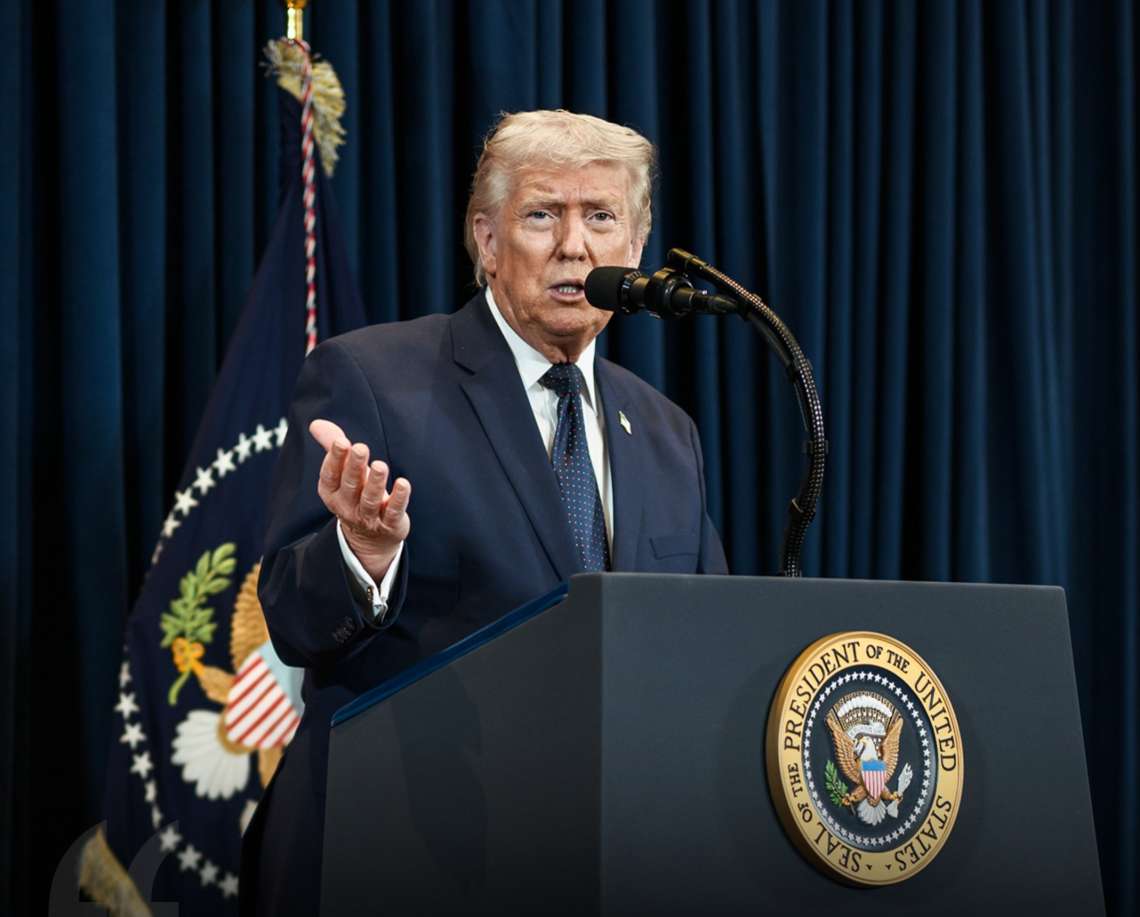
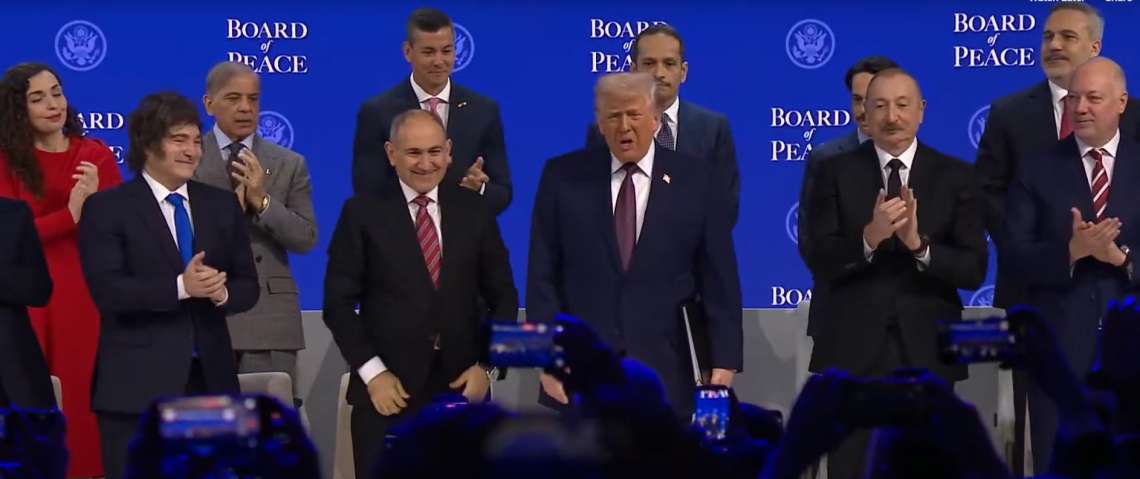
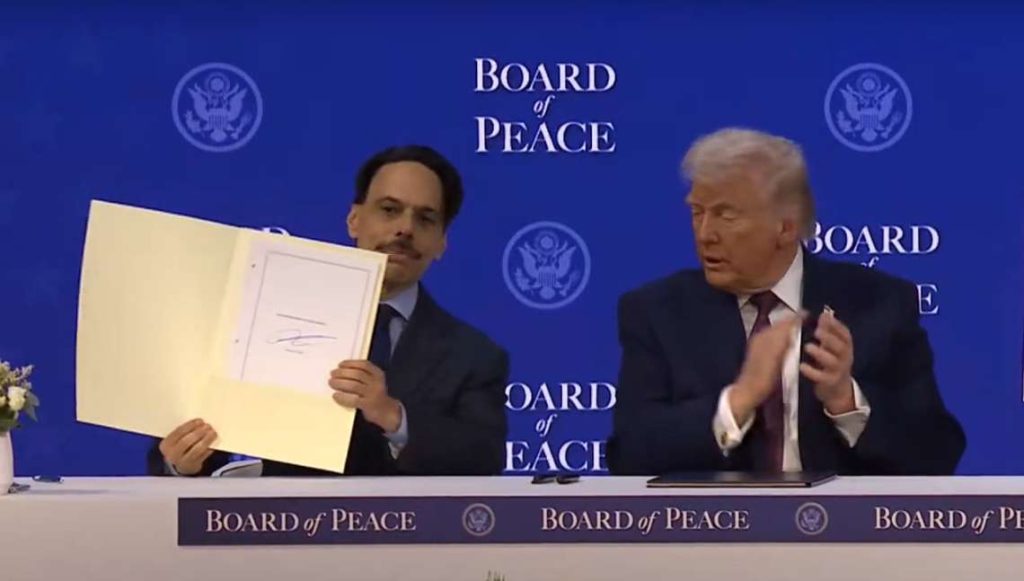
At a high-profile ceremony on the sidelines of the World Economic Forum Annual Meeting 2026 in Davos, Saudi Minister of Foreign Affairs Prince Faisal bin Farhan bin Abdullah signed the founding charter of the newly established Board of Peace in the presence of US President Donald Trump and leaders and representatives from a wide range of countries.

The signing marked the Kingdom’s endorsement of a transitional framework designed to end the conflict in Gaza, support reconstruction and pave the way for long-term security and stability. Saudi Arabia said its participation reflects support for President Trump’s peace initiative and aligns with United Nations Security Council Resolution 2803, which calls for a sustainable political and humanitarian solution in the war-ravaged territory.
The Board of Peace is intended to function as a temporary international body overseeing demilitarisation, governance reform, humanitarian access and economic recovery in Gaza. Saudi Arabia was one of eight Arab and Islamic countries that announced their decision this week to join the initiative, alongside Qatar, Turkey and several regional and international partners.

Speaking at the launch, President Trump described the initiative as a turning point from conflict to reconstruction, framing Gaza’s future in terms of stability, opportunity and economic renewal. He said the goal was to ensure that peace becomes irreversible by focusing on jobs, infrastructure and long-term investment rather than temporary aid.

“This is a very exciting day,” Trump said, adding that the plan was about “moving from war to rebuilding”.

US Secretary of State Marco Rubio described the initiative as a decisive shift in American diplomacy, arguing that years of failed international efforts had left Gaza trapped in a cycle of violence and dependency. He said the administration’s focus was now on implementation rather than declarations, calling the new body a “board of action” rather than a symbolic forum.

The launch also brought concrete announcements. Organisers confirmed that the Rafah crossing between Gaza and Egypt is set to reopen next week, a move seen as critical for humanitarian relief, trade and the movement of people. The reopening is expected to ease pressure on aid agencies and help kick-start economic activity.

US special envoy Steve Witkoff said the agreement had already delivered results, including the return of hostages, and had created momentum for broader regional stability. He described the deal as one that many believed was impossible, but said it had restored hope for Gaza’s future.

Senior presidential adviser Jared Kushner outlined a long-term redevelopment plan, arguing that peace must be supported by security, governance and private investment. He said Gaza’s economy could not continue to rely on aid, which has accounted for the majority of its GDP for years, and stressed the need for dignity through employment and enterprise.

“Without security, nobody’s going to invest,” Kushner said, adding that the plan aimed to replace dependency with opportunity through free-market principles.

The Board of Peace brings together a diverse group of states, including Bahrain, Morocco, Egypt, Jordan, Pakistan, the United Arab Emirates, Indonesia, Hungary, Argentina and several Central Asian and European nations. The broad coalition reflects the Trump administration’s argument that Gaza’s stabilisation requires international burden-sharing and regional buy-in.

While significant challenges remain, including governance reform and security guarantees, Saudi Arabia’s decision to join the board adds political weight to the initiative and signals growing regional support for a post-war framework focused on reconstruction rather than renewed conflict.
Previous Story

Leaders meet in Abu Dhabi

Next Story

UAE Shapes Future of Trade at Davos

Previous Story

Leaders meet in Abu Dhabi

Next Story

UAE Shapes Future of Trade at Davos

Latest from -Top News

Pakistan Risks Overstretching Itself in Yemen War

Pakistan’s expanding military role in Saudi Arabia amid the Yemen conflict could strain its defence resources and fragile finances…reports Asian Lite News Desk Pakistan’s military involvement in the war in Yemen may prove unsustainable because of mounting financial pressures and competing security demands, according to a new report. Islamabad’s growing military presence in Saudi Arabia risks stretching its defence resources while exposing the country to greater strategic and economic challenges. An article by Andrew Wilson in One World Outlook describes Pakistan’s involvement as a case of “fiscal and strategic overreach”, arguing that the country lacks the financial flexibility to sustain an expanded military commitment. Pakistan’s external finances depend heavily on an International Monetary Fund (IMF) programme, financial support from Gulf countries and remittances from Pakistani workers in the region. The report argues that deeper military involvement in the conflict could place additional pressure on these sources of financial stability. It also warns that deploying troops and military equipment abroad could weaken Pakistan’s capacity to address security challenges along its eastern border and deal with two domestic insurgencies. The move could also draw Islamabad into a conflict it has sought to approach cautiously. A Reuters report in May, citing Pakistani security and government sources, said Islamabad had deployed around 8,000 troops, a squadron of approximately 16 aircraft, mostly JF-17 fighter jets, two drone squadrons and a Chinese HQ-9 air-defence battery to Saudi Arabia. According to those sources, Riyadh was financing the deployment, with Pakistani personnel operating the equipment. The sources also said a confidential agreement contemplated the possibility of deploying up to 80,000 troops. Islamabad has not confirmed those figures, although it has acknowledged its military presence in Saudi Arabia, including the deployment of fighter jets at King Abdulaziz Air Base from April. The One World Outlook article argues that Saudi financial support can cover allowances and operating expenses but cannot easily replace military equipment needed elsewhere or resolve the political and strategic challenges of participating in the Yemen conflict. Pakistan’s defence budget is another concern. For the 2026-27 financial year, the federal government allocated PKR 3 trillion, or approximately $10.8 billion, to defence services. The allocation represents an 18 per cent increase from the original PKR 2.55 trillion provision and amounts to around 2.1 per cent of projected gross domestic product (GDP). Defence spending accounts for approximately 16 per cent of the federal government’s PKR 18.8 trillion expenditure. Military pensions are budgeted separately at PKR 822 billion, while debt servicing costs stand at approximately PKR 8 trillion, more than two-and-a-half times the defence allocation. The report argues that these competing financial obligations leave little room for additional military expenditure without placing further pressure on public finances. Pakistan’s reliance on IMF assistance also limits its fiscal flexibility. The country must meet the conditions attached to the programme, including a primary budget surplus target of 2 per cent of GDP and continued restraint on development spending. According to the article, these requirements make it difficult for Islamabad to finance an additional military commitment without compromising other budgetary priorities. Pakistan’s economic indicators offer limited reassurance. Economic growth for the 2025-26 financial year is estimated at between 3.6 and 3.7 per cent, while inflation reached approximately 10.3 per cent in September following an energy price shock. Foreign exchange reserves stood at around $21.5 billion at the end of September. Although this marks an improvement from the low levels recorded in 2023, the report notes that the reserves cover only a few months of imports. Financial assistance from Gulf partners remains central to Pakistan’s external stability. The article says Islamabad holds approximately $8 billion in Saudi deposits at its central bank. In July, the State Bank of Pakistan said Riyadh had extended the maturity of $5 billion in deposits to December 2028, easing the country’s immediate external financing requirements. A further $3 billion deposit was also extended in the spring. However, the article argues that these arrangements provide temporary relief rather than long-term financial independence, particularly as regional conflict threatens the stability of the Gulf economies on which Pakistan relies. The report concludes that Pakistan faces a difficult balance between supporting Saudi Arabia militarily and preserving the financial and military resources needed to address its domestic and regional challenges.
Go toTop

Don't Miss

‘World galvanized against Russia’s invasion’

US estimates many Russian units are depleted, with some operating

US troops to leave Chad in second African state withdrawal

The US has approximately 100 troops stationed in Chad as