US President Donald Trump has imposed a 50 per cent tariff on selected Canadian imports, accusing Ottawa of discriminating against American vehicle exports….reports Asian Lite News Desk
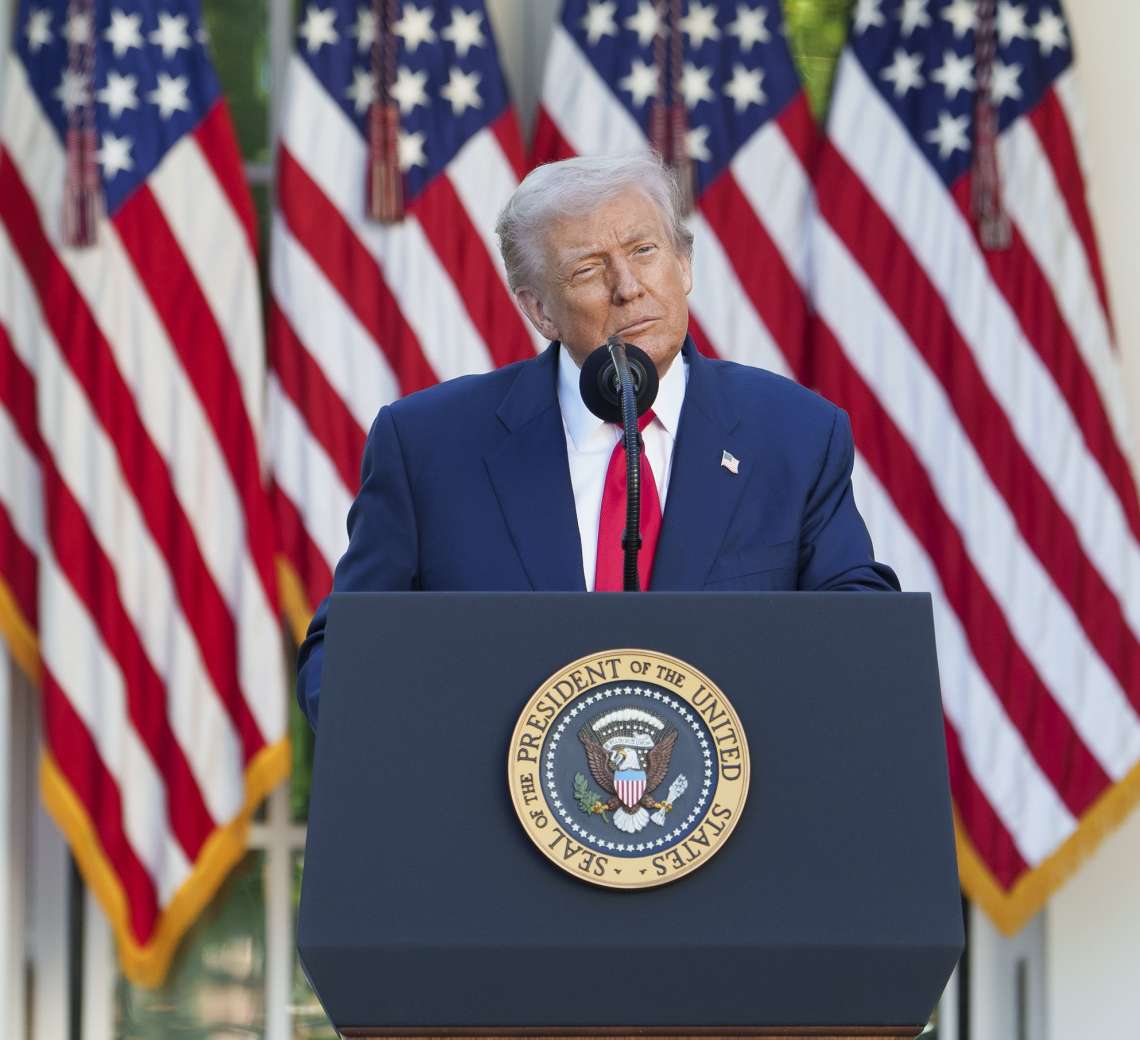
US President Donald Trump has announced a 50 per cent tariff on selected Canadian imports, escalating trade tensions between the two neighbouring countries after accusing Ottawa of discriminating against American automobile exports through its tariff policies.
The proclamation, issued under Section 338 of the US Tariff Act of 1930, argues that Canada’s motor vehicle tariff regime unfairly targets American manufacturers while granting more favourable treatment to vehicles imported from other countries. The White House said the additional duties are intended to offset what it described as the burden placed on US commerce by Canada’s “discriminatory, unequal and unreasonable” trade practices.
Under the order, the additional 50 per cent ad valorem duty will apply to certain Canadian products listed in an annex to the proclamation and will come into force at 12:01 a.m. Eastern Time on August 19. The new tariff will be imposed in addition to any existing duties, taxes and other charges applicable to the affected imports.
The Trump administration contends that Canada’s current automobile tariff system applies only to vehicles originating from the United States. According to the proclamation, Canada has maintained a 25 per cent tariff since April 2025 on US-made vehicles that do not qualify for preferential treatment under the United States-Mexico-Canada Agreement (USMCA). Even vehicles that qualify under the agreement remain subject to tariffs on the value of non-Canadian and non-Mexican components used in production, while tariff-rate quotas limit the number of vehicles eligible for duty-free access.

Washington also argued that Canada has used tariff-rate quotas to encourage investment in domestic production, reducing quotas for companies that shifted manufacturing from Canada to the United States. It said these measures have placed American automakers at a competitive disadvantage while benefiting manufacturers from other countries.
The proclamation cited a decline in US vehicle exports to Canada as evidence of the impact of the policy. It said exports of American motor vehicles to Canada fell by about 22 per cent between April 2025 and March 2026 compared with the corresponding period a year earlier, dropping from approximately USD 25.9 billion to USD 20.3 billion.
At the same time, imports of vehicles from countries other than the United States increased significantly. The document said Canadian imports of Mexican-made vehicles rose by around 23.6 per cent during the period, while imports from Japan, South Korea and Germany also registered double-digit growth. Overall, imports from countries other than the United States increased by roughly USD 2.85 billion, with Mexico accounting for nearly USD 2 billion of that increase.
The White House said the additional tariffs would help restore competitive opportunities for American manufacturers, support domestic production and employment, and encourage Canada to remove what it considers discriminatory measures against US vehicles. It added that expanding opportunities for US producers would strengthen industrial output, investment and economic activity in American communities.
The proclamation also authorises US Customs and Border Protection, in consultation with the Departments of the Treasury and Commerce and the Office of the United States Trade Representative, to implement the new duties and make any necessary amendments to the Harmonized Tariff Schedule of the United States.
The move marks a significant escalation in the latest US-Canada trade dispute and adds fresh pressure to bilateral commercial relations, with Washington arguing that the measures are necessary to protect American businesses and workers from what it views as unequal treatment in the Canadian market.