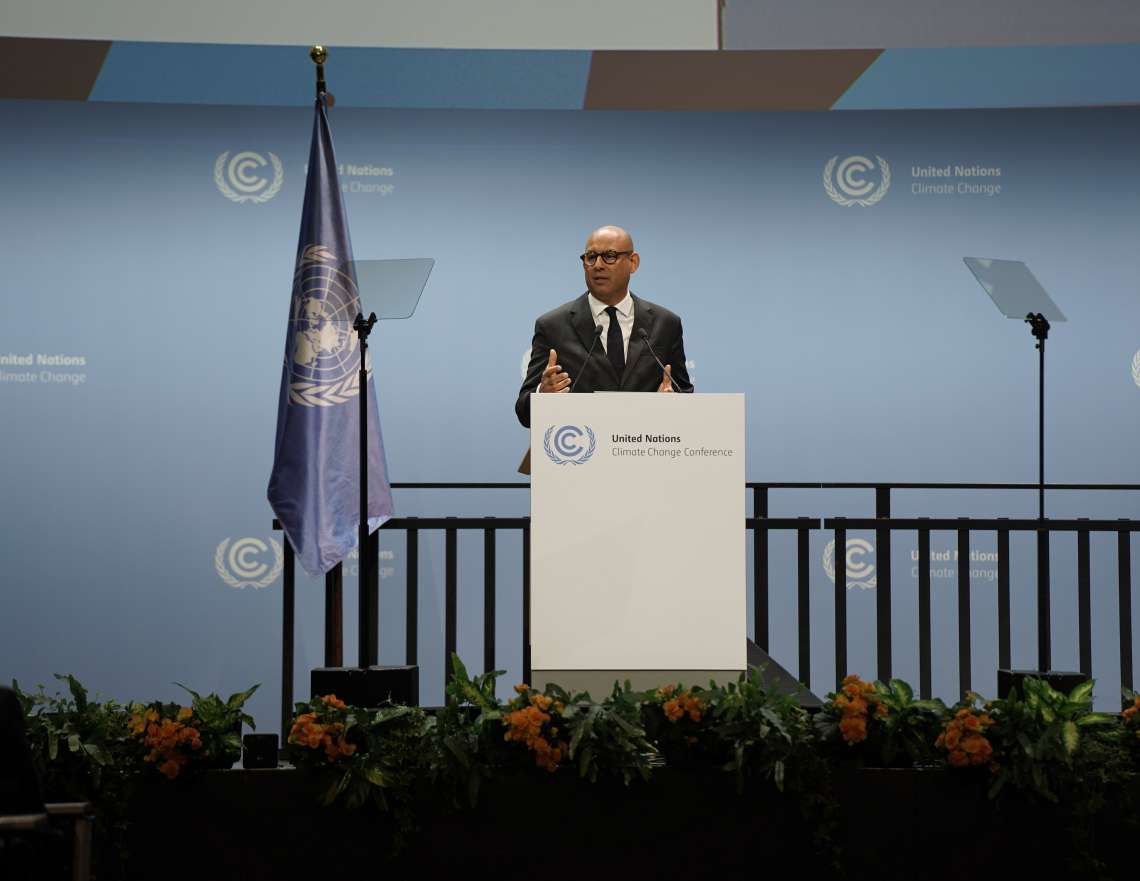
United Nations Climate Change Executive Secretary Simon Stiell hailed India’s rapid expansion in renewable energy, electric mobility and solar manufacturing….reports Asian Lite News Desk
United Nations Climate Change Executive Secretary Simon Stiell on Tuesday likened India’s clean energy transition to cricket legend Sachin Tendulkar and rising star Vaibhav Sooryavanshi rolled into one, saying the country has already built a stellar record while its greatest achievements are still to come.
Addressing a press conference during his visit to India, the UN climate chief used a cricket analogy to praise the country’s progress in renewable energy and clean technology.
“I’m from the Caribbean, a fellow cricket-loving region, so let me use an analogy: India’s clean energy growth is like Sachin Tendulkar and Vaibhav Sooryavanshi rolled into one: a stellar record, but the story is just getting started,” Stiell said.
He said India was well positioned to accelerate its clean energy transition further if it continued investing in renewable energy and clean technologies.
“If India keeps doubling down on renewables and clean tech, the next chapters promise to be truly extraordinary. Decarbonisation is central to India’s impressive development strategy, which is forging a new path for others to follow,” he said.
Stiell noted that fossil fuel-free power now accounts for half of India’s installed electricity generation capacity, a milestone the country achieved five years ahead of schedule.
“Credit goes to the Modi government, working with India’s people and businesses,” he said.
He highlighted the rapid growth of India’s electric vehicle market, led by companies such as Tata Motors, Mahindra & Mahindra and JSW MG Motor India, while noting that the country’s installed solar capacity has increased more than 50-fold since 2014.

Calling India a “solar superpower”, Stiell said the expansion of renewable energy had strengthened the economy, improved living standards and reduced dependence on imported fossil fuels.
Citing figures from the International Renewable Energy Agency (IRENA), he said India’s clean energy expansion helped save about USD 18 billion in fossil fuel imports last year, while the country’s solar manufacturing capacity has increased 75-fold since 2014.
He also said new IRENA data showed India had become the world’s most competitive solar market in terms of electricity generation costs, producing cheaper electricity than any other major economy.
Describing India as a leader in the global energy transition, Stiell said the shift to clean energy was now irreversible following commitments made by countries at COP30, with more than USD 2 trillion invested globally in clean energy last year.
He said accelerating the transition would strengthen India’s economy, improve energy security and reduce exposure to volatile international fossil fuel markets.
“The brutal costs of fossil fuel imports have hit all nations hard, including India, which imports 90 per cent of its crude oil,” he said.
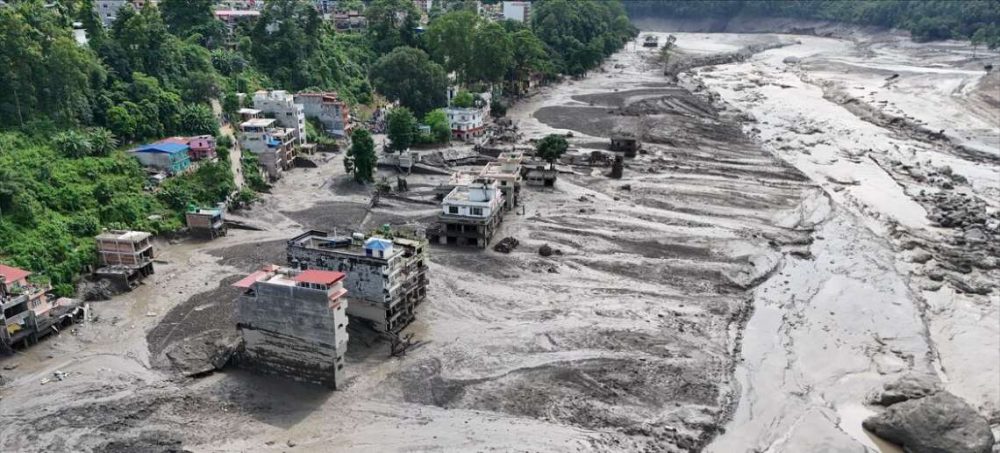
Stiell warned that climate change was intensifying extreme weather events, including deadly heatwaves and erratic monsoon patterns across Asia, increasing pressure on economies and livelihoods.
“Clean energy and resilience are vital parts of the solution. The faster and stronger your climate action, the more lives and livelihoods will be protected as climate-driven disasters get rapidly worse,” he said.
He added that reducing dependence on coal and expanding electrification would improve air quality, lower healthcare costs, strengthen energy and food security, and shield households and businesses from fossil fuel price shocks.
Stiell also said India was well placed to become a global clean technology manufacturing hub by leveraging its skilled workforce and expanding investment in renewable energy, electricity grids, battery storage and emerging sectors such as green steel.
He stressed that international climate cooperation and finance would remain critical to supporting developing countries in accelerating the global transition to cleaner and more resilient economies.