Trump says Saudi Arabia must join the Abraham Accords before securing a US civilian nuclear deal, linking regional normalisation with strategic nuclear cooperation, reports Asian Lite News Desk
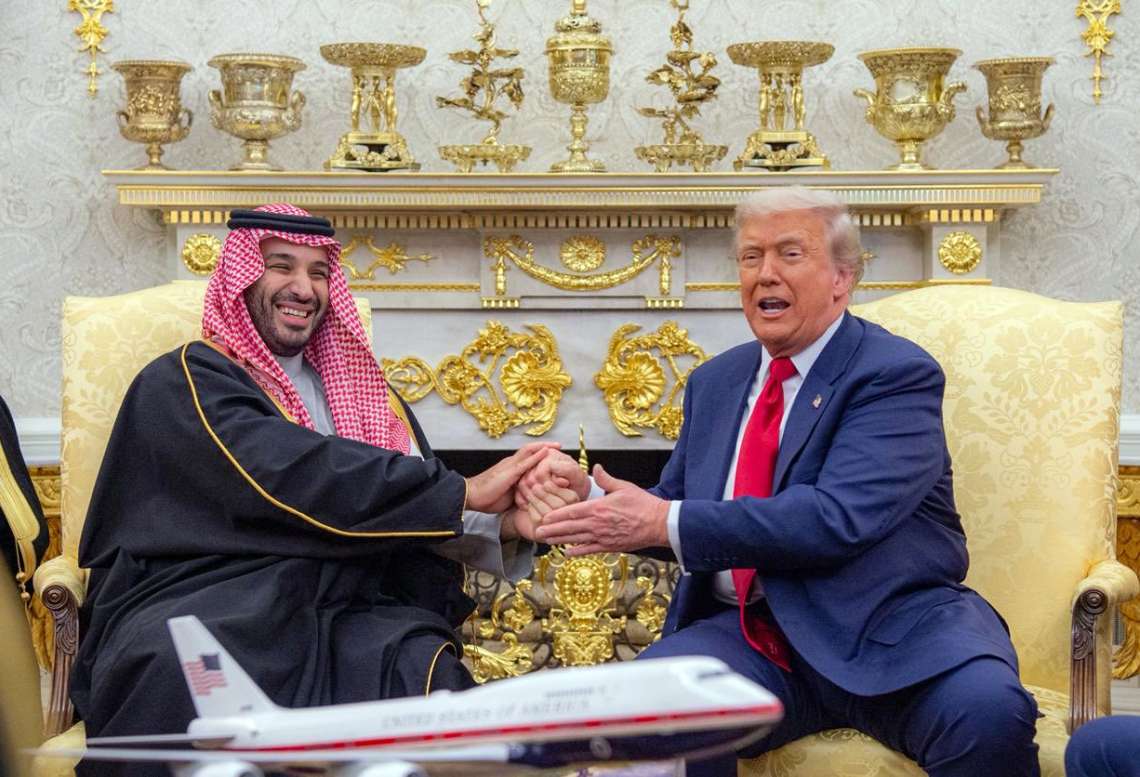
US President Donald Trump has declared that Saudi Arabia must join the Abraham Accords and formally normalise relations with Israel before the United States will proceed with a civilian nuclear agreement with the kingdom, tying one of Washington’s most significant strategic partnerships in the Middle East to regional diplomacy.
Speaking after announcing a milestone in his administration’s civilian nuclear programme, Trump said there was no ambiguity over the conditions attached to the proposed agreement, insisting Riyadh had always been aware that participation in the Abraham Accords was a prerequisite.
The remarks underscore Washington’s continued push to expand the regional normalisation framework while linking future strategic cooperation with Saudi Arabia to broader Middle East stability.
Nuclear deal tied to Israel normalisation
Responding to questions about reports that negotiations on a civilian nuclear agreement had already been completed before additional conditions were imposed, Trump dismissed suggestions that his administration had changed its position.
“In order to do it, they have to be a member of the Abraham Accords,” he said.
Trump described the accords, brokered during his first term, as a major diplomatic success and argued that changing regional dynamics had removed previous obstacles to Saudi participation.
He suggested Saudi Arabia’s security concerns over Iran had diminished considerably.
“They and others didn’t want to do it because of the problem that they had with Iran. You don’t have that problem anymore,” he said.
Later, Trump reiterated that Riyadh had been fully aware of the condition from the outset.
“Saudi Arabia knew that if they didn’t join the Abraham Accords, the deal’s not — I’m not going to do the deal,” he said, adding that any future agreement would also require approval from the US Congress.
Trump emphasised that any cooperation would involve only peaceful civilian nuclear technology without uranium enrichment capabilities.
Trump says Iran no longer dominates region
The President used the occasion to deliver a sharp assessment of Iran’s regional influence, claiming Tehran had been significantly weakened.
Calling Iran “the bully of the Middle East”, Trump argued the country’s ability to project power across the region had declined.
“You don’t have a great power there anymore,” he said, adding that Iran would no longer be able to dominate its neighbours as it had in the past.
Despite the tough rhetoric, Trump indicated his administration remained engaged in diplomatic efforts with Tehran while maintaining military preparedness.
“We’re locked and loaded and ready to go, but we’re talking to them,” he said.
Reiterating his long-standing position, Trump said Iran would never be allowed to acquire a nuclear weapon.
He added that negotiations were continuing under the leadership of Vice President JD Vance, Secretary of State Marco Rubio and other senior officials.
Asked whether Russia or China were providing significant assistance to Iran, Trump said both Chinese President Xi Jinping and Russian President Vladimir Putin had indicated they would not become directly involved.
“I trust them,” he said, adding that any support provided had “not been major.”
Push to revive US nuclear industry
Trump’s comments came during an event highlighting what the administration described as a major achievement in revitalising America’s civilian nuclear sector.
He announced that four privately funded advanced nuclear reactor projects had reached significant milestones following executive orders signed last year to accelerate approvals and deployment.
The President said the United States was reclaiming global leadership in next-generation nuclear technology after decades of limited progress.
“We’re leading the world in pioneering the next generation of nuclear power and there’s nobody even close,” he said.
The administration argues that expanding civilian nuclear energy will strengthen US energy security, boost technological leadership and support strategic partnerships with allies, while ensuring strict safeguards against nuclear proliferation.